
Planning A Shimanami Kaido Cycling Holiday
Southern Japan remains one of the country’s most rewarding regions for travellers who want depth without crowds. While Tokyo, Kyoto and Osaka are popular amongst first time visitors, areas further west and south offer a slower pace and a stronger sense of everyday life. Smaller cities, coastal towns and rural landscapes sit close together, making it easy to move around without long travel days.
The region is shaped by inland seas, fishing towns and fertile countryside. Family run guesthouses, regional food culture and small local museums tend to cater first to domestic travellers, giving the experience a grounded, natural feel. Set within this broader region, the Seto Inland Sea stands out for its gentle climate, calm waters and island culture, offering a clear sense of Japan’s quieter charms.
For active travellers, the Shimanami Kaido has become one of the world’s most appealing cycling routes. Combining scenery, access and comfort, the network of dedicated paths and bridges links the islands between Honshu and Shikoku, allowing riders to cover meaningful distances without busy roads or demanding terrain.
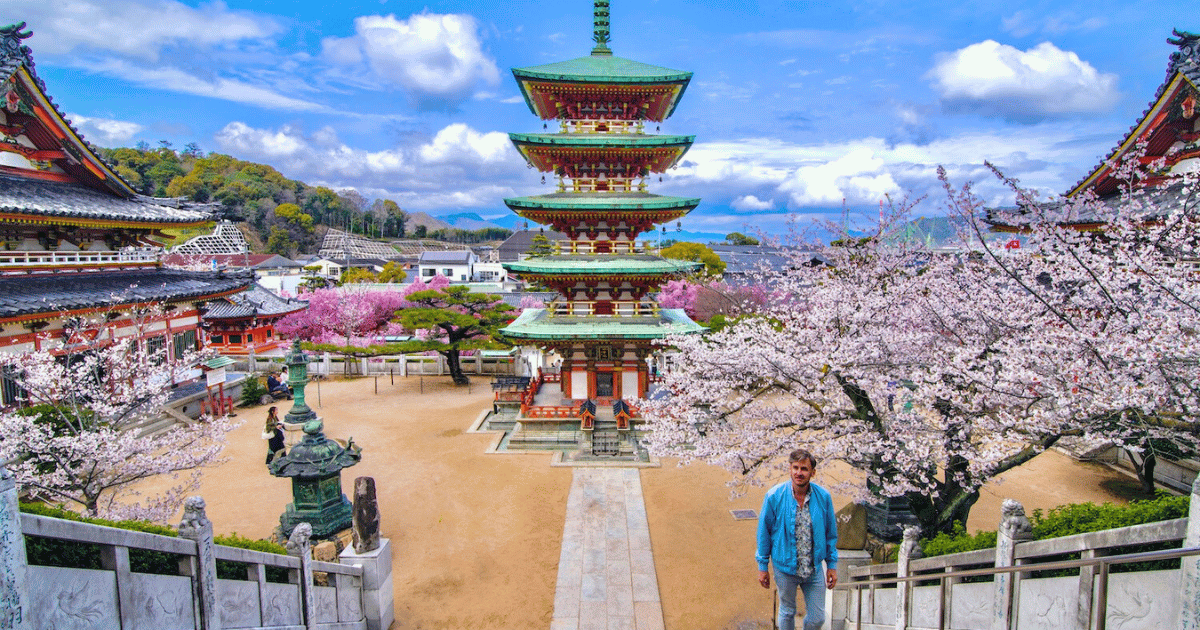
Southern Japan offers a slower, less crowded side of the country, where coastal towns, inland seas and rural landscapes create space to travel at an unhurried pace.
So what is the Shimanami Kaido?
The Shimanami Kaido is a well signposted cycling route that links the cities of Onomichi in Hiroshima Prefecture and Imabari in Ehime Prefecture, crossing the Seto Inland Sea via a chain of islands. The route spans just over 70 kilometres and connects six main islands by a series of long bridges, each with dedicated cycling lanes separated from road traffic.
What sets the Shimanami Kaido apart is its accessibility. The route is fully paved, clearly marked by a blue line on the road, and designed to be ridden at an easy, steady pace. Gradual bridge approaches, frequent rest stops and regular ferry connections make it suitable for a wide range of travellers, including those with limited cycling experience.
Rather than feeling like a single long ride, the Shimanami Kaido unfolds as a sequence of island communities. Cyclists pass fishing harbours, citrus groves, small shrines and quiet coastal roads, with opportunities to stop for food, viewpoints or overnight stays along the way.
Where does the Shimanami Kaido cycling route start and finish?
The Shimanami Kaido cycling route runs between the port city of Onomichi in Hiroshima Prefecture and the coastal city of Imabari in Ehime Prefecture, linking Japan’s main island of Honshu with Shikoku across the Seto Inland Sea. The full route crosses a chain of six islands connected by bridges, with dedicated cycling paths that keep riders separate from most traffic.
Onomichi forms the northern starting point and is easy to reach by train from Hiroshima, Osaka or Tokyo. The ride begins with a short ferry crossing from Onomichi’s waterfront to Mukaishima, where the blue line marking the cycling route starts. Onomichi itself is worth allowing time to explore, with its hillside temples, narrow lanes and views over the inland sea.
Imabari marks the southern end of the route and sits on Shikoku’s north coast. From here, travellers can continue on to Matsuyama or explore further into Shikoku by train or road. Many cyclists choose their starting direction based on onward travel plans, as rental bikes can be returned at either end, making the Shimanami Kaido easy to fit into a wider journey through southern Japan.
How long does it take to ride the Shimanami Kaido?
Riding the Shimanami Kaido can be done in a single day, and many people do complete the full route in one long ride. At just over 70km, the distance is manageable for reasonably active travellers, especially with well surfaced roads, steady gradients and clear signage. A one day ride typically allows time for lunch and short photo stops, but it leaves little room to explore the islands beyond the main cycling path.
Travellers who rush through in a day often miss much of what makes the route special. Small fishing villages, quiet beaches, local cafés, temples and short detours away from the bridges are easy to pass by when time is of the essence.
Allowing three to four days is ideal for most travellers. This pace keeps daily distances comfortable and creates space to experience island life rather than simply ride through it. Shorter days mean time to wander port towns, visit shrines and museums, enjoy long lunches, or take a ferry for part of the journey if conditions change.
How difficult is the cycling considered to be?
The Shimanami Kaido cycling route is widely considered an easy to moderate cycling route and is suitable for people with little or no long distance cycling experience. Roads are fully paved, well maintained and clearly marked with a blue line that guides riders across the islands and over each bridge. Traffic is generally light on the island roads, and dedicated cycling lanes are provided on the major bridges.
The route avoids steep climbs, with long bridge approaches designed as gradual ramps rather than sharp hills. These slopes are steady and manageable, even for casual riders, and e-bikes are widely available for those who want extra support. As the route is linear and well signposted, navigation is straightforward and does not require technical cycling or route finding skills.
What makes the Shimanami Kaido especially approachable is the level of infrastructure in place. Regular rest areas, cafés and ferry connections allow riders to adjust their day if needed, and bike rentals can be returned at multiple points along the route.
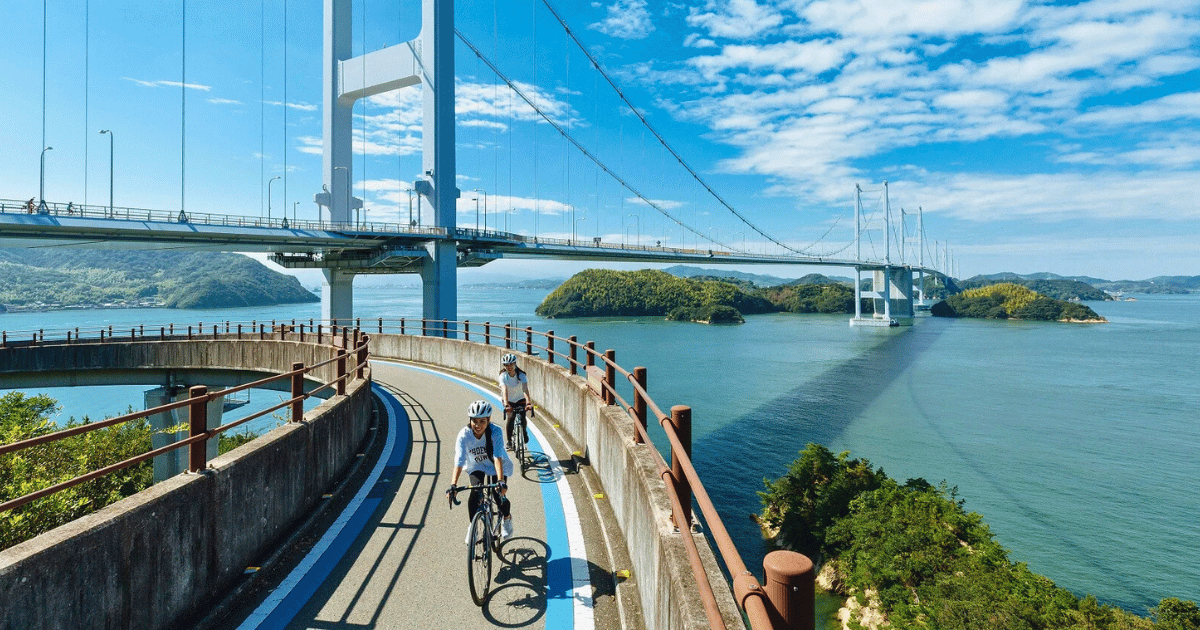
The Shimanami Kaido links a chain of islands across the Seto Inland Sea in Japan, offering a relaxed cycling route shaped by sea views, quiet roads and everyday island life.
What makes the Shimanami Kaido unique?
What makes the Shimanami Kaido unique is the way it blends infrastructure with everyday island life. Rather than feeling like a purpose built cycling trail, the route moves through working fishing ports, residential streets and coastal farmland, giving riders a close view of how people live around the Seto Inland Sea.
The bridges themselves are a defining feature, not just as engineering landmarks but as part of the journey. Each crossing offers wide views over the sea and islands below, creating a sense of movement through open water rather than along a fixed corridor. Between bridges, the pace slows as the route returns to quiet roads and small communities.
Equally distinctive is how naturally the ride fits into broader travel. Cyclists can step on and off the route using ferries, trains or short detours, shaping each day around interest rather than distance. This flexibility allows the Shimanami Kaido to feel less like a single ride and more like a journey through place, culture and landscape.
What can I expect from the islands along the route?
Although the Shimanami Kaido is often described as a single cycling route, it is best understood as a journey through a series of distinct islands. Each island has its own character, shaped by fishing traditions, farming, small towns and its relationship with the sea. Distances between them are short, but the atmosphere can change noticeably from one to the next.
Mukaishima
Mukaishima is the first island reached from Onomichi, usually via a short ferry ride across the channel. It feels residential and low key, with narrow streets, small harbours and everyday island life rather than major attractions. For many riders, it acts as a gentle introduction to the route before the first long bridge crossing, helping ease into the pace and atmosphere of the ride.
Innoshima
Innoshima has a stronger historical identity shaped by its role in Seto Inland Sea trade and maritime defence. The island is closely associated with the Murakami clan, a powerful naval family during Japan’s feudal period, and this heritage is explored at the Innoshima Suigun Castle museum. The landscape feels more rugged, with quiet roads and views that hint at the island’s strategic past.
Ikuchijima
Ikuchijima is one of the most appealing islands to spend time on, particularly around the port town of Setoda. The island is known for citrus farming, especially lemons, and has a lively but relaxed feel compared with others on the route. Kosanji Temple and its marble Hill of Hope make this a cultural highlight, and many travellers choose Ikuchijima as an overnight stop.
Omishima
Omishima feels broader and more rural, with farmland, forests and a sense of space between settlements. It is home to Oyamazumi Shrine, one of the most important Shinto shrines in the region, renowned for its collection of samurai armour and weapons. The island has a calm, reflective atmosphere and is well suited to slower exploration away from the main road.
Hakatajima
Hakatajima is smaller and quieter, often experienced as a brief but welcome pause between longer stretches of cycling. The route passes close to the shoreline, where views open across the water toward beaches and shipyards. Hakata Beach and the Marine Oasis Hakata rest stop offer a simple place to take a break, with the island also known locally for its traditional salt production.
Oshima
Oshima is the final island before reaching Imabari and provides a strong sense of approach and completion. The island rises more sharply than others, with Mt Kiro offering one of the most impressive viewpoints on the route. Cycling across the Kurushima-Kaikyo Bridge from Oshima to Shikoku delivers wide sea views and marks a memorable finish to the journey.
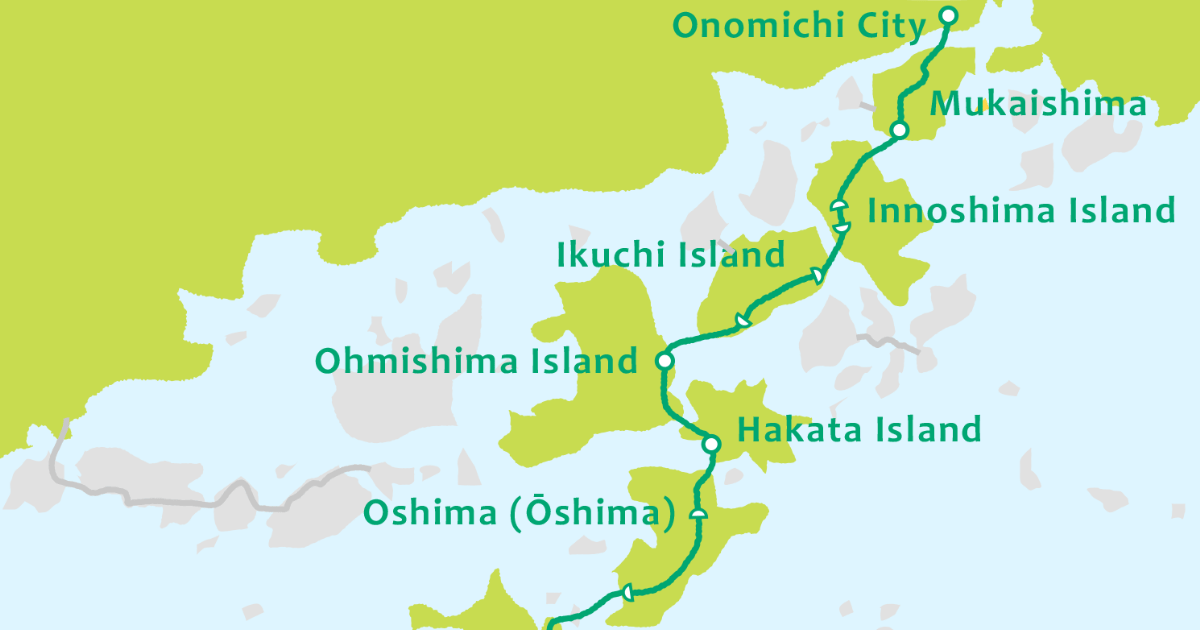
The Shimanami Kaido cycling route map highlights the island connections between Onomichi and Imabari across Japan’s Seto Inland Sea in the Setouchi region.
What should I know before cycling the Shimanami Kaido?
Before setting out, it helps to understand a few practical details that can shape how comfortable and flexible your ride will be. While the Shimanami Kaido is well supported and easy to follow, small planning choices around transport, accommodation and timing can make a big difference to the overall experience.
Logistics and Transport
The Shimanami Kaido is easy to reach using Japan’s extensive public transport network. Onomichi sits on the Sanyo rail line and is accessible from Hiroshima, Osaka and Tokyo, while Imabari connects via Matsuyama on Shikoku. Both cities are well signed for cyclists, with clear directions to ferry terminals, rental centres and the start or end of the route.
Bike hire is flexible and designed for one way travel. Public rental systems operate along the route, allowing bikes to be collected on one island and returned on another, including at both Onomichi and Imabari. Options include standard city bikes, touring bikes and electric assist models, making the ride accessible to a wide range of abilities.
Ferries play an important role in route flexibility. Short crossings can be used to bypass sections of the ride or shorten a day if weather or energy levels change. Local buses also accept bicycles on certain routes, providing additional options if plans need adjusting.
Luggage transfer services are widely used and make the journey more comfortable. Bags can be sent ahead to the next accommodation or to the final destination, allowing riders to cycle with only day essentials. This service is especially useful for multi-day itineraries or travellers carrying larger bags.
Accommodation
Accommodation along the Shimanami Kaido is spread across the islands and suits a relaxed, multi day pace. Guesthouses, small hotels and cyclist friendly lodgings are common, particularly near ferry ports and bridge access points. Many offer secure bike storage and simple facilities tailored to active travellers.
Ryokan provide a more traditional stay and are popular with those wanting an evening meal included. These properties often serve local seafood and regional dishes, adding depth to the experience of staying on the islands. Availability can be limited, so advance bookings are recommended in busier seasons.
Some islands also offer renovated traditional homes and small boutique style stays. These provide more privacy and space, especially for couples or small groups, while still keeping a strong local character. Standards vary, but comfort is generally good.
Travellers can choose to move accommodation each night or stay in one base and explore sections of the route as day rides. Both approaches work well, and the decision usually depends on how much time is available and how much exploring off the main route is planned.
Weather Conditions
The Seto Inland Sea enjoys one of Japan’s mildest climates, making the Shimanami Kaido suitable for cycling across much of the year. Spring and autumn are the most popular seasons, with comfortable temperatures, lower humidity and relatively stable conditions. These periods offer the best balance of weather and visibility.
Summer brings higher heat and humidity, particularly from July through August. While the route remains rideable, early starts, frequent breaks and good hydration become important. Coastal breezes help at times, but shade can be limited on bridge crossings.
Rainfall is generally lower here than in many other parts of Japan, but short showers can still occur. Checking daily forecasts is worthwhile, especially during the early summer rainy season. Roads are well surfaced, but caution is needed on wet descents and painted surfaces.
Winter is cooler and quieter, with clear days and minimal rainfall. Temperatures can drop on exposed bridges, particularly in the morning or late afternoon, but snow is rare. With suitable layers, winter riding can be comfortable and far less crowded.
Packing Essentials
Packing for the Shimanami Kaido is simple and does not require specialised cycling equipment. Comfortable clothing suitable for steady riding is sufficient, along with a light windproof layer for bridge crossings or cooler weather. Breathable fabrics help manage changing conditions.
A small day pack or pannier works well for water, snacks, sunscreen and personal items. While convenience stores are available, distances between them can vary, so carrying basic supplies is sensible. A reusable water bottle is useful, especially in warmer months.
Cash remains important along the route. Small cafés, ferries and family run accommodation may not accept cards, particularly on quieter islands. Keeping some yen on hand helps avoid inconvenience.
If using luggage transfer services, overnight bags can be kept minimal. Those carrying their own gear should pack light, as shorter daily distances and frequent stops make travelling with less far more comfortable and enjoyable.
General Safety
The Shimanami Kaido is considered one of Japan’s safest cycling routes - if not, the world - and was specifically designed with cyclists in mind. Dedicated lanes on bridges, low traffic island roads and clear signage reduce risk and make navigation straightforward. The overall environment encourages relaxed riding rather than speed.
Basic cycling awareness remains important. Helmets are recommended, and riders should be mindful of wind conditions on bridges and after rain. Painted road markings and metal surfaces can be slippery when wet, so caution is advised.
Traffic etiquette in Japan is orderly, and drivers are generally accustomed to sharing the road with cyclists. Riding predictably and following local rules helps maintain this safety standard. Night riding is possible but less recommended due to reduced visibility on rural sections.
Support is readily available if needed. Locals are used to assisting cyclists, rental centres can help with mechanical issues, and emergency services are reliable. With sensible planning and awareness, the route is suitable for first time cycling travellers as well as experienced riders.
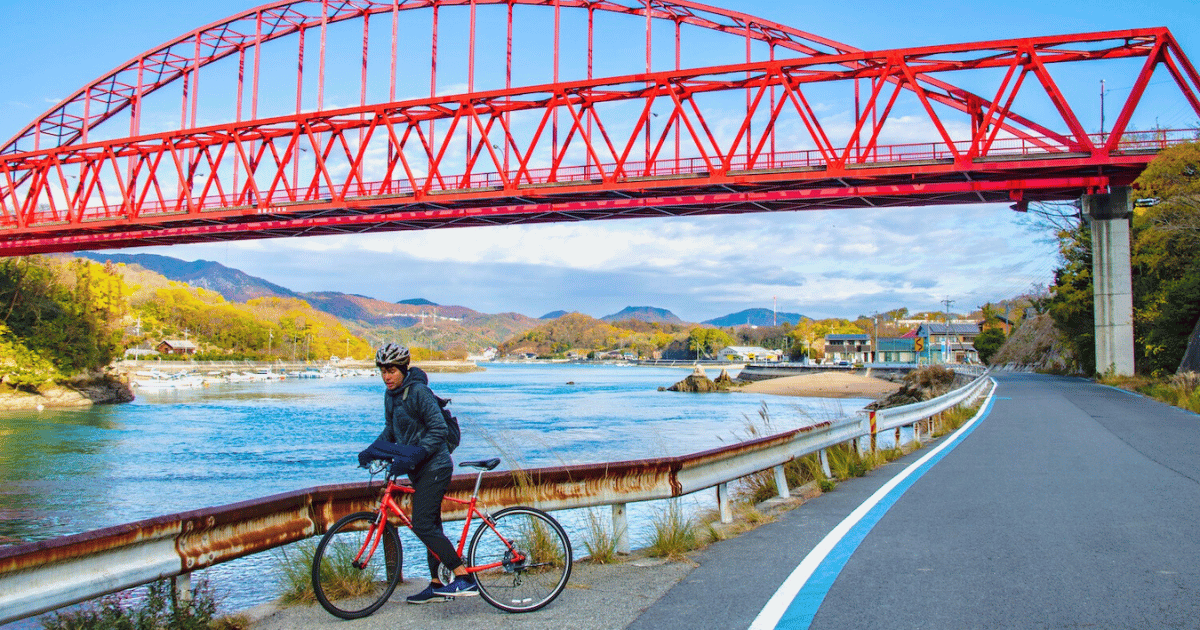
The Shimanami Kaido is ideal for relaxed cycling, with frequent lookouts, small fishing towns and quiet beaches that encourage regular stops along the route.
Cycling the Shimanami Kaido with Remarkable East
For travellers who want to enjoy the Shimanami Kaido without managing the logistics themselves, a guided Japan cycling tour allows the route to be experienced at a comfortable, unhurried pace. Daily distances are designed to leave time for island towns, local food and coastal scenery, with luggage transfers and accommodation arranged in advance.
Cycling the Setouchi with Remarkable East is a one off special interest journey that includes the Shimanami Kaido as part of a broader adventure through southern Japan. Travelling in a small group of just 12 guests, the itinerary balances riding days with cultural stops and regional context, ensuring the route is not treated as a standalone challenge but as a natural part of a longer, well planned journey.