South Korea Walking Tour
Special Interest - Maximum 12 Guests
Trails Of Ulleungdo
Alongside time in South Korea’s major cultural centres, walking the volcanic ridges and coastal paths of Ulleungdo offers a close look at one of the country’s most remote island regions. This 13-day walking journey moves at a considered pace, using time on foot to explore landscapes shaped by geology, weather and maritime life. Early June brings long daylight hours and green seasonal growth, creating good conditions for walking along coastal tracks, forested slopes and quiet backroads. Walking provides continuity throughout the journey, allowing space to observe how landscape and daily life in South Korea intersect across very different settings.
Walking in Seoul introduces historical context through neighbourhood streets and city-edge trails, followed by time in Gyeongju exploring temple precincts, royal tombs and quiet lanes of the former Silla capital. An overnight ferry leads to Ulleungdo, where several days are spent walking the island’s coastline, volcanic basin and interior hills, staying in local towns and moving without pressure to cover distance. We continue through Gangwon Province with walking in Seoraksan National Park and along sections of the Haeparang Trail, before concluding in Busan. Ferry crossings, rail journeys and short road transfers are integrated naturally between walking days, creating a steady flow and access to regions rarely included in standard South Korea itineraries.
From $7,150
24/7 Support
12 Guests
13 Days
Mon 8 Jun - Sat 20 Jun 2026
〰️
Mon 8 Jun - Sat 20 Jun 2026 〰️
South Korea Walking Tour Itinerary
-
Arrive in Seoul this evening, where arrival transfers are included with a group transfer from the airport to the hotel. After the international flight, today is kept deliberately light, allowing time to arrive, settle in and begin adjusting to the time zone.
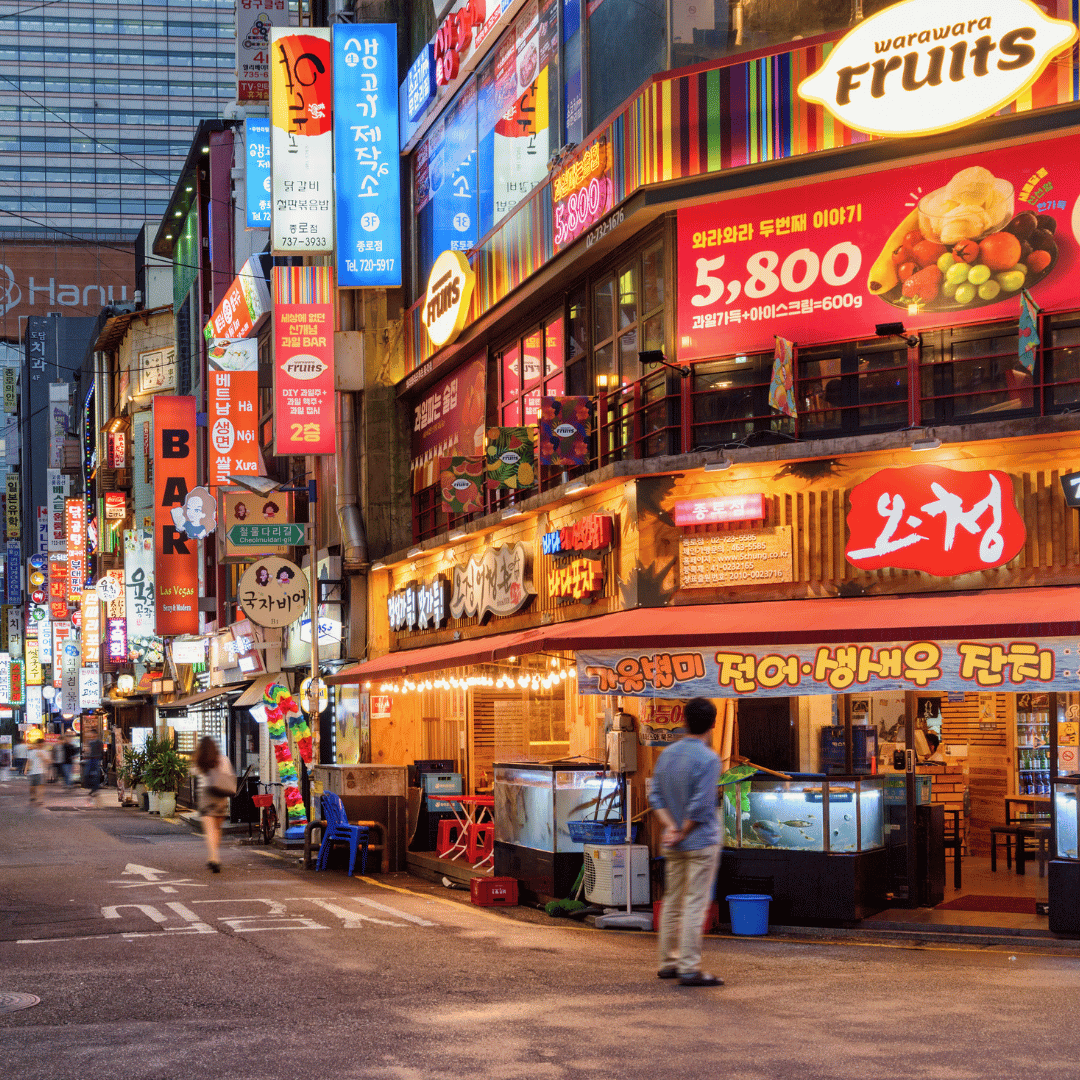
Seoul is a large, lived-in city where daily routines sit alongside long layers of history. Royal palaces, remnants of the old city walls and established neighbourhoods remain part of everyday movement, while modern offices, efficient transport and late-night dining shape how the city functions today. It is a place best understood gradually, through observation rather than rushing into scheduled sights.
Once checked in, the pace remains flexible. Some guests may choose to rest and recover from travel, while others may prefer a short walk nearby to stretch their legs and take in first impressions. Convenience stores, cafés and casual Korean restaurants close to the hotel offer an easy way to step into the city without committing to a full evening out.
There is no formal programme today, giving space for the group to ease into the journey without pressure. This unstructured start allows everyone to feel settled as the tour unfolds over the coming days.
🛏️ New Seoul HotelThe New Seoul Hotel is located near City Hall and Deoksugung Palace, placing you within walking distance of historic streets, government precincts and everyday dining spots used by locals. Rooms are practical and comfortable, well suited to group travel, and the area is well connected by public transport. Cafés, bakeries and casual Korean restaurants nearby make it easy to step out for an unplanned meal or short walk, while the central location keeps travel times efficient for the days ahead.
-
We spend today on foot, exploring Seoul’s historic centre at a steady pace. Beginning directly from the hotel keeps logistics simple and allows the city to unfold naturally, with time built in for explanation, observation and short pauses rather than rushing between landmarks.
The morning opens with the Royal Guard Changing Ceremony, a formal re-enactment that introduces the structure, symbolism and hierarchy of the Joseon dynasty. From here, we enter UNESCO-listed Gyeongbokgung Palace, the principal royal palace of historic Seoul. Its broad courtyards, ceremonial gates and audience halls reveal how Confucian values shaped governance, daily court life and the physical layout of the capital, with surrounding mountains reinforcing the palace’s relationship to landscape and protection.
Leaving the palace precinct, the walk continues into Bukchon Hanok Village. Traditionally home to scholars and officials, this residential area preserves narrow lanes lined with timber and tile hanok houses that are still lived in today. Moving through Bukchon highlights how historic architecture remains part of everyday Seoul rather than being separated from modern life.
The afternoon is spent in Insadong, a long established cultural district known for craft workshops, calligraphy shops, small galleries and teahouses. There is free time to explore the pedestrian street at your own pace, browse traditional goods, stop for tea and sweet snacks, or simply observe the flow of the city before regrouping later in the day.
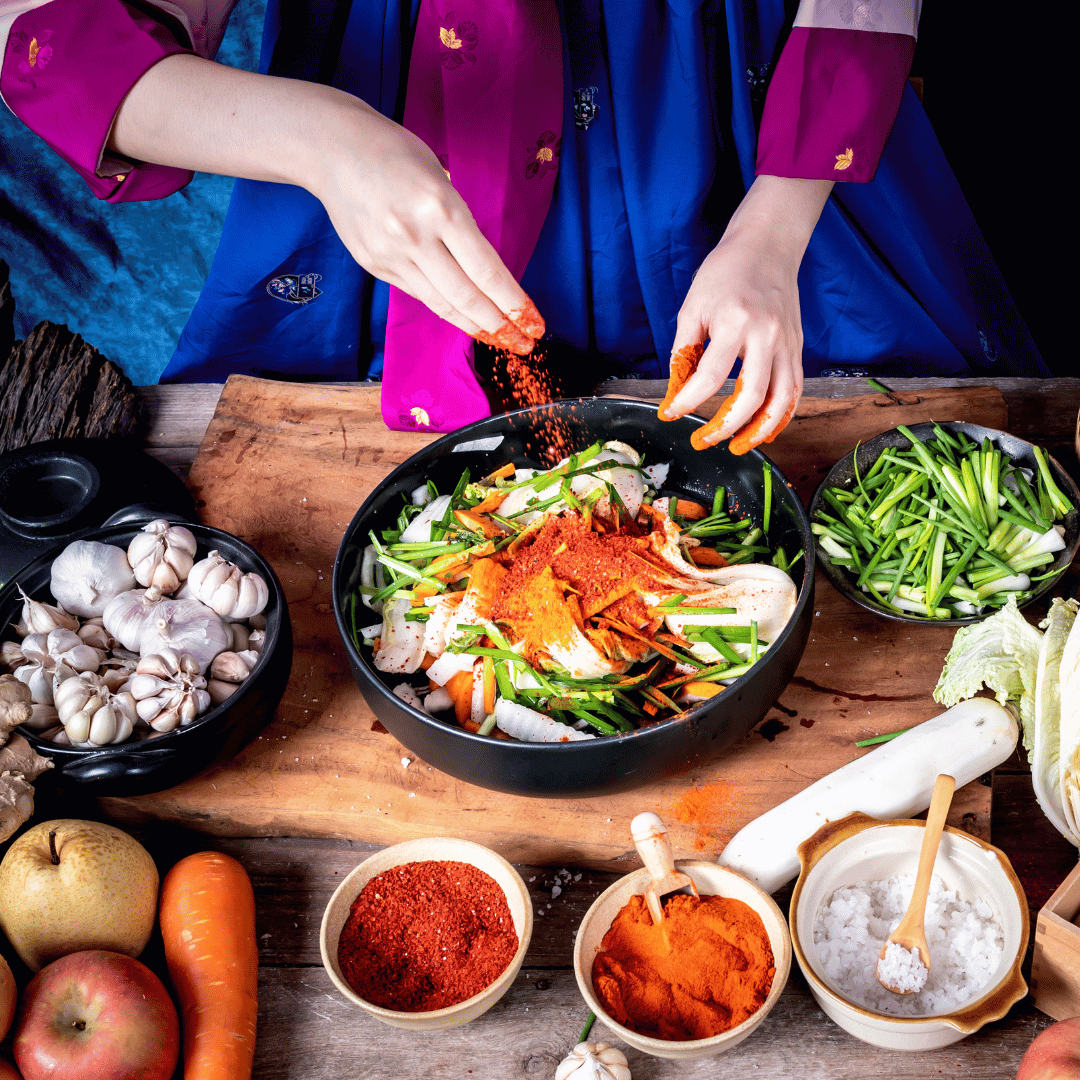
In the early evening, the group gathers for a hands-on South Korean cooking class. Working alongside local instructors, you prepare a selection of classic dishes before sharing the meal together as a welcome dinner. It is a relaxed and social introduction to South Korean food culture and a natural way for the group to come together.
🥘 Breakfast, Lunch & Dinner
🛏️ New Seoul HotelThe New Seoul Hotel is located near City Hall and Deoksugung Palace, placing you within walking distance of historic streets, government precincts and everyday dining spots frequented by locals. Rooms are practical and comfortable, well suited to group travel, and the surrounding area is well connected by public transport. Nearby cafés, bakeries and casual South Korean restaurants make it easy to step out between activities, while the central location keeps travel times efficient for the days ahead.
-
Today focuses on one of Seoul’s most significant historic structures, the Seoul Fortress Wall, originally constructed in 1396 to defend the city from invasion. Built along the ridgelines of the four mountains surrounding the historic centre, the wall stretches 18.6km in total and rises between 5 and 8m high. Walking along it offers wide views across the city while providing insight into how geography, defence and governance shaped Seoul’s development.
The walk today covers two distinct sections of the fortress trail. We begin with the Inwangsan section, a walk of around 4km known for its unusual granite rock formations and open views across central Seoul. From several points along the ridge, there are clear views toward the Blue House, the former South Korean presidential residence. At Changuimun Gate, the historical context sharpens. North Korea lies just 32km away, and this area was the route used during the 1968 infiltration attempt by North Korean Special Forces targeting the South Korean president.
After completing the Inwangsan section, we break for lunch before continuing onto the Baegaksan Trail. This second section covers approximately 5km, running from Changuimun Gate to Hyehwamun Gate and crossing Baegak Peak. In historic Seoul, Baegaksan was considered the city’s primary inner mountain according to geomantic theory, which guided the placement of palaces, walls and gates. Access to this area was restricted for around forty years following the 1968 raid and was only reopened to the public in 2007, adding an additional layer of modern political history to the walk.
Travel to and from the trail start and end points is by public transport, offering a practical insight into South Korea’s efficient and reliable urban transport system. After returning to the hotel in the late afternoon, the remainder of the day is free. The area around the hotel offers a wide choice of local restaurants, making it easy to choose dinner at your own pace.
🥘 Breakfast & Lunch
🛏️ New Seoul HotelThe New Seoul Hotel is located near City Hall and Deoksugung Palace, placing you within walking distance of historic streets, government precincts and everyday dining spots frequented by locals. Rooms are practical and comfortable, well suited to group travel, and the surrounding area is well connected by public transport. Nearby cafés, bakeries and casual South Korean restaurants make it easy to step out between activities, while the central location keeps travel times efficient for the days ahead.
-
Today combines long distance travel with some of South Korea’s most important historic sites. After breakfast, we depart the hotel by private vehicles and transfer to Seoul Station, where we board the KTX high-speed train to Gyeongju. The journey is comfortable and efficient at around 2 hours, allowing us to cross the country quickly and arrive with energy for a full afternoon of sightseeing.
On arrival in Gyeongju, the group is met by a private van. Gyeongju served as the capital of the Silla Kingdom for nearly 1,000 years and remains one of South Korea’s most significant cultural centres. The afternoon begins with visits to Bulguksa Temple and Seokguram Grotto, both UNESCO World Heritage sites. Bulguksa represents the height of Silla-era Buddhist architecture, while Seokguram offers a more intimate experience, with its stone Buddha and carefully engineered sanctuary providing insight into Buddhist philosophy and craftsmanship.
From the temple sites, we continue to the Gyeongju Historic Area, where royal tombs sit alongside East Asia’s oldest surviving astronomical observatory. These sites illustrate the scientific, spiritual and political sophistication of the Silla period and help place the earlier temple visits in a broader historical context.
Late in the day, we visit Hwangridan-gil, a lively district where traditional hanok-style buildings now house cafés, small restaurants and shops. There is free time here to explore and enjoy dinner at your own pace before regrouping for the evening transfer to Pohang Ferry Terminal. From here, we board the Ulleung Ferry for the overnight crossing to Ulleungdo.
🥘 Breakfast & Lunch
🛏️ Overnight Ferry to Ulleungdo
The ferry is well equipped with facilities including a cafe, bar and observation decks, and all group members are booked into private cabins with ensuite bathrooms. -
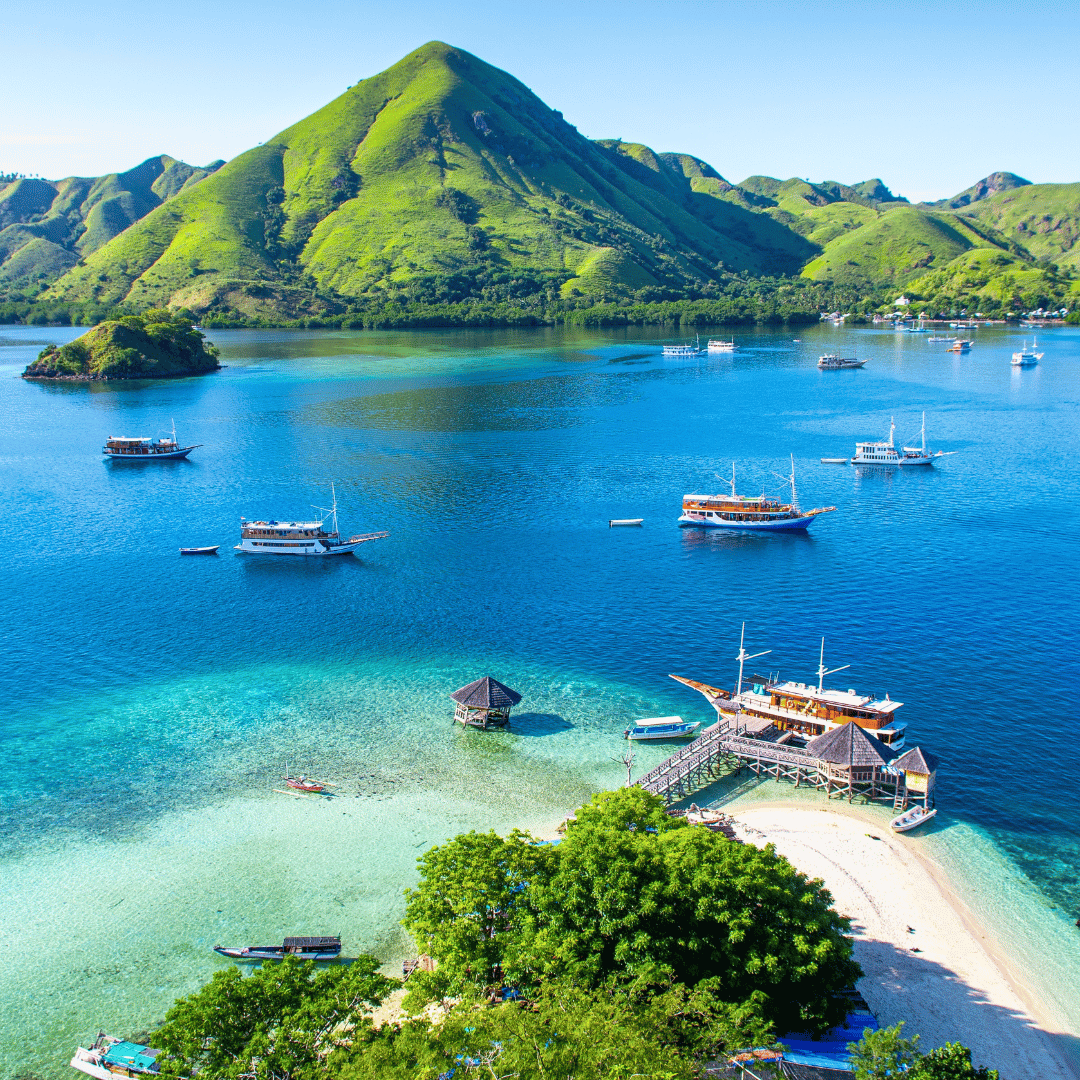
We arrive on Ulleung Island - or Ulleungdo in Korean - by overnight ferry at around 7:00am. Steep, forested slopes rise directly from the sea, and settlements are concentrated along narrow coastal strips, giving the island a compact, self contained feel shaped by isolation and weather. After disembarking, a short vehicle transfer brings us to Dodong, historically the island’s main town and port linking Ulleungdo with the mainland. This is the primary arrival point for ferries and a useful introduction to how the island functions day to day.
Breakfast is taken locally, with the option to try typical Ulleung dishes such as ojing-eo naejangtang, a rich squid soup made with offal and vegetables, or doenjang-jjigae, a fermented soybean stew often served with tofu and seasonal greens. More familiar South Korean breakfast options are also available.From Dodong, we begin the morning walk along the Haengnam coastal trail, which connects Dodong with Jeodong. This is a purpose built coastal walking route rather than a wilderness hike, making it a good introduction to walking conditions on Ulleungdo. The trail is mostly paved or formed as raised boardwalks, with safety railings in exposed sections. There are several staircases and short inclines, but gradients are generally moderate and footing is good throughout.
The route closely follows the eastern coastline, passing beneath volcanic cliffs formed by ancient lava flows and erosion. Along the way, the path skirts sea caves and small inlets, with frequent lookout points built into the trail so walkers can pause without blocking the route. Weather and sea conditions are very present here, giving a clear sense of the island’s exposed maritime setting, while fishermen are often seen working from rocky ledges below.
Near the northern end of the trail, we climb to Dodong Lighthouse. The ascent is short but involves stairs, and from the top there are wide views across the sea and back toward the island’s mountainous interior. A nearby viewing platform offers approximately 270-degree views and serves as a natural stopping point for orientation and photographs. From here, the final section follows a series of linked pedestrian bridges and coastal paths into Jeodong.
Jeodong is the largest town on Ulleungdo and serves as the island’s main service centre. Lunch is taken on arrival, typically at a local restaurant serving simple island fare, before the afternoon options begin. Guests may choose to check in to the hotel and rest, or continue on foot to Bongrae Waterfall. This optional walk involves a steeper ascent of approximately 3km through forested terrain, followed by a 3km descent back to town. While the track is well formed, it is noticeably more demanding than the morning coastal walk and includes sustained uphill sections.
The late afternoon is free to relax or explore Jeodong at a gentle pace. The town is compact and easy to navigate on foot, with small shops, cafés and local restaurants clustered near the harbour. Dinner is taken at a local restaurant in Jeodong, offering further opportunities to sample Ulleungdo’s seafood focused cuisine.
🥘 Breakfast, Lunch & Dinner
🛏️ Onyou HotelOnyou Hotel is located in Jeodong within easy walking distance of the harbour, coastal paths and dining options. Rooms are simple, clean and functional, providing a comfortable base for walking days on the island. Its central location makes it easy to move between accommodation, trailheads and evening meals without long transfers.
-
Today takes us inland, away from the coastline and into the volcanic heart of the island. After breakfast, we make a short vehicle transfer to the trailhead for the start of the walk. The destination is Nari Basin, a high altitude settlement located inside a volcanic caldera and one of the most distinctive landscapes on Ulleungdo.
Before reaching the basin itself, the route climbs steadily up the outer rim of the caldera. This ascent covers around 4km, gaining height gradually to approximately 850m. The track is well constructed, using a mix of coir matting, compacted earth and stair sections in steeper areas, making footing generally secure despite the sustained climb. The pace is steady, with time to pause and take in the changing forested landscape.
At the highest point of the walk, we reach Albong Peak. From here, views open out across the entire basin below, clearly showing the caldera’s bowl-like shape, ringed by ancient volcanic ridges. A light picnic lunch is taken at one of the viewpoints before beginning the descent.
The trail then drops into Nari Basin itself, a broad, flat farming plain that feels markedly different from the rugged coastline and headlands walked earlier in the trip. The basin is dotted with traditional homes, small fields and kitchen gardens, with crops and medicinal plants grown in the fertile volcanic soil. Stone walls, farm tracks and low fences divide the land, giving a clear sense of rural life continuing within a rare geological setting.
After time exploring the basin, the group heads for an early dinner featuring an extensive traditional bibimbap made from local vegetables, including the well known mountain garlic leaf grown on the island. Afterwards, we return to the accommodation by vehicle for a well earned rest.
🥘 Breakfast & Lunch
🛏️ Onyou HotelOnyou Hotel is located in Jeodong within easy walking distance of the harbour, coastal paths and dining options. Rooms are simple, clean and functional, providing a comfortable base for walking days on the island. Its central location makes it easy to move between accommodation, trailheads and evening meals without long transfers.
-
Today is a slower paced day that allows us to see more of Ulleungdo beyond the walking trails. Travelling by vehicle along the island’s circular coastal road, we explore the north and west coasts, with regular stops and short walks at viewpoints and cultural landmarks. This approach keeps distances manageable while still offering time on foot where it adds value.
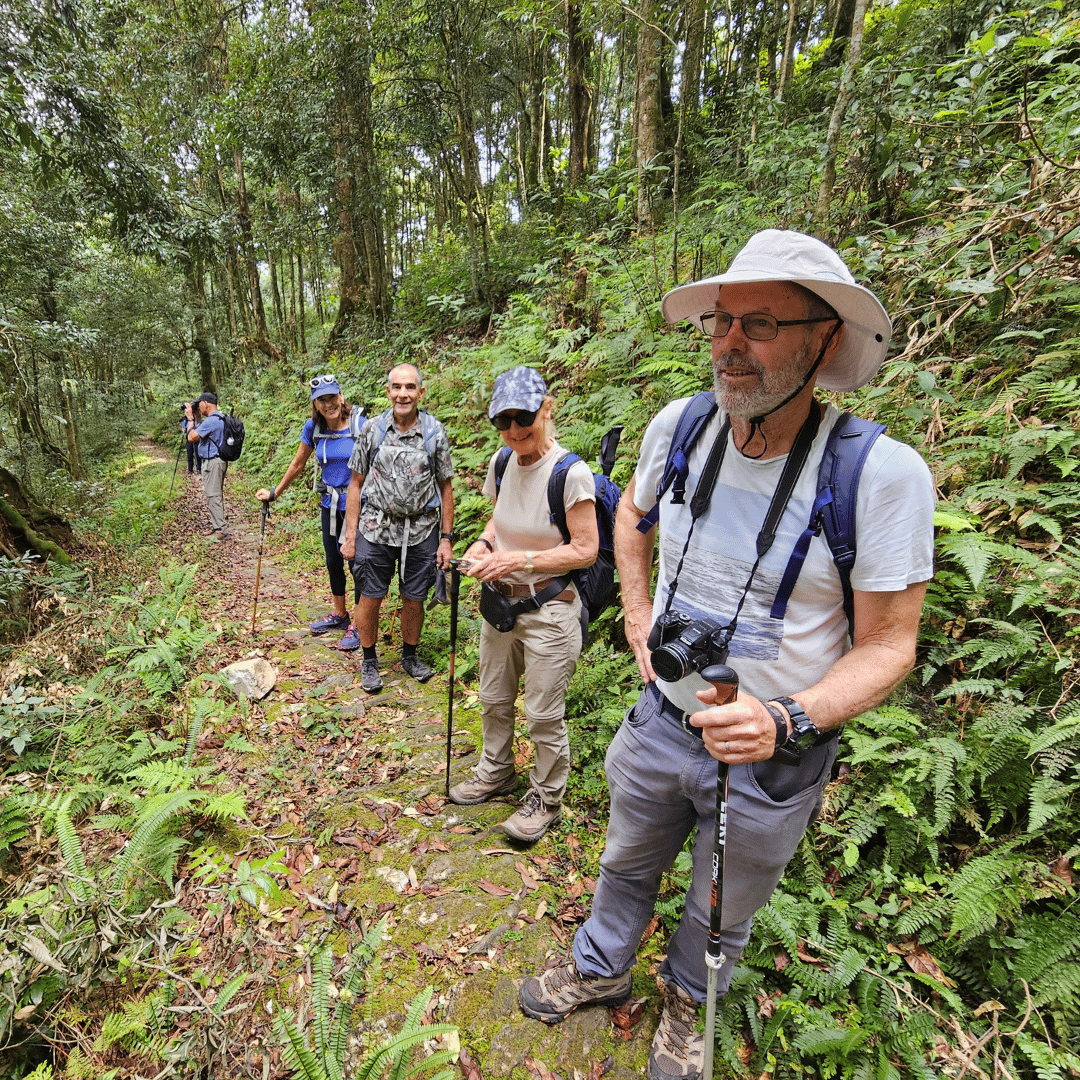
One of the first stops is Gwaneumdo Island, a small islet connected to Ulleungdo by a suspension bridge. The bridge is solid and well constructed, allowing safe access across to the islet. Gwaneumdo is ecologically significant, with dense stands of silver magnolia, camellia and silver grass that have been carefully preserved. Short walking paths allow us to explore the island and take in views back toward the main coastline.
Continuing along the north coast, we stop at Samseonam Hermitage for a photo opportunity. Here, a group of distinctive rock formations rises from the sea. According to local legend, the rocks represent three angels who descended to earth, and the site remains an important cultural and visual landmark along this stretch of coast.
On the west coast, we visit Hyangmok, where a monorail provides access up to Taeha Lighthouse. The ride offers views along steep coastal cliffs and down to the sea below. From the lighthouse, a gently descending walking path leads back down to the vehicles, giving time to enjoy the landscape without a strenuous climb.
Lunch today features a local island speciality, seaweed noodles served in a rich seafood broth, with alternative options available for those who prefer them. After lunch, we return to the accommodation by mid to late afternoon. The remainder of the day and evening is free to relax, explore Jeodong or enjoy dinner locally. Those interested may like to try Ulleung craft beer, brewed on the island, with the Hiking Pale Ale a popular choice.
🥘 Breakfast & Lunch
🛏️ Onyou HotelOnyou Hotel is located in Jeodong within easy walking distance of the harbour, coastal paths and dining options. Rooms are simple, clean and functional, providing a comfortable base for walking days on the island. Its central location makes it easy to move between accommodation, short excursions and evening meals without long transfers.
-
This morning we leave Ulleungdo by fast ferry, sailing back to the mainland and arriving in Gangneung. From here, we continue by vehicle to Sokcho, a compact coastal city set between the East Sea and the mountains of Seoraksan National Park. After several days on the island, the shift back to the mainland is noticeable, with broader roads, lakeside parks and an easy coastal rhythm.
In the afternoon, we walk a short and gentle section of the South Korean Haeparang Trail. This long distance trail runs for 750km along the East Sea coastline, linking coastal towns, fishing villages, forests and beaches from Busan in the south to the border region in the north. Today’s walk focuses on one small section only, chosen for its easy terrain and varied scenery.
The route follows the Yangyang to Sokcho section, beginning at Jangsa Port, a working fishing harbour that reflects the everyday maritime culture of the region. From here, the trail follows a mix of coastal paths and urban walkways before reaching Yeongnangho Lake. A full loop of the lake takes us along flat, well maintained paths through pine forest and open lakeside sections, with calm water and mountain backdrops creating a relaxed walking environment. The walk finishes close to the hotel.
After check-in, the remainder of the afternoon and evening is free. The hotel is well placed for exploring Sokcho on foot, with a wide choice of nearby restaurants offering local seafood and South Korean dishes.
Distance: 13km
Walking Time: 4-5 hours
Difficulty: Easy
Terrain: Coastal paths, paved walkways, lakeside trails🥘 Breakfast & Lunch
🛏️ Sea Cruise HotelSea Cruise Hotel is centrally located in Sokcho, close to Yeongnangho Lake, the waterfront and local dining areas. Rooms are modern and comfortable, and the location makes it easy to reach walking routes, markets and restaurants without long transfers, providing a convenient base for exploring the city and surrounding coastline.
-
Today is spent in Seoraksan National Park, one of South Korea’s most recognised mountain landscapes. Granite peaks, forested valleys and clear streams define the park, and the day is structured to give flexibility within the group. Three walking options are available, allowing each guest to choose an experience that suits their interests and energy levels. All options operate with local guides and within the same time window, rejoining at pre arranged meeting points.
OPTION 1 - Ulsanbawi Rock Trek (Intermediate)
This option is recommended for intermediate trekkers seeking a physically rewarding challenge. The route involves a steep ascent with long sections of stone stairs and sustained elevation gain. In return, it offers close views of Seoraksan’s dramatic granite formations and wide panoramas across the mountains and out toward the East Sea. This walk showcases the park’s rugged character and is often regarded as one of South Korea’s most memorable day hikes.
OPTION 2 - Biryong Falls Trail (Beginner / Relaxed)
This option suits those looking for a gentler walk. The trail follows a scenic valley route on well maintained paths with minimal elevation gain. Forested surroundings, flowing streams and a series of waterfall viewpoints create a nature focused experience, placing emphasis on scenery rather than physical challenge.
OPTION 3 - Seoraksan Cable Car & Scenic Rest
This option is ideal for guests preferring a lighter day or active recovery. The cable car provides access to elevated viewpoints with minimal walking required. From the upper station, there is time for short optional walks, expansive views across granite peaks and valleys, and space to rest, enjoy the scenery and recharge.
After returning to Sokcho, the late afternoon and evening are free to relax, explore the town or enjoy dinner at leisure.
🥘 Breakfast & Lunch
🛏️ Sea Cruise HotelSea Cruise Hotel is centrally located in Sokcho, close to Yeongnangho Lake, the waterfront and local dining areas. Rooms are modern and comfortable, and the location makes it easy to reach walking routes, markets and restaurants without long transfers, providing a convenient base for exploring the city and surrounding coastline.
-
Today shifts the focus from landscapes to recent history and rural life in South Korea’s north east. Travelling by private vehicle for roughly one hour, we head toward the eastern sector of the Demilitarized Zone, a region that offers important context for understanding the Korean Peninsula beyond what is visible in cities and national parks.
The morning visit is to the Goseong DMZ Unification Observatory. Rather than emphasising confrontation, the experience is framed around context and reflection. Interpretation focuses on the background to the Korean War, the armistice, the structure and purpose of the DMZ, and its unusual status as both a military buffer and an accidental nature reserve. From the observatory platform, there are views across the coastline and mountains of North Korea on clear days, along with visible border markers and military infrastructure that underline the reality of division.
After the observatory visit, we travel by vehicle for around 30 minutes to Wanggok Village in Goseong, Gangwon Province. Designated as a National Folkloric Cultural Heritage Site, Wanggok is a well preserved traditional village made up of hanok houses dating back to the Joseon dynasty. The village layout reflects historic rural life, with tiled roofs, courtyards and farming structures set within a quiet landscape of gentle hills and fields.
Staying overnight in Wanggok offers a rare opportunity to experience South Korean heritage in a lived setting rather than as a display. The pace slows noticeably here, with time to settle into the village, share a communal meal and experience a style of daily life that has changed little over generations.
🥘 Breakfast, Lunch & Dinner
🛏️ Traditional Hanok Accommodation, Wanggok VillageAccommodation in Wanggok Village is in traditional hanok houses, built using timber frames, clay walls and tiled roofs. Rooms are heated using ondol under floor heating, and sleeping is on futon style bedding laid out in communal or private rooms depending on the house. Facilities are simple but comfortable, and the experience offers insight into historic South Korean domestic life in a quiet rural setting.
-
Today is a long but comfortable travel day, moving south along South Korea’s east coast by rail. After breakfast, we board the Blue Coastal Train in Gangneung for the journey to Busan. The full journey takes approximately 5 to 6 hours, following the coastline for much of the way and offering extended views across the East Sea.
The Blue Coastal Train is designed for scenic travel rather than speed. Large windows, spacious seating and a relaxed pace make it a comfortable way to cover the distance, with the scenery changing gradually from fishing towns and quiet beaches to more developed coastal stretches. Travelling by train avoids road fatigue and provides a clear sense of the geography and scale of South Korea’s eastern seaboard.
Lunch is included during the journey, allowing time to settle in and enjoy the views without rushing. As the train approaches Busan, the landscape becomes increasingly urban, with ports, bridges and high-rise neighbourhoods signalling arrival in South Korea’s second largest city.
On arrival in Busan, we transfer by vehicle to Haeundae, the city’s best known beachside district. The contrast with earlier destinations is immediate, with a broad urban beach, busy promenades and a lively coastal atmosphere. After check-in, the remainder of the afternoon and evening is free to rest, take a walk along the beachfront, or explore the surrounding area at your own pace.
🥘 Breakfast & Lunch
🛏️ Toyoko Inn HaeundaeToyoko Inn Haeundae is located within easy walking distance of Haeundae Beach, local restaurants and public transport. Rooms are compact, clean and efficient, providing a comfortable base in one of Busan’s most active coastal districts. The location makes it easy to explore the beachfront, nearby cafés and evening dining options without long transfers.
-
Today is spent exploring Busan, South Korea’s second largest city and a place shaped by its role as a working port and refuge during the Korean War. Unlike Seoul, Busan avoided widespread destruction, and much of the city developed through necessity rather than planned reconstruction. This gives it a practical, layered feel, with neighbourhoods that reflect everyday life alongside religious, cultural and commercial sites.
The morning begins at Gamcheon Culture Village, a hillside settlement formed by refugees who arrived during the war and built homes along steep slopes above the harbour. Narrow lanes, staircases and tightly packed houses define the area. In recent years, the village has become known for community led art projects and small studios, but the underlying layout still reflects its origins as a place shaped by displacement and survival. Walking here offers insight into Busan’s social history as well as views across the port and city below.
From Gamcheon, we continue to Jagalchi Fish Market, South Korea’s largest seafood market and the centre of Busan’s fishing industry. This is a working market where the daily catch is unloaded, sold and prepared. Lunch is taken here, with seafood cooked simply and fresh. Nearby, we spend time in Nampodong, the city’s central commercial district, where busy streets are lined with shops, food stalls and cafés. There is free time to explore, sit with a coffee or browse for souvenirs.
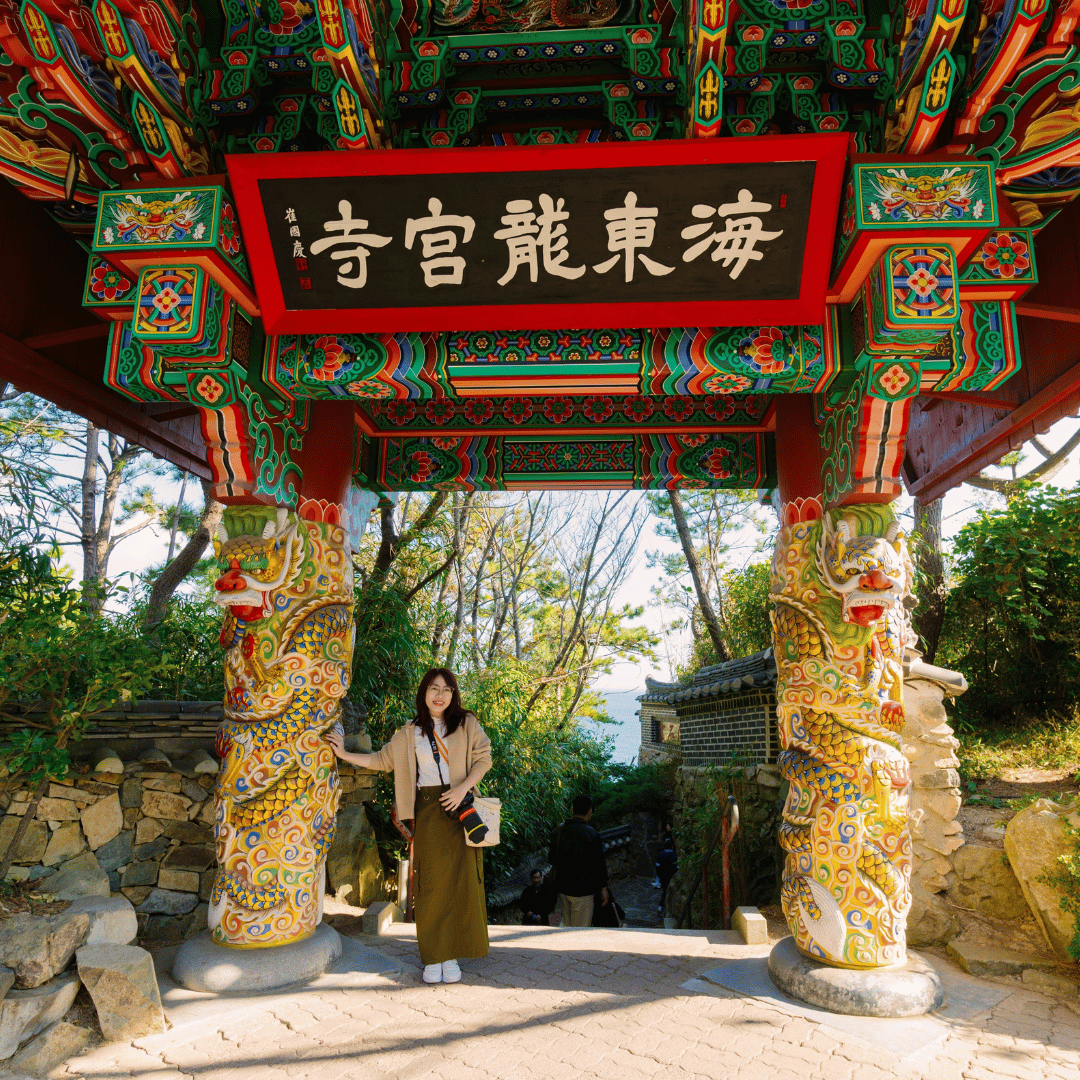
In the afternoon, we travel along the coast to Haedong Yonggungsa, a Buddhist temple set directly on the rocky shoreline. Unlike most South Korean temples, which are located inland or in mountain settings, this temple is defined by its relationship with the sea. Paths wind past shrines, statues and viewing platforms, with waves breaking below and open views along the coast. The visit provides a different perspective on religious practice shaped by Busan’s maritime environment.
After returning to the hotel, the group gathers in the evening for a final farewell dinner in Busan, bringing the journey to a close.
🥘 Breakfast, Lunch & Dinner
🛏️ Toyoko Inn HaeundaeToyoko Inn Haeundae is located close to Haeundae Beach, public transport and a wide range of local restaurants. Rooms are compact, clean and functional, providing a reliable base in one of Busan’s busiest districts, with easy access to the waterfront and evening dining.
-
This morning is free to enjoy a final walk along the beach or a relaxed breakfast near the hotel before departure. With no scheduled activities, there is time to pack, take in the coastal setting one last time, or step out for a short stroll in the neighbourhood.
Depart independently from Busan according to your onward travel plans. Some guests may choose to extend their stay with additional time in the city, add a visit to Jeju Island, or continue onward by overnight ferry to Fukuoka, Japan. Safe travels!
🥘 Breakfast
Special Interest Tours With Remarkable East
Remarkable East creates small group journeys designed for travellers who want depth, character and insight rather than crowded sightseeing. Each itinerary is shaped around culture, history, food and meaningful encounters, with a maximum of 12 guests and guides who know the region intimately. The pace is steady, the hotels are selected for comfort and location, and the experiences are planned to feel personal, not packaged.
Our tours run on set dates through the year across Japan, Vietnam, India and Sri Lanka, with additional one-off special interest departures offered for travellers seeking something more focused. Many guests return for a second or third journey with us as they value the balance of structure and flexibility, the quality of leadership and the ease of travelling in a small group. If you are considering a future trip and want to talk through your options, you’re welcome to book a call. We can walk you through destinations, dates and availability.
Meet Your Tour Guides
Lincoln is the founder of The Unbound Travel Group. When he can escape his desk, he travels on two wheels or on foot, cycling regularly in Japan and more recently, hiking in South Korea after falling in love with the country in 2025. These experiences shape how he designs, tests and hosts journeys.
Lincoln
Max is a South Korean outdoor guide who studied sports science after completing military service. Fuelled by a love of the outdoors, he has worked internationally as a cycling guide, ski instructor and snorkelling guide, and now leads cycling and trekking journeys that connect travellers with landscapes and daily life.
Max
South Korea Walking Tour Key Information
-
At Remarkable East, we believe small group touring should be just that: small.
As such, the group size will be capped at a maximum of 12 people, ensuring a more intimate and personalized experience.
This way, we’re able to get around with ease, utilise local transport and visit more off-the-beaten-track destinations. Our India walking tour is a great opportunity to connect with like-minded travellers, and you may even leave with lifelong friendships. -
To join us on this tour, the price is $7,150 AUD per person, twin share. With a maximum of 12 guests, standard inclusions are:
12 nights accommodation in a mix of well located city hotels, island accommodation and a traditional hanok village stay
All breakfasts, most lunches and several dinners as outlined in the itinerary, including a welcome dinner in Seoul and a farewell dinner in Busan
All internal transport throughout South Korea, including high speed KTX trains, private vehicles, ferries to and from Ulleungdo, the Blue Coastal Train and local transport where appropriate
Private transfers and ground transport for all included activities and walks
Tour led by Lincoln Harris and Max Kim, with local guides and escorts where required for walking days and cultural visits
Guided walking experiences in Seoul, Ulleungdo, Sokcho and Seoraksan National Park, with multiple walking options offered on more challenging days
All entrance fees to monuments, national parks, temples and cultural sites outlined in the itinerary
Korean cooking class and welcome dinner in Seoul
Overnight ferry crossing to Ulleungdo in private ensuite cabins
Island touring on Ulleungdo including coastal walks, volcanic landscapes and interior villages
DMZ Unification Observatory visit in Goseong
Overnight stay in a traditional hanok village at Wanggok
Snacks and bottled water during vehicle transfers and walking days
Arrival and departure airport transfers on the scheduled tour dates
All land, transport and vehicle taxes
Tips and gratuities for guides and drivers
South Korea visa requirements
Australian passport holders can enter South Korea visa free for short term tourism stays. At the time of writing, travellers are generally permitted visa free entry for up to 90 days for tourism purposes. Entry requirements can change, and some travellers may be required to complete an electronic travel authorisation or arrival form prior to departure.
Your passport must be valid for the required period beyond your stay, and you may be asked to show proof of onward travel, accommodation details or sufficient funds on arrival. Immigration formalities are typically efficient and straightforward.
It is the traveller’s responsibility to ensure they meet current entry requirements. We recommend checking the latest information through Smart Traveller or official South Korean immigration sources prior to departure. Any costs, delays or issues arising from incorrect documentation or expired passports remain the responsibility of the traveller.
-
The following expenses are not included in the tour price and should be budgeted for separately:
International airfares to and from South Korea
Meals not specified in the itinerary, including some dinners and lunches
Alcoholic and non alcoholic beverages
Optional activities, upgrades or excursions not outlined in the itinerary
Personal expenses such as laundry, phone usage and souvenirs
Travel insurance, which is strongly recommended
Any costs not explicitly stated in the tour inclusions
-
Absolutely. Solo travellers are very welcome on this tour. A single supplement of $1,510 AUD applies if you prefer your own room.
-
For the Trails Of Ulleungdo walking tour, the most important item to bring is a pair of comfortable, well broken in walking shoes or lightweight hiking boots with good grip. Many of the walks follow well maintained trails, boardwalks and stone paths, but there are also sections with stairs, forest tracks and uneven surfaces, particularly on Ulleungdo and in Seoraksan National Park. Avoid starting the trip with brand new footwear. A few pairs of breathable walking socks that you already know work well will make longer walking days far more comfortable.
Clothing should be suitable for warm early summer conditions, with the ability to layer. June in South Korea can be warm during the day, especially in cities and on the coast, while mornings, evenings and higher elevations can feel cooler. Light, breathable walking clothes are ideal, paired with a warm mid layer such as a fleece or light jacket for cooler conditions. Quick dry trousers or shorts work well, and a lightweight waterproof jacket is important in case of rain. A compact umbrella can also be useful, particularly in urban areas.
A small, comfortable daypack is essential for carrying water, sunscreen, snacks, a camera and personal items during walks. Sun protection is important, so bring a hat or cap, sunglasses and sunscreen. A reusable water bottle is recommended and refill opportunities are frequent throughout the trip.
Walking poles can be helpful for balance on stair heavy sections and longer descents, particularly in Seoraksan, but they are optional rather than essential. It is also worth packing a few personal comfort items such as blister plasters, basic first aid supplies, hand sanitiser, tissues and any medication you require. Finally, bring comfortable clothes for evenings, especially for the hanok village stay and island accommodation, where the pace slows and comfort matters.
-
The walking routes on the Trails Of Ulleungdo tour are varied, scenic and carefully paced to build comfort and confidence as the journey unfolds. Across the itinerary, walks range from gentle coastal and lakeside paths to more sustained ascents in volcanic and mountain landscapes. Typical walking days fall between 8 and 13 kilometres, with time on the trail usually spread across 4 to 5 hours, including breaks.
Early walks in Seoul and Sokcho are designed as gentle introductions, following well maintained urban paths, historic trails and flat lakeside circuits. On Ulleungdo, the terrain becomes more distinctive. Coastal routes follow paved paths, boardwalks and stair sections carved into volcanic cliffs, while inland walks involve forest tracks, stepped ascents and steady climbs into the island’s caldera and high points such as Albong Peak. In Seoraksan National Park, walkers can choose from different route options, ranging from relaxed valley walks to more demanding stair heavy ascents, allowing the day to be tailored to individual energy levels.
You do not need to be an experienced or technical hiker to join this tour, but a reasonable level of fitness and confidence on uneven terrain is important. You should be comfortable walking for several hours at a steady pace, carrying a daypack, and managing repeated ascents and descents, often on stone steps or natural trails. Some days feel more demanding than the distances alone suggest, particularly where stair sections or elevation gain are involved.
If you walk regularly at home and are comfortable with bush tracks, coastal paths or hilly terrain, you will be well prepared. The pace throughout the tour is relaxed, with regular breaks, flexible route options and strong guide support. The focus is on enjoyment, landscape and cultural context rather than speed or endurance, and having a solid base level of fitness will allow you to get the most from the experience.
-
There are no special luggage restrictions on the Trails Of Ulleungdo tour, and you won’t be carrying your main luggage on any of the walks. Your suitcase remains at each hotel or accommodation for the duration of that stay, and all walks are supported by vehicle transfers, so you only need to carry a small daypack while walking.
The main consideration to keep in mind is luggage handling on ferries and trains. The overnight ferry to and from Ulleungdo, as well as train travel including the KTX and Blue Coastal Train, involves managing your own luggage for short distances through terminals and platforms. While there is no strict weight limit enforced in the same way as domestic flights, we strongly recommend packing a manageable suitcase or duffel that you can comfortably lift and move independently.
Aside from this, standard airline luggage allowances apply for your international flights to and from South Korea, and there are no additional internal flight restrictions on this itinerary. Travelling light will make ferry and train transfers easier, but there is no need to pack minimally, as vehicle support and hotel stays are in place throughout the journey.
-
Tipping is not customary in South Korea and is generally not expected in restaurants, hotels, taxis or on guided tours. Service charges are usually included in prices, and staff do not rely on tips as part of their income.
On this tour, tips and gratuities for guides and drivers are already included in the tour price, so you do not need to budget for additional tipping during the trip.
If you receive exceptional service and choose to offer a small personal gesture of thanks, it will be appreciated but should always be discreet and never expected.
-
Yes. We are very happy to assist with pre and post tour accommodation, additional nights or tailored arrangements before or after the Trails Of Ulleungdo tour.
If you would like to arrive early in Seoul, extend your time in Busan, or add another destination such as Jeju Island or a short extension into Japan, our team can help design these additions. Through Asia Unbound, we specialise in privately arranged, customised travel across Asia, allowing us to build seamless extensions that suit your interests, pace and travel style.
We can also assist with optional activities, private guides, additional walks, cultural experiences or upgrades to accommodation where available. All arrangements are handled with the same level of care and detail as the main tour, ensuring a smooth and well considered extension to your journey.
Just let us know what you have in mind, and we will take care of the planning.
-
It’s as easy as getting in touch with us via [email protected] - we like to chat with our guests before making a reservation to ensure this is the right trip for them.
-
To make a booking, we simply require a deposit of $750 AUD with the balance due 60 days prior to travel. Full payment is due at the time of booking for departures within 60 days. Please contact us for more information.