
How To Spend A Day On Cat Ba Island
Most travellers see Halong Bay from the deck of an overnight cruise and leave thinking they have seen the region, but they have seen a fraction of it. The archipelago stretches far beyond the boats that leave Halong City, and its southern edge holds something quite different: an island big enough to walk across, with a national park at its centre and a fishing town on its harbour.
Cat Ba is the largest island in the bay and the only one with a permanent community. Roughly half of it is protected as Cat Ba National Park, a UNESCO biosphere reserve that shelters the critically endangered Cat Ba langur, along with forests, limestone peaks and a long coastline of small coves. The waters immediately offshore form Lan Ha Bay, a quieter extension of the same karst landscape that most cruise itineraries never reach.
A proper visit takes two or three nights, though a single day planned well is enough to understand why the island sits apart from the rest of the bay. The difference lies in knowing where to spend each hour.
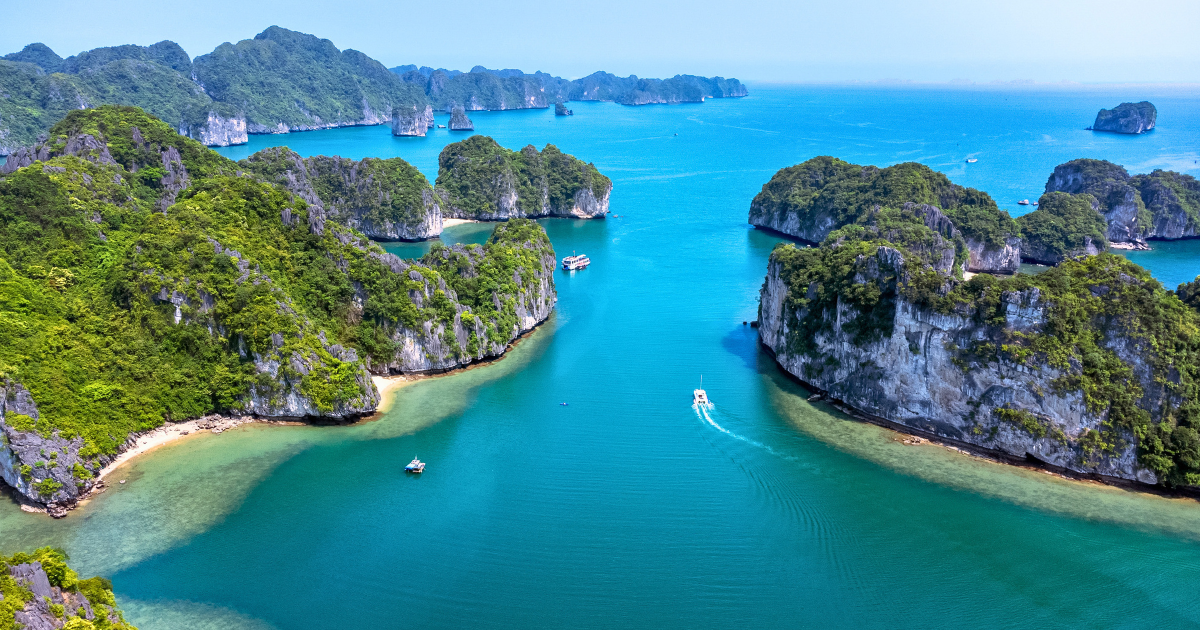
The karst landscape around Cat Ba stretches well beyond the standard Halong Bay cruise routes.
What is Cat Ba Island known for?
Cat Ba is best known as the home of one of the most successful primate conservation stories in Southeast Asia. The Cat Ba langur lives on this island and nowhere else, and careful work by Vietnamese park staff in partnership with the Frankfurt Zoological Society has lifted the population from around 40 animals in 2003 to roughly 80 today.
The island is also the main base for Lan Ha Bay, the southern section of the karst archipelago, and most of the region's climbing routes and independent kayaking operators work from its harbour. Hundreds of bolted climbing routes line the limestone cliffs here, cycling trails loop through the national park interior, and kayaking in the quieter lagoons has become one of the signature experiences of the region.
Cat Ba Town itself has also grown into a relaxed harbour community where fishing boats still come in each morning and the seafront fills with families and travellers in the late afternoon. Few places in Vietnam combine protected wilderness, a working local community and this range of outdoor activity within such a small area.
How do you get to Cat Ba Island?
Cat Ba sits off the coast of Haiphong, around 150 kilometres east of Hanoi, and the trip out to the island is a genuine part of the journey. Every route involves at least one water crossing, with the final stretch easing into the karst landscape of the bay itself. The approach sets the tone for the day ahead.
Most travellers come from Hanoi, though the island is also easy to reach from Halong City, Haiphong and Ninh Binh. The best route depends on how much time you have, how much luggage you are carrying, and whether you want the trip to feel leisurely or quick.
How to get to Cat Ba Island from Hanoi?
The standard route from Hanoi takes around three to three and a half hours door to door, and the whole journey can be booked as a single ticket. Operators such as Cat Ba Express and Daiichi Travel handle the three legs together, collecting travellers from the Old Quarter, driving to Got Pier on the Haiphong coast, crossing to Cai Vieng by ferry, and continuing by minibus into Cat Ba Town.
Departures run several times each morning, with the earliest leaving Hanoi around 7:30am. A day's notice is usually enough to secure a seat, though summer weekends book up faster and early reservations are worth making.
What is the fastest way to get to Cat Ba Island?
The fastest option is the limousine van and speedboat combination, which covers the same route in around two and a half hours. These services use comfortable nine-seat vans for the road transfer and a speedboat instead of the car ferry, which shortens the water crossing to under fifteen minutes. The fare is roughly double the standard shuttle, and the time saved translates into an extra hour on the island itself.
Travellers already in Halong City have an even quicker option. A direct speedboat crosses to Cat Ba in around 45 minutes and arrives at Ben Beo Pier, a few minutes from the centre of town. This route suits anyone combining Cat Ba with a Halong-based cruise and wanting a seamless transition between the two.
Is it better to take the bus or ferry to Cat Ba?
The bus and the ferry are two parts of the same journey rather than two alternatives. The bus covers the road leg from Hanoi to either Got Pier or Tuan Chau on the coast, and the ferry or speedboat handles the final water crossing onto the island.
The real choice is between the standard car ferry via Got Pier and the speedboat via Ben Beo. The car ferry is more affordable, runs frequently throughout the day, and offers a slower introduction to the bay. The speedboat is quicker, more comfortable, and lands closer to town.
For a single day on the island, the speedboat wins on time and makes the most of daylight hours. For travellers with a longer stay, the car ferry is a pleasant way to arrive, with open-deck views of the archipelago building as the island comes into sight.

Boats are central to reaching and exploring Cat Ba Island, with multiple ferry and speedboat routes in operation.
What are the best things to do in Cat Ba in one day?
A single day on Cat Ba works best when it follows the rhythm of the island itself. Mornings are the quietest time in town, midday belongs to the park and the forest, and the late afternoon is when the light softens over the bay and the beaches come into their own. The route below moves through the island in that order, with the town as a starting point and the coast as the close.
Start the morning in Cat Ba Town
The harbour is the best place to begin, when the fishing boats are still unloading and the seafront cafés are opening for breakfast. A short walk along the waterfront gives a clear sense of how the town works, with the market on one side and the bay on the other. Small family-run places serve pho, banh cuon and fresh coffee, and the cooler morning air makes this the right time to be on foot.
Cat Ba Town is a working harbour community rather than a resort strip, and the morning is when that character is most visible. The central market behind the seafront is worth a look before it gets busy, with vendors selling the morning catch alongside vegetables, herbs and the dried seafood the island is known for. A morning coffee, looking across to the karst islands offshore, sets up the day well before heading north to the park.
Trek inside Cat Ba National Park
The park entrance is around 15 kilometres north of town, and the drive takes about 25 minutes by taxi or scooter. The main trail heads up to Ngu Lam Peak, the highest point in the park, and takes around 90 minutes return at a comfortable pace. The climb passes through Kim Giao forest, named after the rare conifer that grows here, and ends at a viewing tower with a long look across the island's interior.
Longer walks are available for travellers with more time, including the traditional route to Viet Hai village on the eastern side of the park. For a single-day visit, the Ngu Lam walk gives the clearest sense of the park's forest character without taking up the whole middle of the day.
Take a short boat trip into Lan Ha Bay
The afternoon belongs to the water. Small boats leave from Ben Beo Pier on the eastern side of town, and a half-day trip into Lan Ha Bay covers the closest and most scenic sections of the karst. Typical routes pass Cai Beo floating village, one of the oldest fishing communities in Vietnam, and continue through quieter stretches where kayaks can be launched into sheltered lagoons.
Most trips include a swim stop in a sheltered cove, where the water is calm and clear and the limestone walls rise directly from the surface on both sides. A local guide who knows the bay well will choose stops that larger itineraries tend to skip, and that knowledge makes a real difference to what the day covers. Most half-day trips return to Ben Beo by early afternoon, leaving the rest of the day free on land.
Swim at Cat Co Beach in the afternoon
The three Cat Co beaches sit in sheltered coves a short walk from town, connected by a coastal path cut into the cliffs. Cat Co 1 is the largest and has the most facilities, Cat Co 2 is the quietest and most scenic, and Cat Co 3 sits in a deeper cove and suits families with children. All three face directly out to the bay, with the karst islands visible offshore and the water calm enough for easy swimming through most of the year.
Mid-afternoon is the right time to arrive, with the park and the boat trip behind you and the beach at its warmest. The coastal path linking all three is worth walking before settling on a spot, as the headland sections offer some of the better views of the day. Beach vendors sell cold drinks and light food, and the pace here drops considerably from the morning's activity.
Climb to Cannon Fort for the view
From Cat Co, the walk up to Cannon Fort takes around 20 minutes, with scooter taxis available for the climb. The fort is a short loop of preserved positions and lookout points opening onto views across Lan Ha Bay and the harbour below. Late afternoon is the best time to arrive, with the light falling across the water and the limestone islands turning gold as the sun drops, and the harbour below fills with the returning boats of the day.
The site covers in under an hour, and the walk back down into town leads directly to the seafront restaurants where the evening's seafood is already on display. It is a good way to end a day that has covered most of what the island does best.
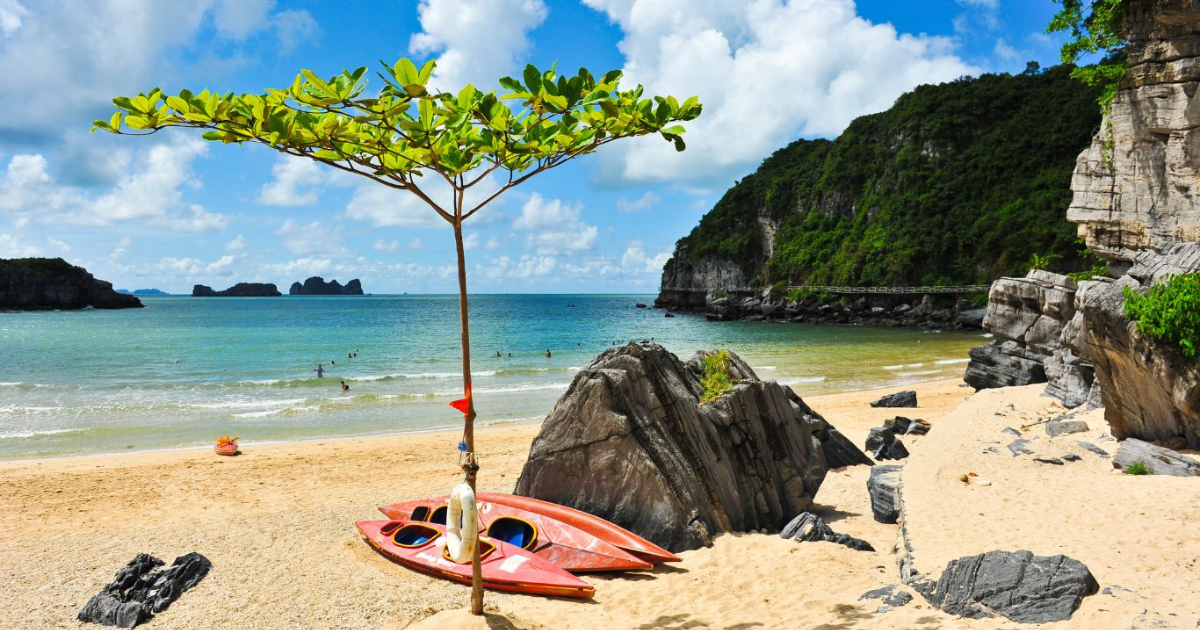
Cat Ba's beaches are sheltered by limestone headlands, with kayaks available to explore the calmer waters offshore.
Is Cat Ba better than Halong Bay?
The comparison comes up often, but it is not quite the right question. Halong Bay and Cat Ba offer different things, and the better choice depends on what a traveller is looking for rather than which destination wins on paper.
Halong Bay is best experienced from the water. The classic overnight cruise from Halong City moves through the densest concentration of karst formations in the region, covering caves, floating villages and open bay in a single itinerary. For first-time visitors to northern Vietnam it remains the most direct way to see the limestone seascape the region is known for.
Cat Ba offers something alongside that experience rather than in competition with it. The island gives travellers a land base from which to move between forest, town and water at their own pace, and the national park, the harbour community and the beaches add a depth that rewards those who want more than scenery alone.
Lan Ha Bay vs Halong Bay
Halong Bay is a cruise experience at its best. Travelers board in Halong City, move through one of the most dramatic karst landscapes in the world, and spend the night anchored among the islands as the bay settles into silence. The caves, floating villages and open water that most itineraries cover give a genuine sense of what makes the region remarkable, and the overnight format suits the scale of it beautifully.
Lan Ha Bay, accessed from Cat Ba, brings the same limestone architecture closer. The boats are smaller, the routes more personal, and the stops more varied. A typical half-day covers a floating village, a lagoon narrow enough to kayak through single file, a beach tucked between two limestone walls, and a swim in water clear enough to see the coral below. With 139 sandy beaches spread across the bay, there is always a quiet cove to find and a stretch of water to have almost entirely to yourself.
The two bays suit different kinds of days. Halong rewards those who want to sit back and let the landscape unfold from the deck of a well-run cruise. Lan Ha rewards those who want to move through it, get into the water and finish the afternoon on a beach before heading back to Cat Ba Town for dinner.
What to know before visiting Cat Ba Island
A little preparation makes the day run considerably more smoothly on Cat Ba. The island is straightforward to navigate, but the right timing, the right footwear and a basic sense of how to get around make the difference between a day that flows and one that loses hours to logistics.
When is the best time to visit Cat Ba?
The best months to visit are March to May and September to November, when the weather is mild, the skies are clear and the bay is calm enough for comfortable boat trips. These shoulder periods also see fewer visitors than the peak summer months, which means quieter trails in the national park and more space on the water.
July and August bring warmer temperatures and longer days, and the island is at its most lively during this period. Seas can be rougher and accommodation books up quickly, so planning ahead is worthwhile. December to February is cooler and quieter, better suited to walking and exploring the town than swimming, though the misty light over the bay in winter has its own appeal.
What to pack for a day on Cat Ba?
The day covers a reasonable amount of ground, from forest trails to boat decks to beach, so packing light but packing well makes a difference. Sturdy walking shoes with grip are essential for the national park, where the limestone trails can be slippery. A change of clothes and a small dry bag are useful for the boat trip and the beach section of the afternoon.
Sun protection is worth taking seriously, particularly on the water where the reflection amplifies the intensity. A light rain layer is useful in the shoulder months, and a refillable water bottle covers the park section comfortably. Most essentials are available in Cat Ba Town if anything is forgotten.
How do you get around Cat Ba Island?
Cat Ba Town is compact and easy to cover on foot, with the harbour, the market and the beach access all within a short walk of each other. For the national park and Cannon Fort, taxis are readily available from the seafront and can be arranged through most accommodations. Scooter rental is a popular option for independent travellers who want more flexibility over timing, with rates starting at around $12AUD per day.
A private car or minibus arranged through a local guide or tour operator is the most comfortable option for a full day itinerary, particularly when the route covers the park, the pier and the fort in sequence. For a group of travellers, it also works out to a similar cost to individual taxis and saves the time spent finding transport between each stop.

Cycling routes loop through Cat Ba National Park, offering an unhurried way to explore the island's interior and coastline.
Visiting Cat Ba Island with Remarkable East
Cat Ba is one of northern Vietnam's most satisfying island destinations, and a day spent here tends to exceed expectations at every turn. The morning light over the harbour, the forest trails of the national park, the limestone walls of Lan Ha Bay and the last of the sun from Cannon Fort make for a day that stays with travellers long after they leave. Cat Ba destination that makes a small group tour in Vietnam worthwhile.
Remarkable East designs small group journeys through Vietnam for no more than 12 guests at a time, with expert local guides who bring that kind of depth to every stop on the route. For those ready to explore northern Vietnam in depth, contact us to talk through itinerary options.