
The Best Time To Visit Japan By Season
Japan stretches across more than 3,000km of ocean, reaching from the subarctic forests of Hokkaido in the north to the subtropical islands of Okinawa in the south. This geographic range produces four genuinely distinct seasons, each one defining the country in a different way. The landscape, the cultural calendar and the rhythm of daily life all shift noticeably as the year moves through them.
Because the seasons differ so sharply, there is no single best time to visit Japan. The right season depends on what the traveller most wants to see and do, and on the regions they plan to include. Each season opens up parts of the country and quietens others, which is why travellers familiar with Japan often return at different times of year.
For a country this layered, the season chosen matters almost as much as the route itself. Knowing when to go to Japan, and what each season gives or takes away, makes planning a journey far easier.
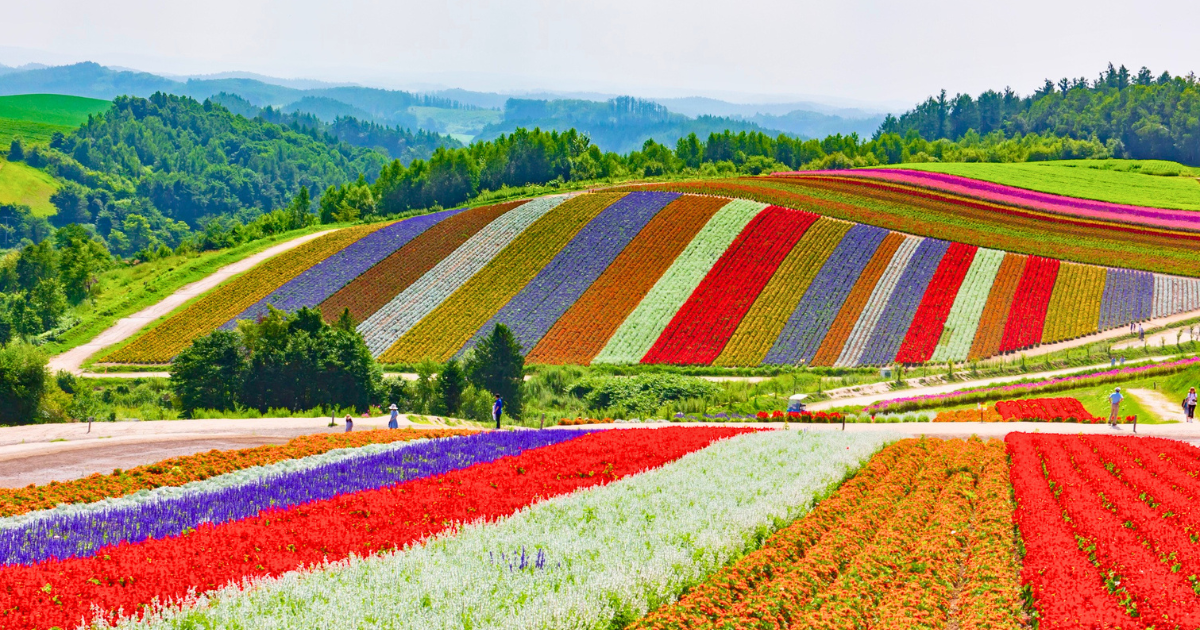
Hokkaido's flower fields, including those at Shikisai-no-Oka and Tomita Farm, bloom through July and August and draw visitors looking for cooler summer weather.
Why does the time of year matter in Japan?
Japan's seasons are tied directly to what is open, what is in bloom, what is being celebrated, and how the country moves day to day. The cultural calendar is built around specific weather windows that have been observed for centuries.
Cherry blossom season in late March and early April is the clearest example. The bloom lasts only a week or two in any given location, and the entire country organises around it. Autumn colour, known as koyo, works the same way in reverse, moving south through the country from late September to early December. Summer brings the matsuri season, when towns and cities hold festivals tied to local shrines and harvests. Winter has its own calendar of snow festivals in the north and the quiet of hatsumode, which is the new year shrine visit that begins the Japanese calendar.
The seasons also change what is physically accessible. Mountain passes in the Japanese Alps and parts of Hokkaido close due to heavy snow. Highland regions that are too hot to enjoy in summer come into their own in autumn. Coastal areas in the south stay mild through winter, when the historic cities of central Japan are at their quietest.
Spring in Japan (March to May)
Spring is the most popular season to visit Japan, and the reason is well known. Cherry blossom season draws travellers from across the world, and the cultural weight given to the bloom is genuine rather than manufactured for tourism. Beyond the sakura, spring also brings mild weather, long daylight hours and a country that feels collectively in a good mood.
What is the weather like in Japan in spring?
Spring weather varies considerably across the country. March is still cool in most regions, with daytime temperatures in Tokyo and Kyoto sitting around 10 to 15 degrees and colder mornings. April warms quickly, with averages climbing to 18 or 20 degrees by the end of the month. May is the most settled month of the season, with daytime temperatures around 22 to 25 degrees in central Japan and clear skies more often than not.
The north and the highlands run cooler. Hokkaido stays cold well into April, and the cherry blossoms in Sapporo and Hakodate do not appear until early May. The far south, including Okinawa and Kyushu, is already warm by March and sees its sakura in late January and February.
Rain is light through most of spring, though April can bring brief showers. The wet season proper does not begin until early June.
How busy is Japan in spring?
Spring is the busiest international travel season in Japan, and the cherry blossom weeks in late March and early April are the peak. Hotels in Kyoto, Tokyo and the popular sakura towns tend to book out months in advance, and prices rise noticeably. Domestic travel adds to this, as Japanese families and workplaces often schedule their own hanami gatherings around the bloom.
Golden Week, which runs from late April to early May, is the second peak. Four national holidays fall within a single week, and much of the country is on the move at the same time. Trains, hotels and the major sights see their busiest days of the year, and many smaller restaurants and shops close for the holiday period.
There are more relaxed windows within spring. Mid to late March, before the bloom reaches central Japan, and the second half of May, once Golden Week has passed, both offer good weather and easier access to better accommodation.
What else is worth seeing in Japan during spring?
The sakura draws most of the attention, but spring in Japan offers plenty more for travellers happy to look beyond the bloom. The season opens with plum blossoms, or ume, in February and early March. The plum trees flower a month or two ahead of the cherries, and gardens such as Kairakuen in Mito and Kitano Tenmangu in Kyoto have their own loyal following.
Spring is also a strong season for festivals. Takayama Matsuri in mid April is one of the most loved in the country, with beautifully carved wooden floats paraded through the old town of the Hida region. Sanja Matsuri in Tokyo follows in mid May, bringing more than a million people to the streets around Asakusa over a single weekend. Smaller regional festivals run throughout the season, many of them tied to rice planting and local shrines, and they offer a warm window into community life.
The flowering carries on long after the cherry blossoms fade. Wisteria comes into bloom in late April and early May, with Ashikaga Flower Park in Tochigi and Kawachi Fuji Gardens in Fukuoka among the more memorable places to see it. Azaleas follow soon after, filling temple grounds and hillsides through May. For travellers visiting in the second half of the season, these later blooms offer a calmer alternative to the busy sakura weeks.
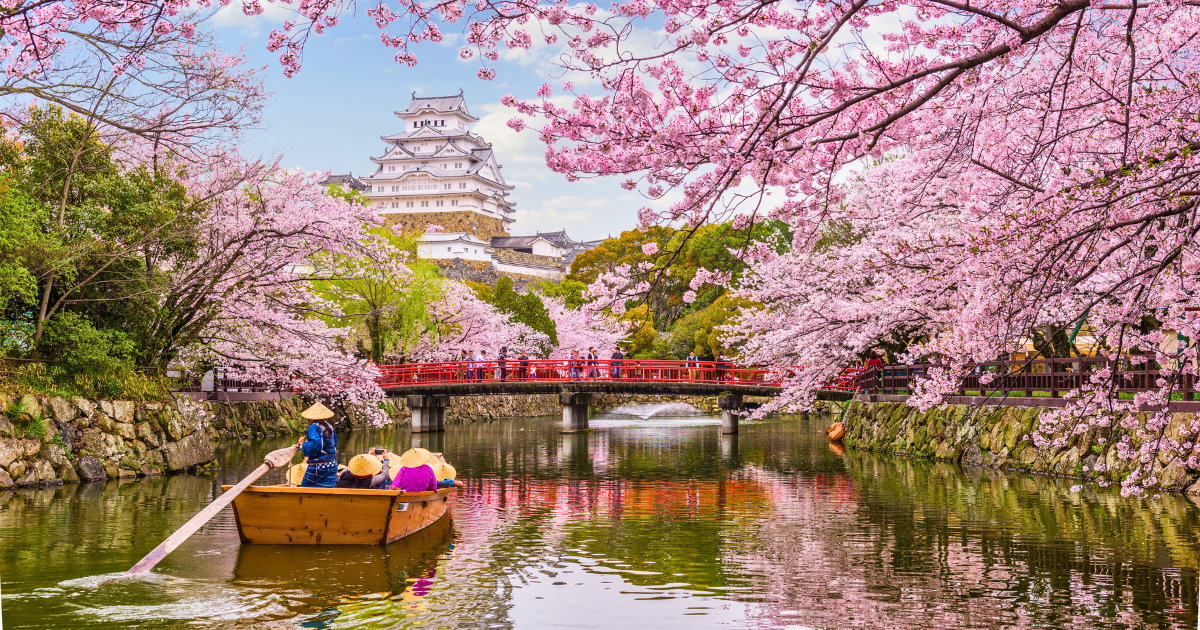
Himeji Castle is one of twelve original castles still standing in Japan and a popular regional alternative to the busier sakura spots in Kyoto and Tokyo.
Summer in Japan (June to August)
Summer is one of the more underrated seasons to visit Japan, particularly for travellers who have already seen the country in spring or autumn. The heat builds quickly and the season opens with several weeks of rain. Even so, summer brings the richest festival calendar of the year and the chance to escape into the highlands and the north when the lowlands get too warm. Temples and gardens that are crowded in spring tend to be far quieter, and the country takes on a slower, more local rhythm.
How hot does Japan get in summer?
Summer heat in Japan builds gradually through June and peaks in late July and August. Tokyo, Kyoto and Osaka regularly sit between 30 and 35 degrees during the day, with humidity that makes the temperature feel higher again. Evenings stay warm, often holding above 25 degrees well into the night. Kyoto in particular is known for its summer heat, as the city sits in a basin that traps the warmth.
The first half of June brings tsuyu, the rainy season, which lasts roughly three to four weeks across most of the country. Showers tend to be steady rather than dramatic, and there are still plenty of clear days within the period. Hokkaido is the exception and largely skips the rainy season, which makes it a popular choice for travellers in late June and early July.
For those wanting to avoid the worst of the heat, the highlands of Nagano, the Japanese Alps and Tohoku stay noticeably cooler. Daytime temperatures in places like Kamikochi, Karuizawa and Hakuba sit closer to 22 to 26 degrees through summer, and the evenings are pleasantly cool. Hokkaido is cooler again, with Sapporo averaging in the mid 20s through July and August.
What summer festivals are worth timing a Japan trip around?
Summer is the heart of the matsuri calendar, with festivals running across the country from late June through August. The festivals are tied to local shrines, harvests and seasonal traditions, and they remain genuinely community events rather than tourist performances.
Gion Matsuri in Kyoto is the most famous of them. The festival runs through the whole of July, with the main float processions on 17 July and 24 July. Towering wooden floats called yamaboko are pulled through the streets of central Kyoto by teams of locals, and the evenings leading up to the processions see the old machiya neighbourhoods open their doors to the public. The festival has run in some form since the ninth century.
Tenjin Matsuri in Osaka follows on 24 and 25 July, with a river procession of boats lit by lanterns and a fireworks display over the Okawa River. Nebuta Matsuri in Aomori in early August fills the streets of the northern city with enormous illuminated paper floats, and the Awa Odori dance festival in Tokushima draws more than a million people to Shikoku in mid August. Smaller fireworks festivals, known as hanabi taikai, run almost every weekend through July and August in towns and cities across the country.
Are there many tourists in Japan during summer?
Summer is one of the quieter seasons for international travel to Japan, particularly through July and August. The heat puts off many travellers, which means the major sights in Kyoto, Tokyo and Nara are noticeably less crowded than in spring or autumn. Hotels are easier to book and prices are softer outside the festival weeks.
Domestic travel does pick up during Obon in mid August. Obon is a Buddhist observance honouring family ancestors, and many Japanese return to their hometowns for the period. Trains and domestic flights book out, and the major cities can feel a little quieter as residents leave. The festival itself is a wonderful time to be in regional Japan, as towns hold Bon Odori dances and lantern ceremonies.
The festival weeks themselves are the busiest summer windows. Accommodation in Kyoto fills up around Gion Matsuri, and Aomori is fully booked during Nebuta. Outside these specific dates, summer remains one of the easier seasons to travel through Japan and one of the better seasons for those who prefer quieter temples and gardens.
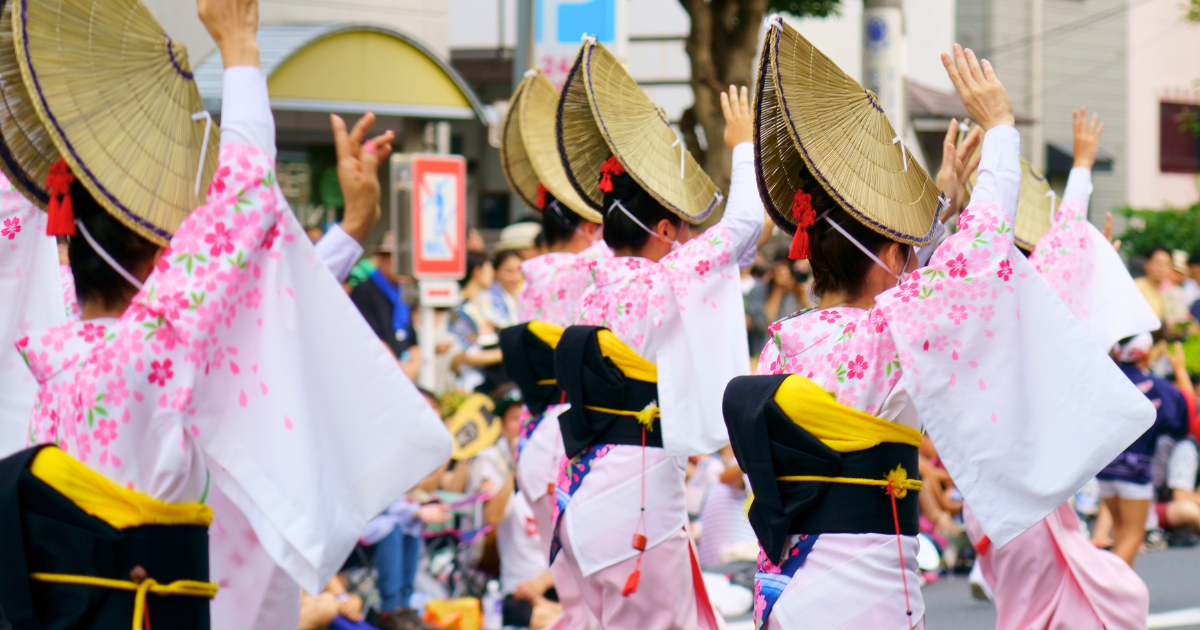
Awa Odori has been held in Tokushima for more than 400 years and draws over a million visitors to Shikoku each August.
Autumn in Japan (September to November)
Autumn is the season many seasoned Japan travellers prefer. The summer heat eases through September, the skies clear, and the country moves into its second great natural display of the year. Koyo, the autumn colour, holds the same cultural weight as the cherry blossom, and it is the season among the four that consistently rewards a longer trip.
When and where does autumn colour peak in Japan?
The colour begins in the north, with Hokkaido turning first in mid September. Daisetsuzan National Park is the earliest place in the country to see koyo, and it draws the first wave of domestic travellers each year. From there the change works steadily south, reaching Tohoku and the Japanese Alps through October.
Nikko, Hakone and the Kiso Valley are usually at their best in late October and early November, when the maples and ginkgos are at full strength. Kyoto, where most international travellers experience the season, peaks between mid and late November. Temples such as Tofuku-ji, Eikando and Kiyomizu-dera are particularly known for their maples, and many open for evening illuminations during the peak weeks.
Tokyo and the surrounding Kanto region follow a similar timing to Kyoto, with the gardens and parks at their best from late November into early December. Further south, Kyushu and Shikoku see colour at the very end of November and into the first week of December. This gives later season travellers the option of moving south to extend their window.
Is autumn less crowded than the cherry blossom season?
Autumn is busy, particularly in Kyoto, but the koyo season runs over a longer stretch of the calendar and the crowds spread more evenly across the country. International visitor numbers have grown sharply in recent years, and Kyoto in mid to late November now sees similar pressure to the spring peak.
Hotels in central Kyoto book out months ahead, and the most photographed temples are very busy from mid-morning onwards. Early morning visits, weekday timing and lesser known temples on the outskirts of the city all make a real difference. The eastern hills around Yoshida and Ohara are particularly worth considering for travellers who want a calmer pace.
The picture changes once travellers move beyond Kyoto. The Japanese Alps, Tohoku, Hokkaido and the smaller historic towns stay noticeably calmer, and the autumn colour in these regions is often more dramatic than in the cities. The Kiso Valley, the lakes around Mount Fuji and the Tohoku highlands all suit travellers who want koyo without the Kyoto pressure.
What festivals and events happen in Japan during autumn?
The autumn calendar is quieter than summer, but a handful of festivals are worth planning around. The biggest falls on 22 October, when Kyoto holds Jidai Matsuri, a procession of more than 2,000 people in historic costume walking from the Imperial Palace to Heian Shrine. The same evening sees Kurama no Hi Matsuri in the village of Kurama just north of the city, where locals carry flaming torches through the streets to a mountain shrine.
Earlier in the month, Takayama holds its autumn festival on 9 and 10 October, with the same float procession through the old town as its spring counterpart. Nada no Kenka Matsuri in Himeji in mid October is a rougher, louder affair, with rival neighbourhood teams clashing portable shrines together in front of large crowds. Both work well into a regional itinerary outside the main tourist routes.
The chrysanthemum, or kiku, has its own season through October and November. Exhibitions are held at temples and shrines across the country, with the displays at Yasukuni Shrine in Tokyo and Nijo Castle in Kyoto among the most established. The flower has been a feature of Japanese imperial and cultural life for centuries, and the autumn displays are one of the most distinctive traditions of the season.
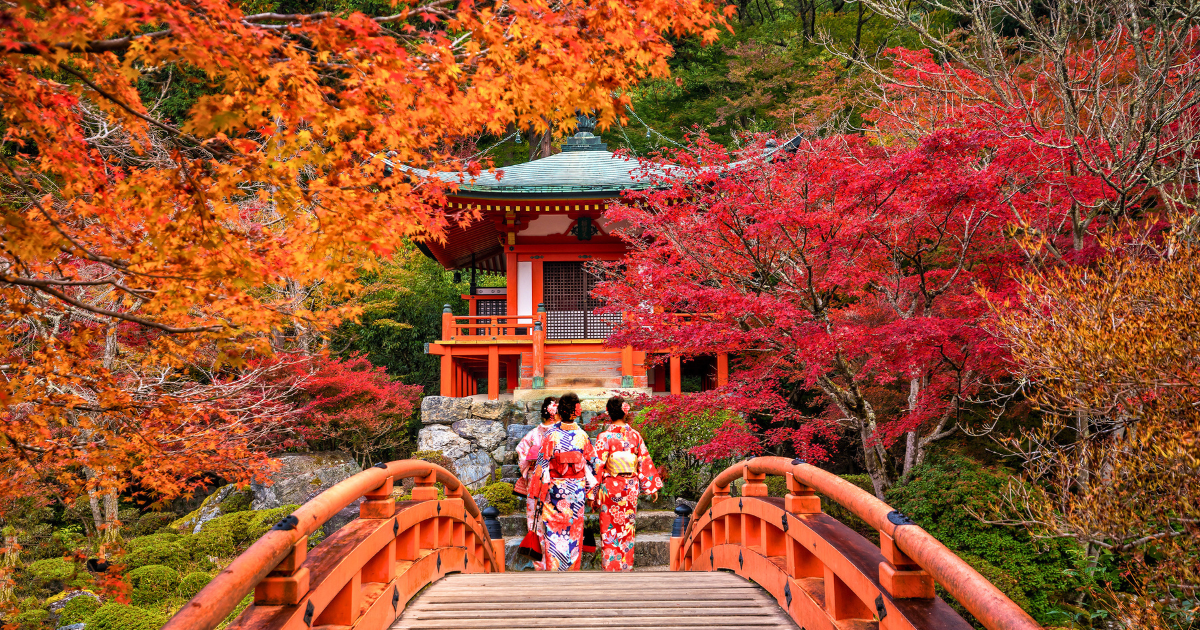
Daigo-ji in southeast Kyoto is a UNESCO World Heritage site and one of the city's quieter temples for autumn colour.
Winter in Japan (December to February)
Winter takes the country into a different register. The major cities slow down after the new year rush, the snow country reaches its deepest point of the year, and the cultural calendar moves into the rituals and traditions that mark the start of the Japanese year. For travellers who enjoy clear cold days, hot springs and a more local pace of travel, winter offers a side of Japan that the spring and autumn crowds rarely see.
How cold does winter get across Japan?
Winter temperatures vary widely depending on the region. Tokyo and Kyoto sit between 5 and 10 degrees through the day in January and February, with cold mornings and the occasional dusting of snow. The skies are often clear, and the dry winter air gives the historic cities a sharpness that suits temple visits and garden walks. Snow in central Kyoto is rare but does happen a few times each winter, and the temples on those days are remarkable.
The north and the mountains are a different proposition. Hokkaido sits well below freezing through January and February, with daytime temperatures in Sapporo around minus 5 degrees and far colder in the inland regions. The Japanese Alps and the Sea of Japan coast, including towns like Takayama, Kanazawa and the snow country of Niigata, see heavy snowfall through the season.
The far south stays mild. Kyushu and Okinawa rarely drop below 10 degrees during the day, and Okinawa in particular is a comfortable winter destination with daytime temperatures often around 18 to 20 degrees. Travellers wanting to escape the cold without leaving Japan often pair a few days in Tokyo or Kyoto with a week in the south.
What to do in Japan during winter?
Winter is the strongest season for onsen, the hot spring tradition that runs through Japanese culture. Outdoor baths, known as rotenburo, are at their best when surrounded by snow, and the experience of soaking in hot mineral water with cold mountain air on the skin is one of the defining experiences of winter travel in Japan. The onsen towns of Hakone, Kusatsu, Nyuto and Kurokawa each have their own following.
The snow country offers experiences that are simply not available the rest of the year. Shirakawa-go, the village of steeply pitched thatched farmhouses in the Japanese Alps, is at its most striking under heavy snow and runs evening illuminations on a handful of dates each January and February. The snow monkeys at Jigokudani in Nagano, who bathe in their own hot spring through the winter, are another well-known draw. Skiing and snowboarding in Hokkaido and Nagano have built an international following, with Niseko and Hakuba among the most established resorts.
Winter also brings the new year traditions that shape much of Japanese cultural life. Hatsumode, the first shrine visit of the year, draws large crowds to the major shrines in the first three days of January. Temples and shrines hold purification rituals, and many cities run winter illuminations through December and January. The Sapporo Snow Festival in early February is the largest winter event in the country, with enormous ice and snow sculptures filling the central city for a week.
Which regions see the heaviest snowfall in Japan?
The Sea of Japan coast and the inland mountains receive some of the heaviest snowfall in the world. The snow country of Niigata, made famous by Yasunari Kawabata's novel of the same name, sees consistent deep snow from December through March. Towns like Echigo-Yuzawa and the surrounding mountains are easily reached from Tokyo by Shinkansen, and the contrast between leaving the dry capital and arriving in metres of snow is one of the more striking transitions on the Japanese rail network.
The Japanese Alps deliver the most varied winter landscapes. Shirakawa-go and the neighbouring village of Gokayama are the most photographed, with their thatched farmhouses sitting under a metre or more of snow through January and February. Takayama and Kanazawa, both within easy reach of the Alps, are good winter bases and offer their own historic streetscapes under snow.
Hokkaido is the coldest and snowiest region of the country, and the experience of winter there sits in a different category to the rest of Japan. The drift ice that arrives on the Sea of Okhotsk coast in late January and February is unique in Asia, and the winter wildlife of eastern Hokkaido, including red crowned cranes, Steller's sea eagles and Blakiston's fish owls, has built a strong following among naturalists. Sapporo itself is a good winter city and serves as the main entry point for travellers heading further into the region.
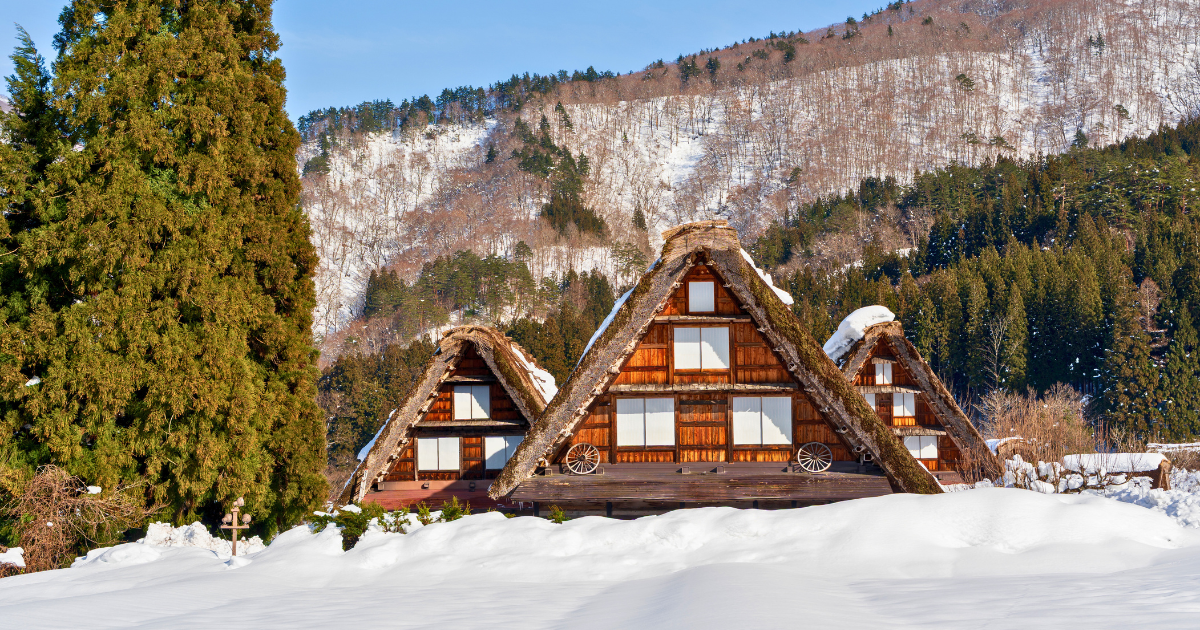
The gassho zukuri farmhouses of Shirakawa-go were designed with steep thatched roofs to shed the heavy winter snow common to the region.
What is the cheapest month to go to Japan?
The cheapest months to travel in Japan tend to be late January through early March, with February usually the lowest point of the year. The major travel peaks have passed, the cherry blossom season is still a few weeks away, and international demand eases noticeably outside the ski regions. Hotel rates in Tokyo and Kyoto sit at their most reasonable, and flights from Australia often soften through this window.
Lunar New Year in early February is the one exception, when travellers from across Asia push prices up briefly. Early June, just ahead of the rainy season ending, and the first half of December, before the new year holiday peak, are the other quieter and more affordable windows in the year.
The cheapest month is rarely the best month to visit Japan for the trip itself. February in Tokyo and Kyoto can be cold and the gardens are still bare, while June brings the wet season across most of the country. For travellers happy to spend a little more in favour of a better experience, the shoulder periods in late May and early November tend to offer the best balance, with comfortable weather, manageable crowds and prices that sit below the spring and autumn peaks.
Which month is the best overall to visit Japan?
For most travellers, the best month to visit Japan is somewhere between late October and early November. The weather across the country is at its best, with clear skies, daytime temperatures around 18 to 22 degrees in central Japan, and cool evenings that suit walking and dining out. The autumn colour begins to appear in the highlands and northern regions, and the major cities are still ahead of the Kyoto koyo peak that draws the largest crowds in mid to late November. Cultural festivals run through October, and accommodation across the country is more available than during the cherry blossom and koyo peaks.
April is the other obvious answer, particularly for first time visitors. The cherry blossoms across central Japan, the long daylight hours and the sense of the country at its busiest and most festive all sit at the top of what most travellers want from a Japan trip. The trade off is the planning required, with hotels, restaurants and rail bookings filling up months ahead and prices well above the rest of the year.
Beyond these two, late May offers a quieter alternative with warm but not hot weather, while early February rewards travellers drawn to the snow country, the onsen towns and the cultural calendar of winter. When to go to Japan depends entirely on what the trip is built around, which is why travellers familiar with the country often return at different times of year rather than settling on one favourite season.
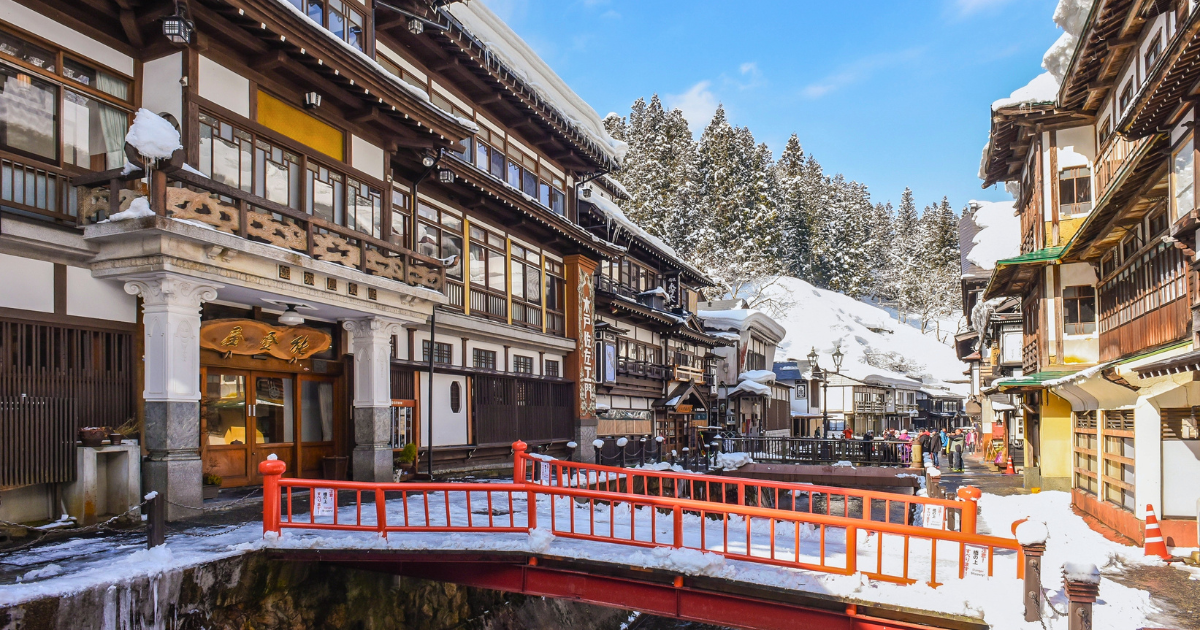
Ginzan Onsen in Yamagata Prefecture is one of Japan's most atmospheric hot spring towns and dates back to the early 1600s, when the area was a working silver mine.
Planning a trip to Japan with Remarkable East
The right season makes a real difference to a Japan trip, and the most popular months tend to book up well ahead. Remarkable East runs small group journeys through Japan with a maximum of 12 guests, designed for travellers who want time, space and a more considered pace. The small group journeys are run on set departure dates through the year, which makes planning around season and availability far simpler.
For travellers thinking about a Japan journey, contact the team to talk through the season options, the upcoming departures and the trip that suits best.