
Unpacking South Korean Food Culture
South Korea is easy to associate with temple compounds, palace architecture and a fast-moving urban culture. Yet, the food culture tells a deeper story. Daily meals follow patterns shaped over generations and those patterns are still part of how people eat today.
A Korean meal begins with structure rather than spectacle. Rice, soup, kimchi and a spread of side dishes are served together, each food playing a role on the table. This is part of what makes South Korean food distinct. Flavour matters, but so do balance, texture, pacing and the way dishes relate to one another.
For travellers, understanding even a little of this structure changes the experience of eating in South Korea. You notice more and the meals start to feel less unfamiliar, which is part of why any useful South Korea food guide should begin with the table itself.
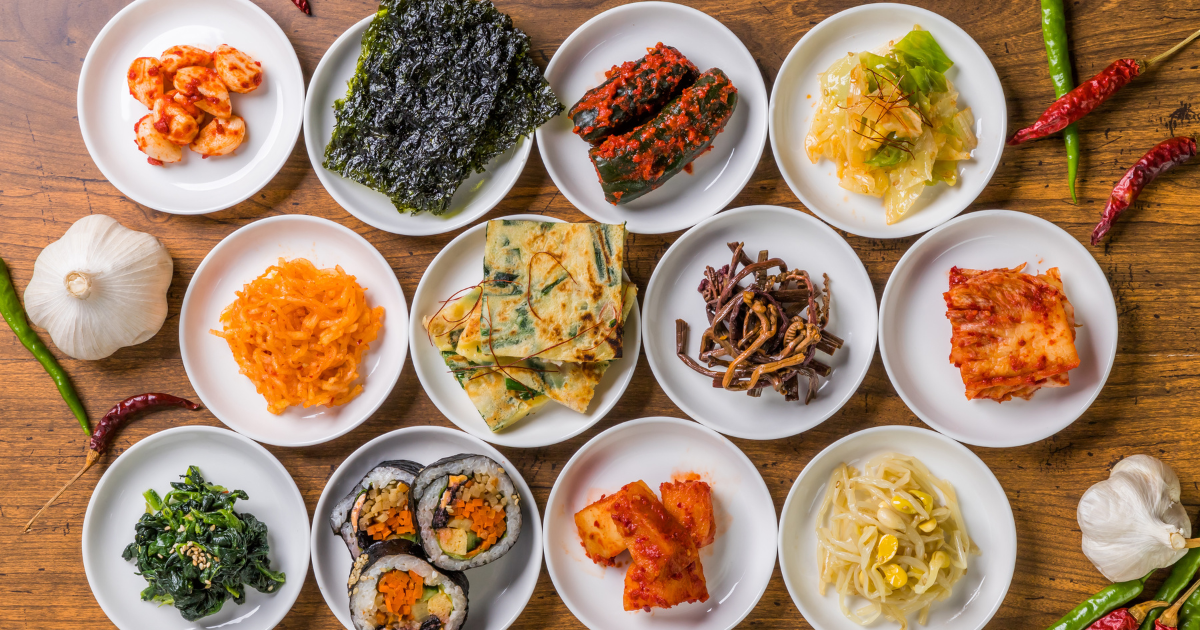
Banchan, the small shared side dishes that come free with every Korean meal, are one of the first things that make dining in Seoul feel different from eating anywhere else.
What is the food culture in South Korea?
Korean food culture is built around a system called the bapsang, which is the way a meal is set and served at the table. Meals are not organised around a main course. Instead, rice, soup and a collection of shared side dishes called banchan appear together. The meal moves between them rather than through a set sequence.
What is a bapsang?
A bapsang is the Korean term for a set meal table. It typically includes bap (cooked rice), guk or jjigae (soup or stew) and several banchan arranged in the centre for everyone to share. In contrast, banchan are the small shared dishes that appear at every Korean meal, often consisting of seasoned vegetables, small portions of fish or tofu and, almost always, kimchi.
The number of banchan on the table has carried meaning for centuries. During the Joseon Dynasty, a commoner's table might include three side dishes. A nobleman could have five, seven, or nine. A royal bapsang included twelve. These numbers were codified and they reflected social standing as clearly as clothing or housing did.
What is the role of colour in a Korean meal?
The structure of a bapsang goes beyond what is served and how many dishes appear. There is also a visual logic to the arrangement of food. A Korean meal follows a principle called obangsaek, which assigns meaning to five colours: green, red, yellow, white and black.
Each represents one of the five elements and a cardinal direction. Dishes are chosen partly for how their colours balance one another, so a bapsang that looks right usually tastes balanced too. The visual composition and the flavour composition are connected.
Why do Koreans always share a meal?
The care that goes into composing a bapsang carries through to how people eat. Meals are communal, with dishes placed in the centre of the table for everyone to share. Individual plating is uncommon.
The eldest person begins first, while others wait. Drinks are poured for the person beside you (not for yourself) and received with both hands, or with one hand supporting the other wrist.
Before eating, Koreans say "jal meokgesseumnida," which translates roughly as "I will eat well." It is a short phrase, but it acknowledges the effort that went into the food and the company sharing it.
These customs are rooted in Confucian values of respect and hierarchy that have shaped Korean social life for centuries. In homes and restaurants across South Korea, they are still part of how meals begin and how people behave at the table.
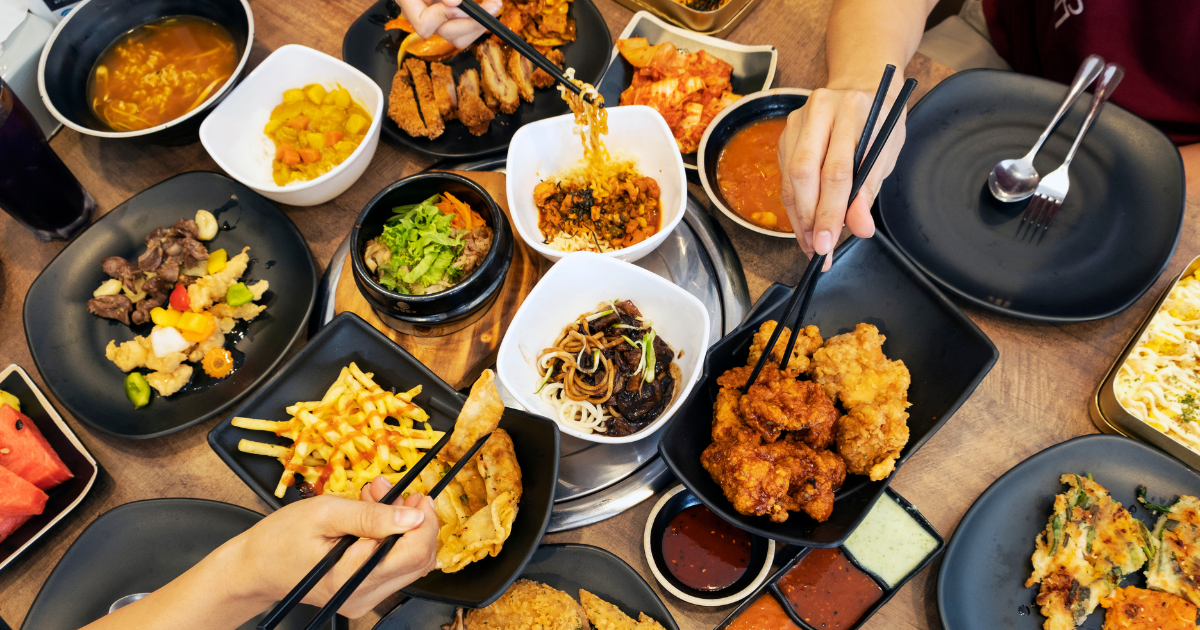
Meals in Seoul are designed to be shared, with dishes arriving together and everyone reaching in at once.
Why do South Koreans take food so seriously?
Food in South Korea is closely tied to health, seasonal rhythms and community. One of the oldest ideas behind this is yaksikdongwon, a principle that treats food and medicine as having the same origin. Meals are composed with health in mind as much as flavour.
This logic also explains why fermentation became so central to Korean cooking. Roughly 80% of the peninsula is mountainous and winters are long. Fermenting, pickling and drying were the main ways to keep food edible through the colder months.
Over time, these survival techniques became defining features of the cuisine. Kimchi is the most recognised fermented food, but doenjang (soybean paste), gochujang (chilli paste), ganjang (soy sauce) and jeotgal (salted seafood) are equally present. They are South Korea’s base ingredients.
What are the traditional foods in South Korea?
Traditional Korean food covers a wide range of dishes, but most fall into a few core categories. Understanding these helps make sense of a Korean menu and gives travellers a clearer idea of what to expect at the table.
Rice, soups and stews
Rice is the anchor of almost every Korean meal. It is eaten plain, mixed with vegetables and sauce as bibimbap. It could also be slow-cooked into juk, a soft porridge often served as comfort food or a recovery meal.
Soups and stews sit alongside rice at almost every sitting and they vary in weight and purpose. A light doenjang jjigae made with soybean paste and vegetables might accompany a larger spread of banchan. A heavier stew like kimchi jjigae, built on aged kimchi, can anchor a simpler meal on its own. The choice depends on the season, the occasion and what else is on the table.
Grilled meats and barbecue
Korean barbecue is often where visitors get their first real introduction to the cuisine, but it is worth paying attention to the format as much as the food. In South Korea, diners grill meat at the table themselves.
Each bite is then assembled by hand with a piece of meat placed on a lettuce leaf with rice, a slice of garlic, some chilli and a dab of ssamjang. This is called ssam and building each wrap is part of the eating experience.
Noodles and rice cakes
Noodle dishes tend to stand on their own rather than forming part of a bapsang spread. They also come in many forms. Cold buckwheat noodles are a summer staple, served in icy broth as a counterpoint to the heat. Glass noodles with vegetables appear at celebrations and family gatherings.
Rice cakes, called tteok, hold a unique position in Korean food. They appear at weddings, ancestral rites and seasonal holidays in elaborate, carefully prepared forms. They’re also a part of the street food culture. Rice cakes tossed in a sweet-and-spicy sauce, or tteokbokki, is one of the most common and affordable dishes to eat in any Korean city.
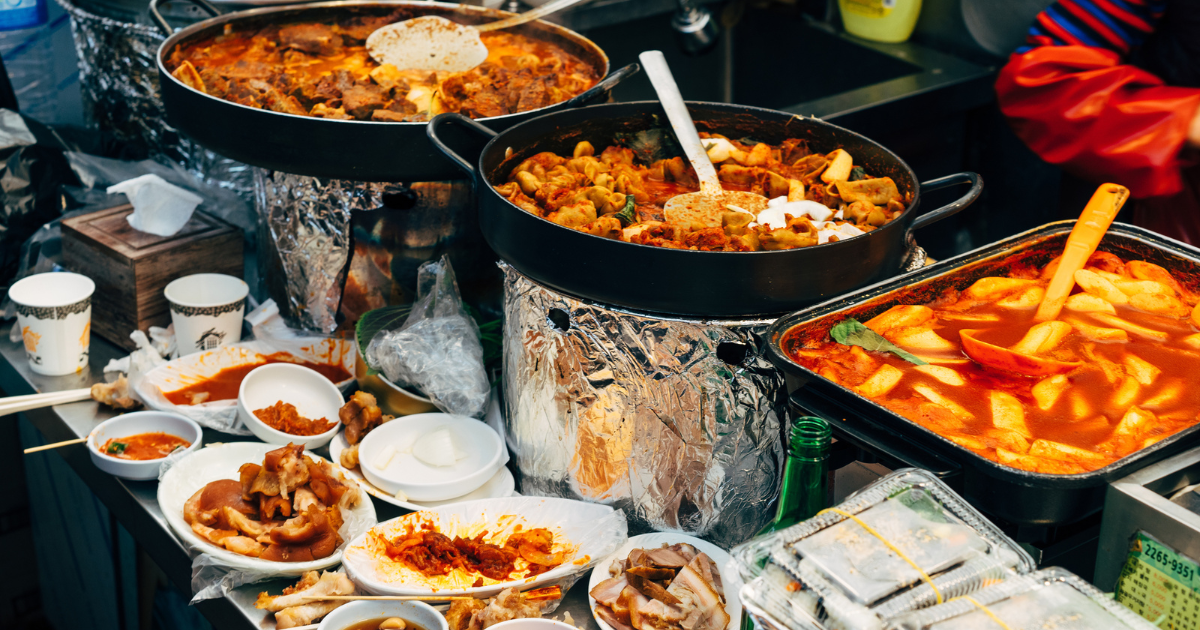
Tteokbokki began as a simple street snack and has become one of the most recognisable dishes in Korean food culture, found at market stalls and restaurants across the country.
What travellers should know about eating in South Korea
Travellers eating in South Korea for the first time will notice a few things quickly. Restaurants often specialise in a single dish, banchan arrive without being ordered and meals follow an etiquette that is easy to learn but important to get right.
What are restaurants like in South Korea?
Many Korean restaurants specialise in a single dish or a narrow menu. But don’t consider this a limitation. It usually means the kitchen has been refining one thing for years, sometimes decades. Choosing where to eat in South Korea often means choosing what to eat first, then finding the place that does it best.
Banchan arrives automatically with your order and is free of charge. The selection varies by restaurant and by day. But you can expect kimchi, seasoned vegetables and at least one or two fermented sides. If you finish a dish you enjoyed, you can ask for more.
It is also worth knowing that many Korean restaurants are built around communal eating. Tables are often large and portions are designed to be shared. Ordering is sometimes done for the group rather than per person. Solo dining is increasingly common in cities, but the default format assumes you are eating with others.
What should you know about table etiquette?
Korean meals are eaten with a spoon and a pair of metal chopsticks. The spoon is for rice and soup. The chopsticks are for banchan and other solid dishes.
Do not lift bowls from the table to eat from them. Another important one to remember is not to stand your chopsticks upright in a bowl of rice, as both are considered disrespectful.
When eating with others, wait for the eldest person to start before you begin. If someone pours you a drink, receive the glass with both hands. These are small gestures that South Koreans notice and appreciate.
What about street food and eating on the go?
Pojangmacha are worth seeking out. These are orange-lit street food tents that appear across Korean cities at night. They serve simple food, often with soju or beer and they have a different atmosphere from a sit-down restaurant.
During the day, street vendors sell things like hotteok (filled sweet pancakes), eomuk (fish cake skewers) and roasted chestnuts from carts and stalls. Eating while walking is common and there is no formality to it. It is simply another part of how Koreans eat throughout the day.
Why a South Korean cooking class offers a different view of the food culture
Eating in restaurants shows you what Korean food tastes like. A cooking class shows you how it is built. The two experiences are very different. For travellers interested in food culture, the second one fills in gaps that the first cannot.
Most classes in Seoul begin at a local market rather than in the kitchen. Instructors guide participants through stalls selling fresh produce, fermented pastes, dried seafood and seasonal ingredients. You learn how to identify good doenjang and gochujang by colour and age. You see how a meal takes shape before any cooking starts.
In the kitchen, the focus shifts to technique. You’ll learn how seasoning is layered into a dish rather than added at the end. You’ll understand why fermented ingredients carry most of the flavour. You’ll know why certain banchan are paired together and how a stew builds its depth over time.
By the end of the session, you have prepared a full meal from scratch and understand how a bapsang comes together as a connected whole.
What to expect from a Korean cooking class in Seoul?
A typical cooking class in Seoul runs for two to three hours and is hands-on from start to finish. Most classes are designed for small groups, usually between six and twelve people and no prior cooking experience is needed.
How is a Korean cooking class structured?
Classes generally follow the same format. You prepare three to six dishes, cook them yourself with guidance from the instructor and sit down to eat everything at the end. Some classes focus on a specific category, like kimchi-making or makgeolli-brewing. Others cover a broader spread, walking you through a full meal including rice, stew, banchan and a main dish.
Many classes include a market visit at the start. This is usually a guided walk through a local neighbourhood market where you buy the ingredients you will cook with. It adds roughly 30 to 45 minutes to the session and gives useful context for what happens in the kitchen.
Where are classes held?
Korean cooking class settings vary. Some classes operate out of purpose-built cooking studios. Others are hosted in local homes or in traditional hanok buildings, which adds a layer of cultural context to the experience.
The Korean Food Promotion Institute and the Tteok Museum in Seoul both run their own programmes for visitors. These are government-supported and tend to focus on traditional techniques and dishes.
Classes are not limited to Seoul. Jeonju, Busan and several Buddhist temples around the country offer their own programmes.
How much is a South Korean cooking class in Seoul?
Cooking class prices in Seoul vary depending on the format, group size and what is included. Most group classes fall within a similar range and represent good value for a two-to-three-hour hands-on experience.
Group classes (2-3 hours, 3-6 dishes): USD 75-120 / approximately AUD 115-185 per person
Kimchi or makgeolli specialist classes: USD 80-120 per person
Private classes: USD 150-230 per person
Market tour: included in most group classes at no extra cost
Classes held in traditional hanok buildings or local homes sometimes sit at the higher end of the range, but the setting is part of what you are paying for. Government-supported programmes at places like the Korean Food Promotion Institute tend to be more affordable.
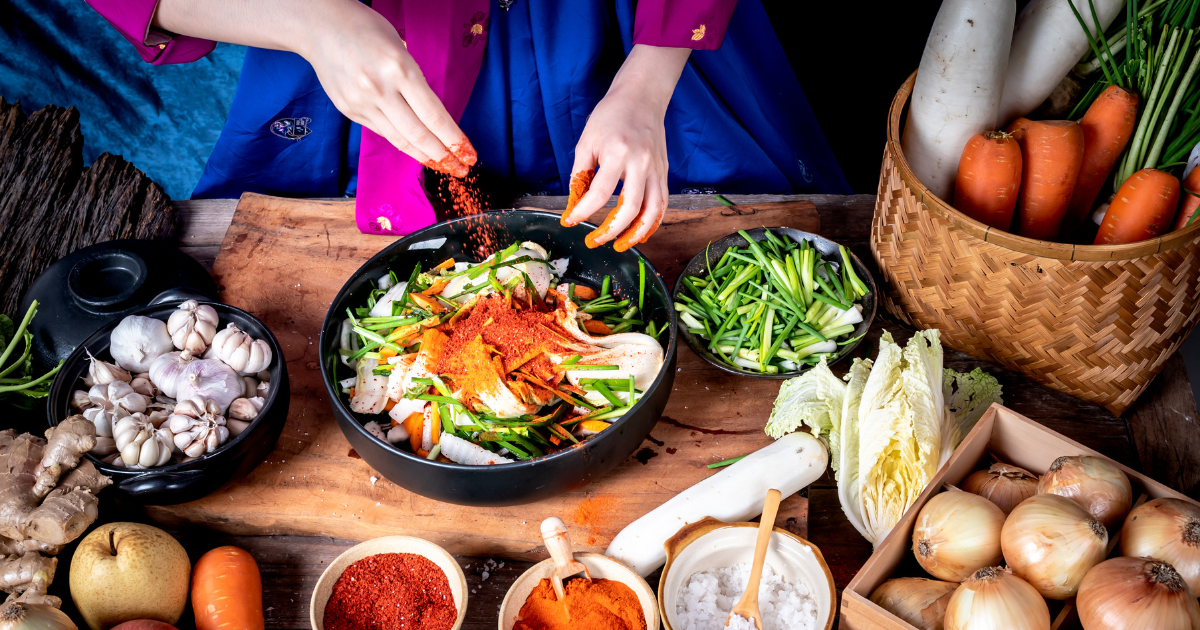
Kimchi is one of the most common dishes taught in Seoul cooking classes, with each step offering a hands-on introduction to the ingredients and techniques behind Korean food.
Experience South Korean food with Remarkable East
South Korean food makes more sense when you experience it in context. The flavours, the structure of the table and the customs around eating all become clearer when you encounter them where they developed.
Remarkable East operates small group journeys through South Korea with a maximum of 12 guests per departure. Each itinerary is led by an expert host with knowledge of regional food traditions. Cooking classes, market visits and meals at locally renowned restaurants are part of the journey, not just a side trip.
If you are interested in exploring South Korean food culture firsthand, contact us today.