
How To Spend 3 Days In Seoul For First Timers
South Korea has steadily become one of the most visited countries in East Asia, and most travellers start in Seoul. The capital is home to almost 10 million people, built along the Han River and surrounded by low mountains visible from most parts of the city.
What strikes most first-time visitors is how close everything feels. A 600-year-old palace shares a street with a glass office tower. Traditional tile-roofed alleyways open onto metro stations that run like clockwork. Seoul puts old and new side by side and lets you walk between them.
For travellers with a few days to spare in Seoul, the city is surprisingly approachable. The main sightseeing areas sit close together, the metro is straightforward, and the food alone justifies the trip.
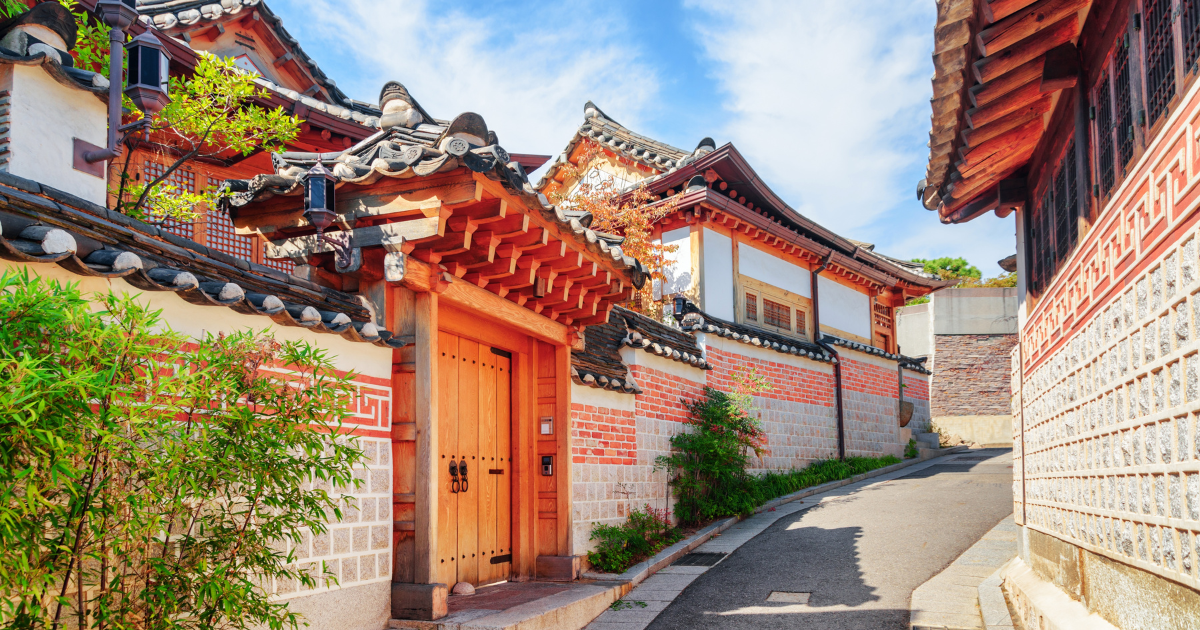
Traditional hanok houses in Bukchon, one of several historic neighbourhoods in Seoul where centuries-old architecture sits minutes from the modern city centre.
Day 1: Visit Seoul’s historic centre
On the first day of your Seoul itinerary, it’s best to walk around the historic centre north of the city. Gyeongbokgung Palace, Bukchon Hanok Village and Insadong all sit within walking distance of each other, so you can cover them in a single day without rushing.
Gyeongbokgung Palace
Gyeongbokgung is Seoul's largest and most important royal palace, and the best place to start your day if it’s your first time in South Korea. Built in 1395 as the main seat of the Joseon dynasty and spanning over 40 hectares, the complex is home to more than 300 restored buildings set against the backdrop of Bugaksan Mountain.
The changing of the guard ceremony takes place at 10:00am and 2:00pm daily, except on Tuesdays when the palace is closed. It lasts about 20 minutes and is free to watch. Arriving for the 10:00am ceremony and then spending two to three hours exploring the grounds is a good way to pace the morning.
Admission is 3,000 won for adults, but wearing a rented hanbok (traditional Korean clothing) gets you in for free. There are rental shops on the streets surrounding the palace.
Inside the grounds, the Geunjeongjeon throne hall and the Gyeonghoeru Pavilion are the two standout structures. The National Folk Museum of Korea sits on the eastern side and is included with the ticket.
Bukchon Hanok Village
Bukchon is a 15 to 20 minute walk east from Gyeongbokgung. It is a residential neighbourhood of over 900 traditional Korean houses, or hanok, that date back to the Joseon period. The houses sit on a hillside between Gyeongbokgung and Changdeokgung palaces. The higher streets offer clear views across Seoul's modern skyline with hanok rooftops in the foreground.
Bukchon is a residential area where people live and go about their daily routines, which is part of what makes it feel so genuine. Since March 2025, visiting hours have been introduced along the most popular section of Bukchon-ro 11-gil, allowing tourists between 10:00am and 5:00pm only. Outside those hours, sightseeing visits are not permitted and fines of 100,000 won can apply.
Some of the hanok along the lower streets have been converted into small cafes, craft workshops and tea houses, making it easy to stop and rest between the uphill stretches. The area around Anguk Station also has a good concentration of restaurants, so timing a visit around a late morning coffee or early lunch works well.
Insadong
From Bukchon, Insadong is a 10 minute walk south towards Anguk Station. The main street, Insadong-gil, is lined with tea houses, craft shops, small galleries and Korean restaurants. It is one of the older cultural districts in Seoul and has a more traditional feel than the commercial streets further south.
Insadong has been a centre for Korean arts and antiques for decades, and the side alleys still have shops selling traditional calligraphy supplies, handmade paper and ceramics. Ssamzigil, a four-storey open-air shopping complex built around a spiralling ramp, brings together independent craft sellers and small studios in one space.
Insadong works well as a late afternoon stop after the palace and Bukchon. Eat an early dinner in the backstreets, browse Ssamzigil, or sit in a traditional tea house before heading back to your accommodation. The nearby Jogyesa Temple is also worth a short visit if you pass it on the way.
Day 2: Explore Seoul’s neighbourhoods and streets
Where do you go after the palaces and historic sights? The second day is a good time to explore Seoul's more contemporary neighbourhoods, where converted hanok, cafe culture and evening bar scenes give a different picture of how the city lives day to day.
Ikseondong and Euljiro
Ikseondong is a short walk from Insadong and easy to reach from Jongno 3-ga Station. It is Seoul's oldest surviving hanok district, with houses built in the 1920s, but the feel is very different from Bukchon. Here, the narrow alleyways have been converted into cafes, bakeries, small restaurants and craft beer bars, all fitted into the original hanok structures while keeping their low rooflines and courtyard layouts.
The crowd here skews younger and more local than in Bukchon, and the pace is noticeably more relaxed. A couple of hours in the morning is enough to eat well, try some good coffee and get a sense of how Seoul repurposes its older buildings rather than replacing them. Cafe Onion Anguk, housed in a restored hanok with an open courtyard, is one of the more popular stops in the area.
Euljiro is a five-minute walk south of Ikseondong and feels like a different city entirely. By day, it is still a working industrial district, with printing presses, lighting shops and hardware stores lining the streets. After dark, the same alleyways fill with a different crowd, as wine bars, craft breweries and speakeasy-style cocktail spots open up behind unmarked doors and between workshop shutters. It is one of the most interesting evening neighbourhoods in Seoul and pairs well with dinner in Ikseondong earlier in the day.
Namsan Tower
From Euljiro, the Namsan cable car is a short walk south through Myeongdong. The cable car takes about three minutes to reach the top of Namsan mountain, which sits roughly in the centre of the city at 243 metres above sea level. At the summit, the N Seoul Tower observation deck offers a full 360-degree view across the city, with the Han River, the palace district and the surrounding mountain ridgeline all visible on a clear day.
Going up about an hour before sunset is the best way to catch Seoul in both daylight and lit up at night. The cable car ticket is valid for return at any time, so there is no rush to come back down. The tower area also has a handful of restaurants and cafes at the top, making it easy to stay for a drink or a meal while the city lights come on.
The walk back down through Namsan Park is a good alternative to the return cable car, following a paved path through dense woodland. It takes about 30 minutes on foot and comes out near Myeongdong, which is convenient for dinner or an evening walk through the shopping district.
Hongdae or Itaewon
For the evening, Hongdae and Itaewon are the two main options and both are easy metro rides from central Seoul. They offer quite different atmospheres, so the choice depends on what kind of evening suits the mood.
Hongdae is the area around Hongik University, South Korea's leading art school, and the neighbourhood reflects that background. The streets are full of performers, independent shops, live music venues and cafes that stay open late. The energy is young and creative, and the area is particularly lively on Friday and Saturday nights when buskers and dance crews set up along the main pedestrian street.
Itaewon has a more international feel. It developed as a neighbourhood around the old US military base and has kept a diverse mix of restaurants, from Middle Eastern and Mexican to Indian and Italian, alongside Korean options. The bar scene is well established, with rooftop spots, cocktail bars and more relaxed pubs spread across the hilly streets. Itaewon tends to attract a slightly older and more mixed crowd than Hongdae, and the pace is a bit more relaxed.
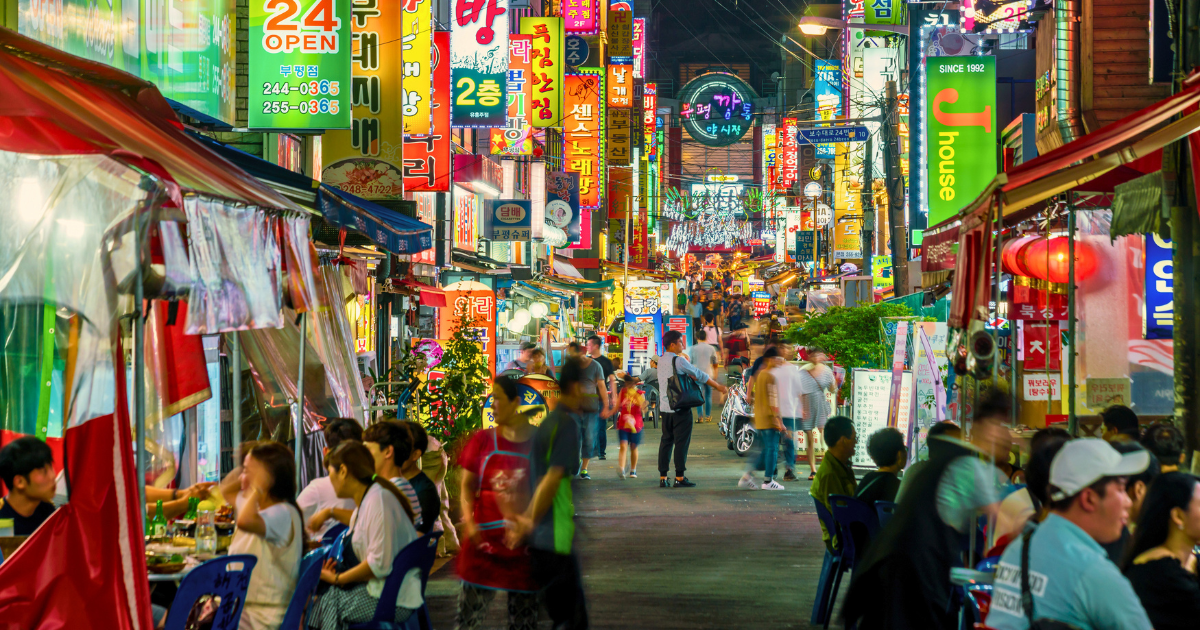
Neighbourhoods like Itaewon and Hongdae come alive in the evening with street food, neon signage and late-night dining.
Day 3: Discover South Korea’s food culture
Of all the things to do in Seoul, spending a day eating through the markets and restaurants is one of the most rewarding. Food is central to daily life here, and dedicating a full day to it gives enough time to experience how Koreans actually eat.
Gwangjang Market
Gwangjang Market is the best place to start your third day. Opened in 1905, it is Seoul's oldest permanent market and still one of its busiest. It has over 5,000 vendors and around 65,000 visitors daily. The food stalls are concentrated on the second floor, where you sit elbow to elbow at long communal tables while stallholders cook to order in front of you.
The dishes to look for are bindaetteok (crispy mung bean pancakes) and mayak gimbap (small seaweed rice rolls). You can also try kalguksu (knife-cut noodles in pork bone broth) and yukhoe (Korean beef tartare dressed in sesame oil and raw egg yolk).
Most dishes cost between $3 to $8 AUD, and $20 to $30 AUD will leave you properly full across several stalls. The market is open daily from 8:30am, but the lunchtime rush between 12:00pm and 2:00pm is when the atmosphere peaks. Bring cash, as many stalls do not accept cards.
Namdaemun Market and Myeongdong
Namdaemun Market is about a 25-minute walk from Gwangjang or a short metro ride. It is Seoul's largest traditional market and covers far more ground, with stalls selling kitchenware, clothing, dried goods and street food through a maze of narrow covered alleyways.
The street food here leans toward quick bites, fried snacks and hotteok (sweet Korean pancakes). From Namdaemun, Myeongdong is a few minutes on foot. The evening street food stalls along the main pedestrian street are worth a pass through, though the atmosphere is more tourist-oriented than at the markets.
Korean BBQ
A sit-down Korean BBQ meal is the best way to close the day. Korean BBQ is a shared experience. You cook meat at a grill built into the table, and the meal comes with banchan, a spread of small side dishes that are refilled for free. Soju or beer usually accompanies the meal, and it is customary to pour for others at the table rather than for yourself.
Ordering can feel unfamiliar at first. Many restaurants use touchscreen ordering systems with an English option, and staff will often help with the grill if you are unsure.
Tipping is not expected anywhere in South Korea. The meal itself is a good introduction to how food functions socially in Korea. It is rarely a solo activity. Meals are designed to be shared, and eating together is a central part of daily life here.
Where should first time visitors stay in Seoul?
Myeongdong and Insadong are the two best bases for a first visit to Seoul, both sitting north of the Han River with easy access to the main sights and good metro connections to the rest of the city. They offer quite different atmospheres, so the choice depends on what kind of neighbourhood feels right.
Myeongdong is the more popular choice, centrally located within walking distance of Namdaemun Market, the Namsan Cable Car and Gyeongbokgung Palace. The streets are busy with shops and the area stays lively well into the evening. It suits travellers who enjoy being at the centre of the action, though those who prefer quieter evenings may find it a bit much.
Insadong is quieter and more traditional. The streets are lined with tea houses, small galleries and Korean restaurants. You can walk from there to Bukchon Hanok Village or Ikseondong within minutes. Insadong also has the same central location as Myeongdong but a calmer feel. For travellers who prefer atmosphere over shopping, Insadong is the stronger choice.
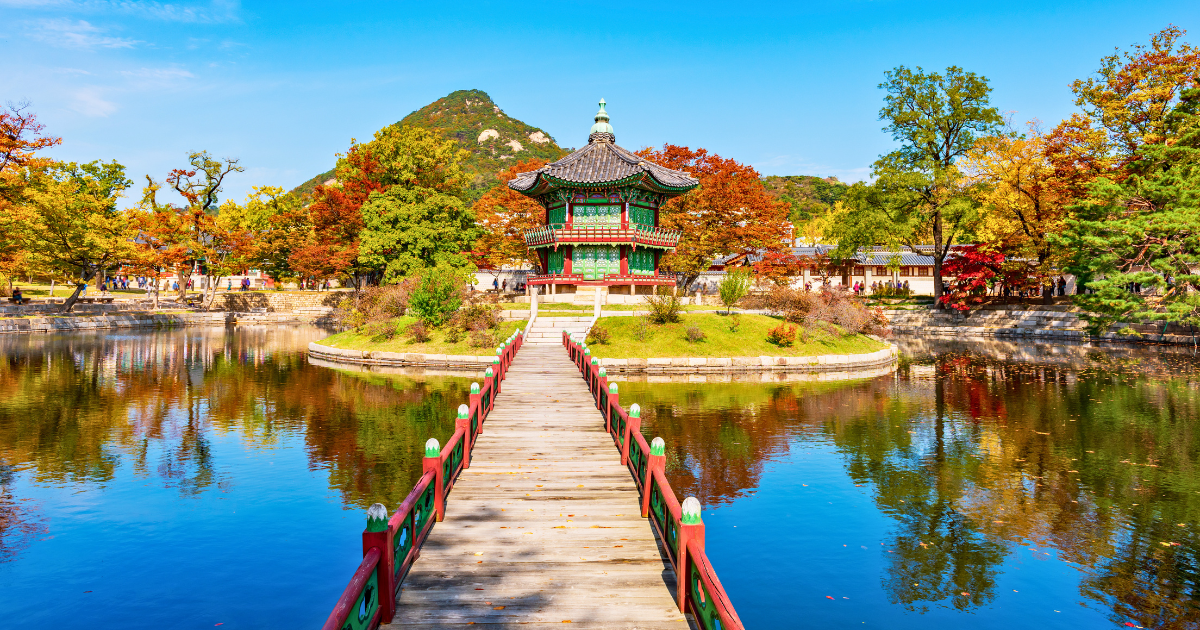
Staying in Myeongdong or Insadong puts Hyangwonjeong Pavilion at Gyeongbokgung Palace. within easy walking distance on the first morning.
How many days is enough for Seoul?
Three to five full days in Seoul hits the right balance for a first visit. Most Seoul travel guide recommendations land in this range, and for good reason. Three days cover the major palaces, a few neighbourhoods, and the food markets, with enough downtime to avoid feeling rushed.
Four or five days gives you room to add a day trip to the DMZ, the heavily guarded border zone between North and South Korea, about 50km north of the city. There is also time to explore south of the Han River, or simply revisit a market or neighbourhood that stood out the first time around. With a few extra days, your Seoul itinerary shifts from covering the essentials to properly getting to know the city.
Beyond five days, the city becomes a base for day trips. Suwon and its 18th-century Hwaseong Fortress is an easy train ride away, and Incheon on the coast is even closer. But for a first visit focused on Seoul itself, three to five days suits most travellers.
What is the best month to visit Seoul?
April and October are the two best months to visit Seoul. April brings cherry blossom season, with daytime temperatures around 7°C to 19°C. You can also experience the pink and white blooms lining the palace grounds, parks and riversides.
October offers similar comfort at around 10°C to 20°C. This month brings autumn foliage turning the city red and gold, particularly around Namsan Park and the palace gardens.
May and September are strong alternatives. May is warmer, less crowded than April, and still pleasant for long days on foot. September sits at the tail end of summer humidity but dries out quickly and leads into the foliage season.
Summer runs from June to August and brings heavy humidity, monsoon rain and temperatures above 30°C. It is manageable but not ideal for a first visit built around walking and sightseeing. Winter, from December to February, drops well below freezing and can make outdoor time uncomfortable, though the city is quieter and accommodation costs fall.
Is Seoul a walkable city?
Yes! Seoul is very walkable within its individual neighbourhoods, but the city itself is large. You can walk from Gyeongbokgung Palace to Bukchon Hanok Village in about 15 minutes. From the village to Insadong or Ikseondong is another 10 minutes. Myeongdong, Namsan and Namdaemun Market are all within comfortable walking distance of each other too.
The thing that catches most visitors off guard is the hills. Seoul is built on and around mountains, and the terrain is steeper than it looks on a map. Comfortable shoes with decent support matter more here than in most Asian cities. Flat-soled shoes will leave you sore by the end of the first day.
Is Seoul safe and easy to navigate?
Crime rates are low, streets are well-lit into the evening, and most visitors feel at ease walking around after dark. The city is also refreshingly easy to trust, with little of the tourist-targeted hassle that can be common elsewhere in the region.
Getting around is also easy. The metro is clean and signed in both Korean and English. A single ride costs around $1.20 AUD, paid with a T-money card from any convenience store. In 2026, the Seoul Climate Card also offers unlimited daily or weekly metro and bus rides for a flat fee.
The one thing worth setting up before arriving is a few local apps. South Korea has its own navigation and translation tools that work better than the global alternatives. Naver Map is the go-to for directions, Papago handles translation beautifully, with a camera function that reads menus and signs in real time, and Kakao T makes booking taxis simple. With these three on a phone, getting around without speaking Korean is easy.
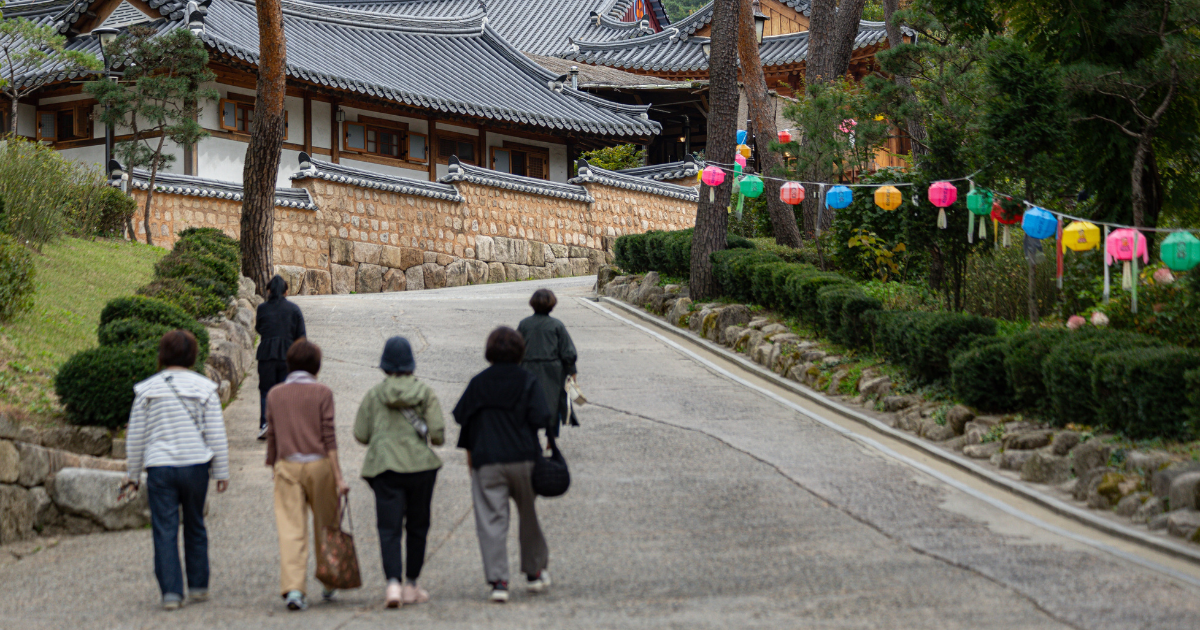
Much of Seoul's historic centre is best explored on foot, with palaces, hanok villages and temple grounds all within easy walking distance of each other.
Exploring Seoul and beyond with Remarkable East
Seoul has enough going on to fill a week, but even three well-planned days can give you a real feel for the city. Choosing the right neighbourhood, timing your visit well and pacing your days properly all shape how much you get out of a first trip.
Remarkable East runs small group tours of no more than 12 guests, led by expert hosts who know the region well. Our South Korea Walking Tour covers Seoul's palaces, markets and neighbourhoods combining walking with cultural exploration at a considered pace.