
Get To Know The Wildlife Of Malaysian Borneo
The Malaysian states of Sabah and Sarawak occupy the northern part of Borneo, an island shared with Indonesia and Brunei. Rainforest stretches across the interior, and rivers wind through lowland forests towards mangrove-lined coasts. Orangutans, proboscis monkeys and Bornean elephants are among the animals of Borneo that depend on these forests for food, shelter and space to move.
Travellers can explore these forests on guided walks or take boat trips along rivers such as the Kinabatangan in Sabah. From the water, they can watch proboscis monkeys gathering in riverside trees and look for elephants along the banks. Finding an orangutan can take more patience, as its reddish coat may be partly hidden among the leaves. Local guides help visitors spot these animals in Borneo and understand what they are witnessing in real time.
The chance to see species found nowhere else in the world makes Borneo one of the most rewarding wildlife destinations. Proboscis monkeys and Bornean orangutans are among its best-known residents, but there is plenty more to look for. Here are some animals to look for in Borneo, where to see them in Sabah and Sarawak, and what to know before planning a Borneo tour.
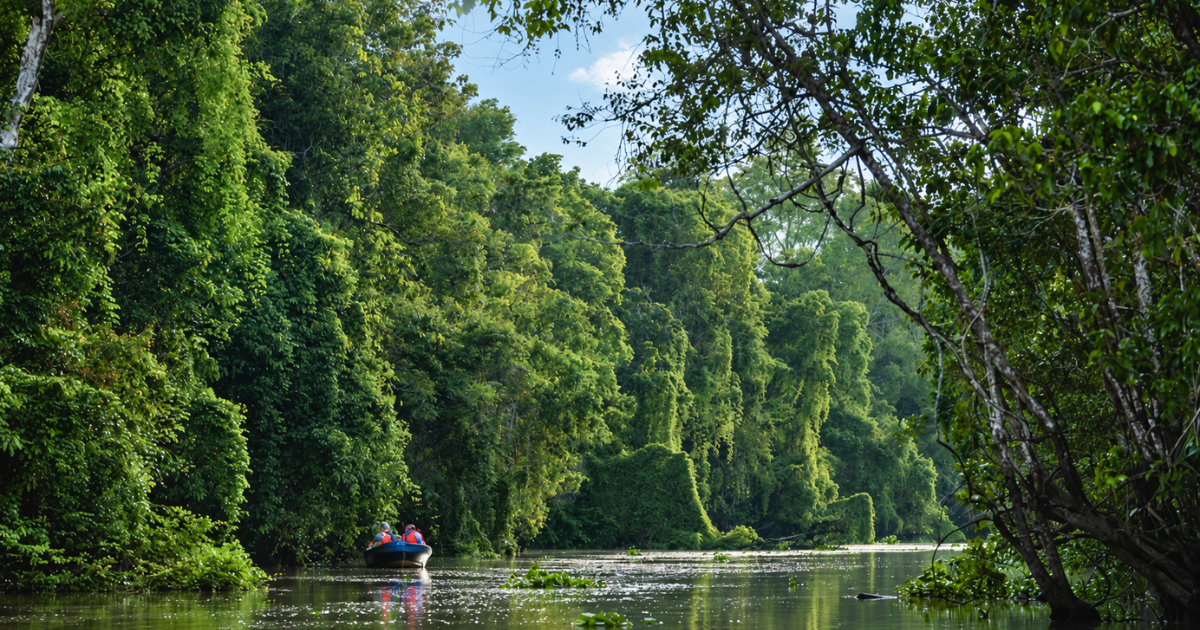
River cruises along Sabah’s Kinabatangan River offer chances to see proboscis monkeys in riverside trees and, occasionally, Bornean elephants along the banks.
What is Borneo famous for?
Borneo is famous for its tropical rainforests and wildlife, particularly orangutans and proboscis monkeys. Alongside Sumatra in Indonesia, Borneo is one of only two islands in the world where orangutans live in the wild.
Proboscis monkeys have an even smaller natural range, living only on Borneo. They inhabit forests beside rivers and along the coast, where they feed in the trees and swim between feeding areas.
The island’s wildlife also extends to its coastal waters, where green turtles feed on seagrass and hawksbill turtles search for sponges on reefs. Females come ashore to lay their eggs on sandy beaches, including those in Sabah’s Turtle Islands Park. Both species nest here throughout the year, and visitors can join rangers to observe nesting when conditions allow.
What are the Big 5 animals of Borneo?
The Bornean orangutan, Bornean elephant, proboscis monkey, rhinoceros hornbill and estuarine crocodile are commonly known as Borneo’s Big 5. The name is a wildlife tourism grouping, particularly associated with Sabah’s Kinabatangan River, where all five inhabit the surrounding forests and waterways. Seeing all five animals on one trip is possible, though their movements make each river outing different.
Bornean orangutan
Bornean orangutans spend much of their lives in the canopy, using long arms and grasping feet to move between branches. They feed mainly on fruit and may stay in one place to eat before continuing through the forest. When orangutans are ready to rest, they build a nest among the branches, where they can sleep at night or pause during the day.
Unlike monkeys that travel in troops, adult orangutans generally live alone, although mothers remain with their dependent young. Baby orangutans stay with their mothers for about 7 to 8 years, making it one of the longest childhoods in the animal kingdom. Travellers may encounter them in the wild around the Kinabatangan River or Danum Valley. At Sepilok, visitors can also observe orangutans undergoing rehabilitation, with supplementary feeding supporting their transition towards independent forest life.
Bornean elephant
Often called pygmy elephants, Bornean elephants are still the island’s largest land mammals. They travel in family herds led by an experienced female, moving through lowland forests to find food and water. Young elephants remain with the herd as they grow, though males eventually leave to live alone or in smaller male groups. Herds may stop to drink and bathe along the rivers before continuing to another feeding area.
Travellers may encounter these herds beside the Kinabatangan River, feeding along the banks or swimming across to the opposite side. As elephants move between feeding areas, they sometimes cross plantations where farmland and roads have divided the forest. They can damage crops along the way, bringing them into conflict with farmers. Conservation teams restore strips of forest between their remaining habitats, helping the herds reach food and water with less need to cross farmland.
Rhinoceros hornbill
Rhinoceros hornbills take their name from the curved, horn-like structure above their bill, known as a casque. Its orange and yellow colouring stands out against their dark plumage, making them recognisable when perched in the canopy. They feed largely on fruit and disperse swallowed seeds as they move between feeding sites. Travellers may spot them perched in riverside trees or flying across the Kinabatangan River in Sabah.
When breeding, a pair chooses a hollow tree in which the female can nest. She seals herself inside, leaving a narrow opening through which the male passes food while she incubates the eggs and cares for the chicks. She depends on him to bring enough food throughout this period. Because they need hollows large enough to accommodate the nesting family, rhinoceros hornbills rely on mature trees that can take decades to replace.
Estuarine crocodile
Estuarine crocodiles, also known as saltwater crocodiles, inhabit freshwater rivers, mangrove swamps and coastal waters. They can remain almost completely submerged, with only their eyes and nostrils above the surface, allowing them to watch for prey without exposing their bodies. Young crocodiles feed on smaller animals such as fish and crustaceans, while larger adults can also take mammals that approach the water.
Travellers may see them along Sabah’s Kinabatangan River, particularly when they emerge onto exposed banks to bask. As reptiles, they rely on warmth from their surroundings to regulate their body temperature, moving between the water and the bank as conditions change. A resting crocodile can remain motionless for long periods, giving boat passengers time to observe it. Guides keep their distance and advise visitors on safe behaviour around the river.
Proboscis monkey
Proboscis monkeys, also known as nose monkeys, live in the wild only on Borneo and are recognisable by their reddish-brown coats, rounded bellies and distinctive facial features. Adult males have the large, hanging noses associated with the species, while females have smaller, pointed ones. Their prominent bellies house specialised stomachs in which bacteria help digest leaves, allowing them to feed on tough plant material alongside seeds and unripe fruit.
They inhabit mangroves, swamp forests and woodland beside rivers, where they can swim across channels to reach another feeding area. Towards evening, groups gather in riverside trees to settle for the night, making late afternoon a useful time to observe them on the Kinabatangan. Travellers may see adults feeding or resting on branches while younger monkeys climb nearby, often with several animals visible in the same stretch of riverbank.
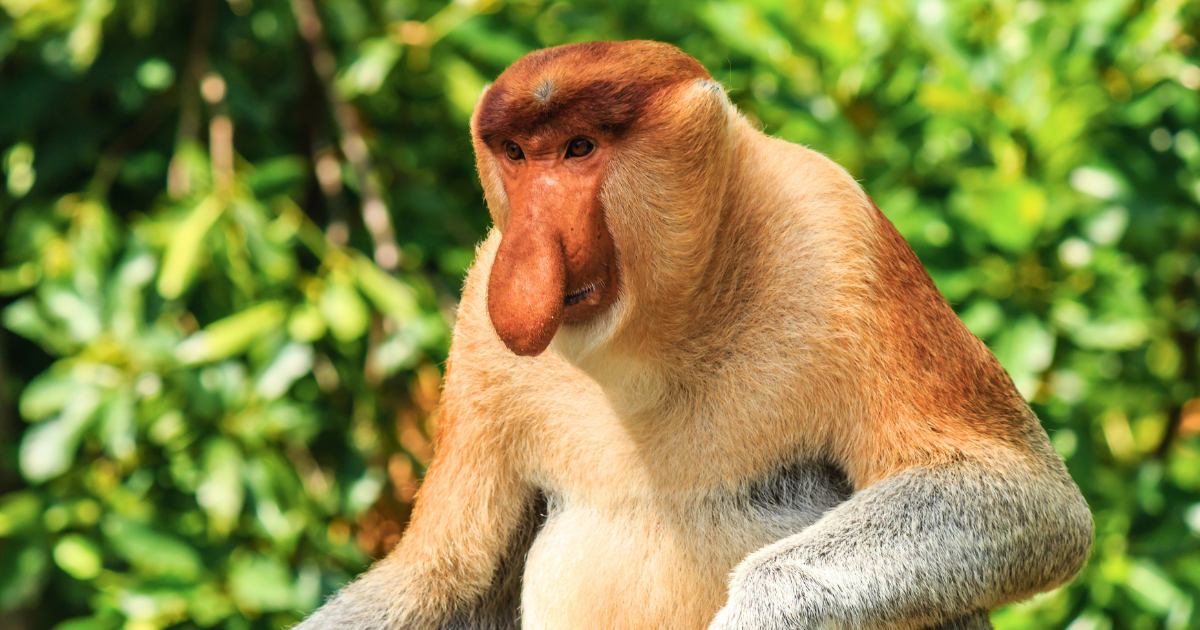
Found naturally only on Borneo, proboscis monkeys inhabit riverside forests and mangroves, where groups gather in trees before nightfall.
What other animals live in Malaysian Borneo?
Beyond the Big 5, Malaysian Borneo is home to the world’s smallest bear, elusive forest cats and nocturnal primates. Wildlife encounters also extend to the coast, where green and hawksbill turtles come ashore to nest on the islands off Sabah.
Sunda clouded leopard
The Sunda clouded leopard is Borneo’s largest wild cat, recognisable by the dark, cloud-shaped markings across its coat. It has short, powerful legs and broad paws for climbing, while its long tail helps it balance along branches. These adaptations allow it to move through the canopy, although it also travels on the ground. Despite its name, it is a separate species from the leopard found across mainland Asia and Africa.
Travellers hoping to see one can join wildlife drives in Sabah’s Deramakot Forest Reserve, where researchers also use camera traps to study the cats. Sunda clouded leopards have been recorded in Danum Valley and Tabin Wildlife Reserve, but their presence does not make sightings routine. They are secretive and difficult to locate, so an encounter should be treated as a possibility during a broader wildlife trip rather than an expected part of the itinerary.
Malayan sun bear
Malayan sun bears are the world’s smallest bears, recognisable by their short black coats and pale chest patches, which vary in shape between individuals. They use strong claws to climb trees and tear apart decaying wood in search of insects. Their long tongues help them reach ants and termites inside crevices and extract honey from bee nests, giving them the name “honey bear”.
Travellers can observe them at the Bornean Sun Bear Conservation Centre in Sepilok, beside the orangutan rehabilitation centre. Rescued bears live in forest enclosures where they can climb, forage and develop the skills needed for life in the wild. Visitors can watch from raised platforms, with staff available to explain individual bears’ behaviour and rehabilitation. This provides an opportunity to see how they use their claws and tongues while searching for food.
Slow lorises
Slow lorises are small nocturnal primates with large eyes suited to low light and dark markings around their faces. They move through the trees by gripping branches firmly with their hands and feet, reaching across gaps rather than jumping. Guided night walks at Sepilok’s Rainforest Discovery Centre offer a chance to spot them, although their size and quiet movements can make them difficult to find.
Slow lorises also have an unusual defence for a primate. They lick a secretion from glands on their upper arms, mixing it with saliva to deliver a venomous bite. This ability belongs to several slow loris species, including those found on Borneo. During a sighting, visitors should leave them space to move and follow the guide’s instructions on lighting, allowing the animal to continue foraging without being handled or disturbed.
Bearded pig
Bearded pigs get their name from the coarse, pale whiskers that grow around their cheeks and snouts. They use these snouts to dig through soil for roots and earthworms, supplementing their diet with fallen fruit. Some follow feeding macaques through the forest, picking up pieces dropped from above. When fruit becomes scarce, they can travel considerable distances to find a fresh supply.
At Bako National Park in Sarawak, bearded pigs may wander out of the forest to search for food along the shore. Seeing them in the open makes it easier to distinguish their slender bodies, elongated heads and facial bristles. Visitors can watch them searching the ground for food, but should give them room to pass and avoid offering scraps that encourage them to approach people.
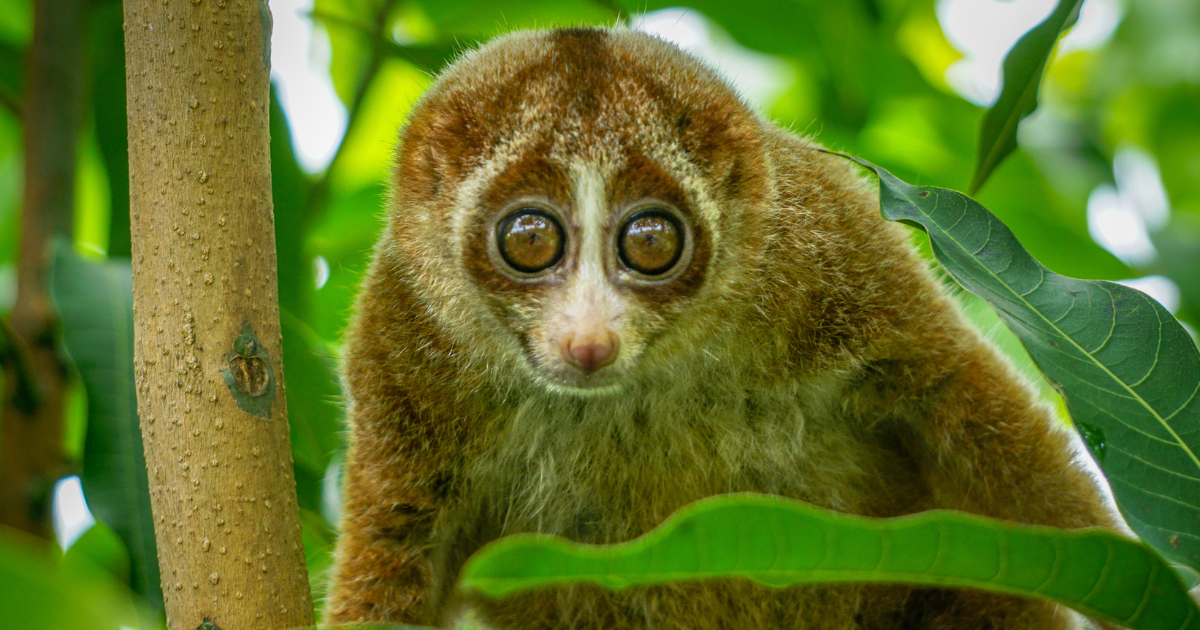
Slow lorises move through the trees at night, feeding on tree gum, nectar and insects. Their strong grip helps them reach food while hanging from branches.
What to know before planning a wildlife trip to Borneo
A wildlife itinerary should allow time for several guided outings, with some flexibility for rain and changes in animal movements. Before booking, travellers should check the number of excursions included, the times they run and the amount of walking involved.
Are wildlife sightings guaranteed?
Sightings cannot be guaranteed, even on a Borneo tour focused on wildlife. These trips visit areas where all five species live, but some species may not be visible during an excursion. Animals move between feeding areas and may remain hidden beyond the trails or riverbanks. On the Kinabatangan, taking both morning and afternoon cruises allows time to search again as animals move between feeding and resting places.
When is the best time to visit?
March to September is generally a good period for wildlife trips, though the driest months vary across Malaysian Borneo. Sabah’s northeast coast usually receives its lowest rainfall in April, while coastal Sarawak is typically driest in June or July. Travellers visiting both states should consider the seasonal conditions at each stop. The wetter period usually falls between November and March, when the northeast monsoon brings heavier rain to western Sarawak and northeast Sabah.
What should travellers bring and wear?
Lightweight, loose-fitting clothes help travellers stay comfortable in the heat and humidity. For forest walks, long sleeves and trousers also help protect against insect bites and scratches from vegetation. Closed shoes with good grip help on wet, uneven trails, while a lightweight raincoat is useful for both walks and river cruises. Cameras and phones should be kept in waterproof bags when not in use. A small daypack can hold these items alongside drinking water, leaving hands free when boarding boats or using railings along forest walkways.
How can visitors watch wildlife in Borneo responsibly?
Visitors should give animals space to feed, rest and move away, following their guide’s directions and avoiding crowding or pursuing them for photographs. Binoculars or a zoom lens allow a closer view without approaching. The same care applies at rehabilitation centres. At Sepilok, visitors should remain at least 10 metres from orangutans and step back quietly if one approaches a boardwalk, leaving its path clear. Touching the orangutans and using flash photography are not permitted.
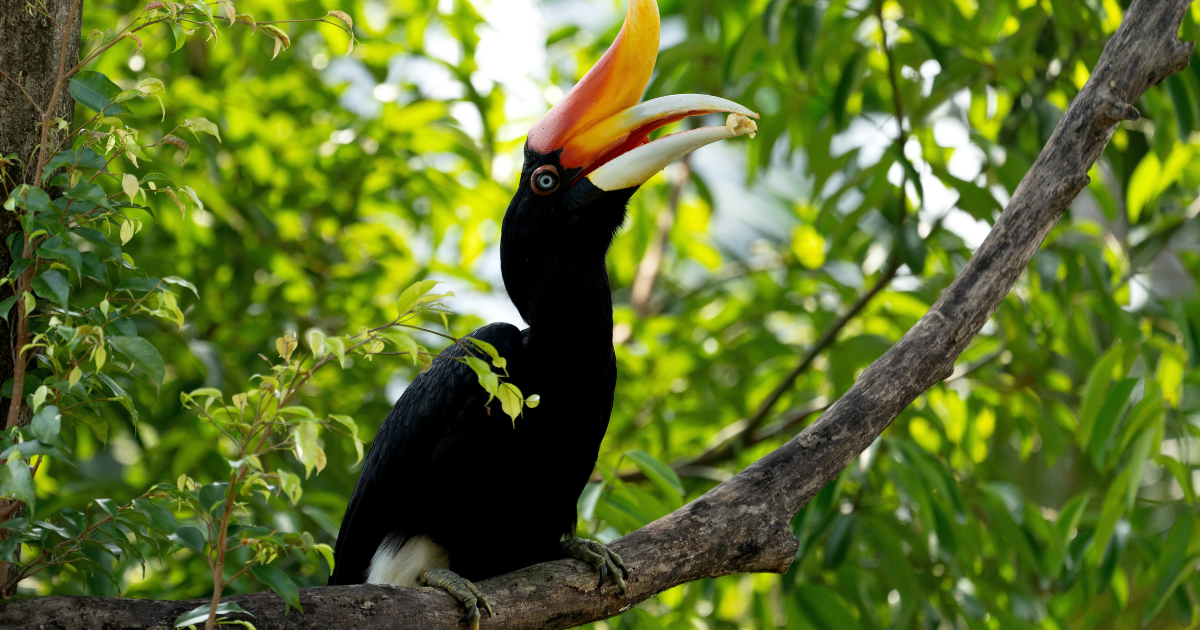
Rhinoceros hornbills depend on mature trees for nesting hollows and help spread seeds as they travel between feeding sites.
Explore Malaysian Borneo with Remarkable East
Remarkable East specialises in small group journeys across Asia, with a maximum of 12 guests on each departure. Our Untamed Borneo Expedition explores Sarawak and Sabah, combining Bako’s forest trails, Sepilok’s wildlife centres and Kinabatangan river cruises. Contact our team to discuss the itinerary and upcoming departures.