
Ceylon tea is one of Sri Lanka's most recognised exports, valued for its quality and the distinctive varieties produced across the island. Much of its story is rooted in Sri Lanka's hill country, where plantations extend from the hills around Kandy to the higher elevations of Nuwara Eliya and east towards Haputale. Tea has been grown across these hills for generations, and the estates and factories remain an important source of work for local communities.
Many working plantations welcome visitors to see how Ceylon tea is grown and processed, offering a closer look at an industry that continues to shape life in the highlands. There is also much to discover beyond the tea estates, particularly around Kandy, Sri Lanka's last royal capital.
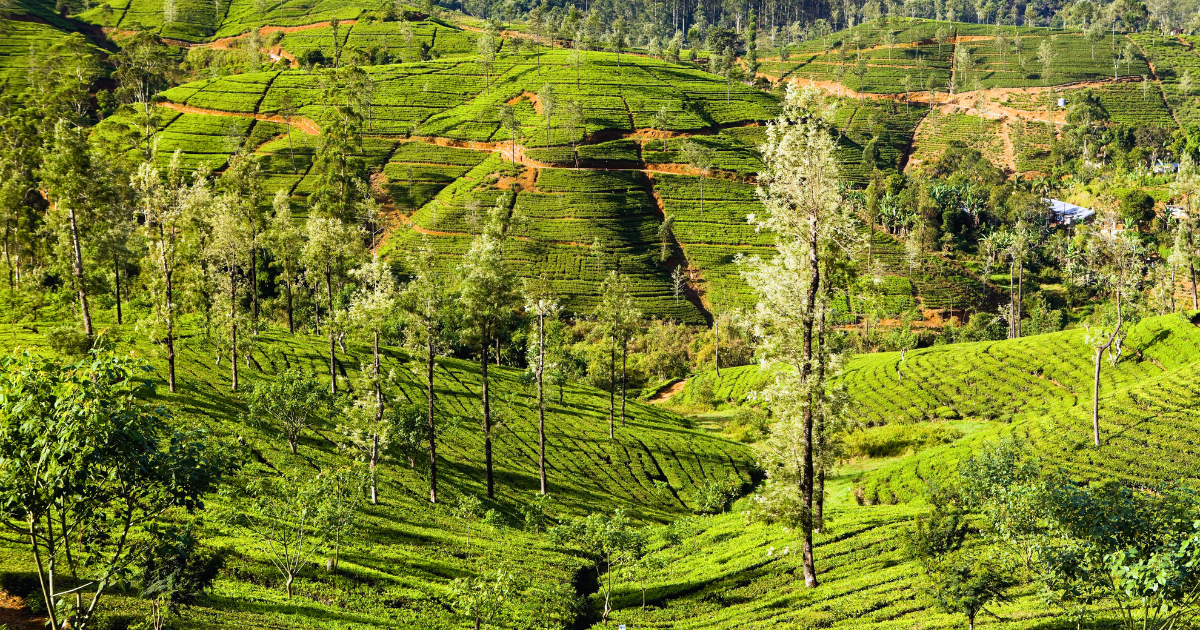
Tea plantations have shaped the landscape and livelihoods of Sri Lanka’s hill country since the nineteenth century.
What exactly is Ceylon tea?
Ceylon tea is produced from the leaves of the Camellia sinensis plant grown in Sri Lanka, which was known as Ceylon until 1972. The name remained in use because Sri Lankan tea had already established a reputation worldwide. Today, the Sri Lanka Tea Board protects its authenticity through the official Lion Logo, which certifies that the tea is 100% Sri Lankan and packed within the country.
Ceylon tea is valued for its quality and range of flavours, which are influenced by where it is grown. In the cooler highlands, tea tends to develop a lighter, more delicate flavour, while leaves grown at lower elevations generally produce stronger, fuller-bodied teas. Differences in altitude and seasonal rainfall contribute to these variations, giving Sri Lanka's tea-growing regions their own distinctive characteristics.
Beyond these regional differences, Ceylon tea is also produced in several forms. Black tea is the most widely cultivated, recognised for its brisk flavour and rich colour. Sri Lanka also produces green and white teas, including Silver Tips, a prized white tea made from young, unopened buds. The distinction between black, green and white tea depends mainly on how the harvested leaves are processed.
How did Ceylon tea become synonymous with the history of Sri Lanka?
During British colonial rule, coffee was the main plantation crop in Sri Lanka's central highlands. Large estates were established around Kandy, where coffee was grown for export. Tea was still a relatively new crop when Scottish planter James Taylor began cultivating it commercially at Loolecondera Estate in 1867. His success showed that the highland climate was also suitable for tea production.
In 1869, a fungal disease known as coffee leaf rust began spreading across the island, devastating coffee plantations. With coffee production declining, estate owners turned to tea as an alternative. Many converted their existing plantations, making use of the roads and other facilities already established for the coffee industry. By the end of the 19th century, tea had largely replaced coffee as Sri Lanka's main plantation crop.
As tea production expanded, so did the demand for plantation workers. British estate owners relied heavily on labourers brought from South India, particularly Tamil communities, to maintain the plantations and harvest the leaves. Many workers and their families lived in basic housing known as line rooms, built in rows within the estates. Over generations, these settlements developed into established communities, and descendants of the original workers continue to play an important role in Sri Lanka's tea industry today.
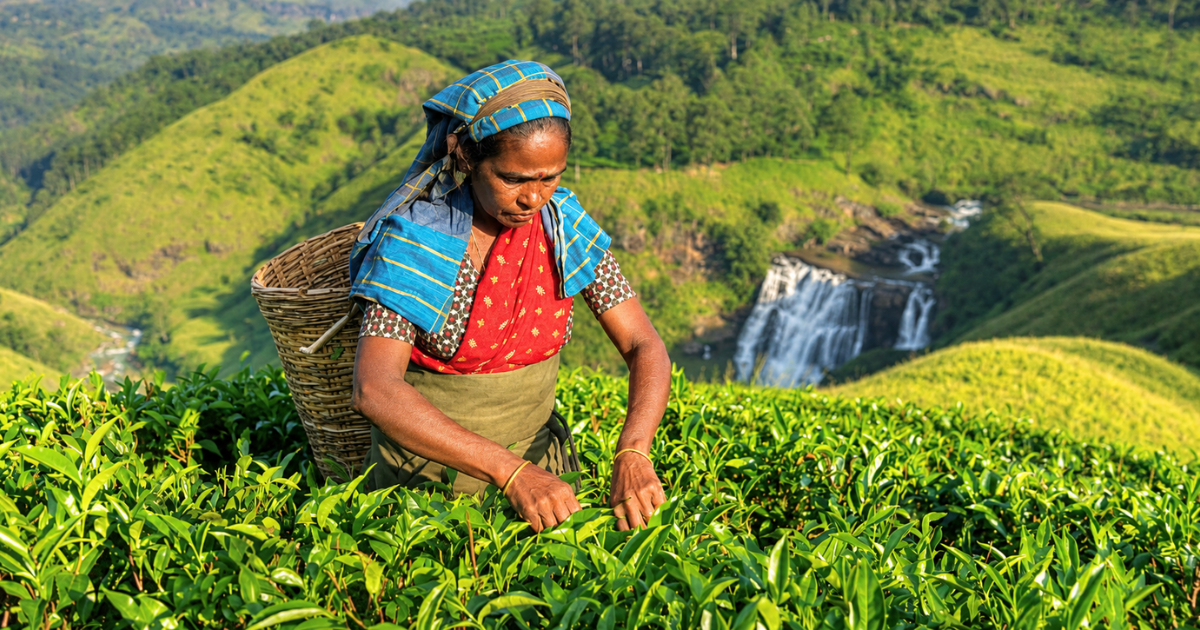
Estate workers and their families have played a central role in Sri Lanka’s tea industry for generations.
Where is Sri Lanka's tea country?
Sri Lanka’s tea-growing regions extend across the central highlands and into the warmer lowlands of the south and south-west. The hill country includes the estates around Kandy and Nuwara Eliya, continuing east into Uva Province around Haputale and Ella. Beyond these mountain areas, Ruhuna and Sabaragamuwa are important producers of low-grown Ceylon tea. Remarkable East's Reflections of Ceylon tour explores this part of the hill country, with time in Kandy and the surrounding countryside near Digana.
Kandy
Kandy is one of the oldest tea-growing areas in Sri Lanka and the region where commercial Ceylon tea production began. The city sits in a valley surrounded by hills, with plantations extending into Hantana, Gampola and Hewaheta. These estates generally grow tea at moderate elevations, producing what the industry calls mid-grown Ceylon tea. Compared with the lighter teas grown farther into the mountains, Kandy teas tend to have a stronger flavour and a deeper, coppery colour when brewed.
The hills around Kandy are also closely connected to the early development of Sri Lanka's tea industry. At Hantana, the Ceylon Tea Museum occupies a former tea factory built in 1925, with displays of historic processing machinery and exhibits about the industry's development. The museum provides a good introduction to the region's plantation history before travelling into the higher tea-growing areas.
Nuwara Eliya
Nuwara Eliya lies around 1,800 metres above sea level, making it one of the highest towns in Sri Lanka. Its cooler mountain climate attracted British colonial officials, who developed the town as a hill station during the 19th century. Tea plantations also spread across the surrounding slopes, where the growing conditions contribute to the light golden colour and delicate fragrance associated with Nuwara Eliya tea.
The town remains closely connected to the estates surrounding it, many of which have operated since the colonial period. Pedro Tea Estate, established in the 19th century, is one of the best-known examples, with its factory retaining historic machinery used in tea production. Visitors can learn about the estate's operations while exploring an area where tea cultivation continues to play an important role in the local economy.
Dimbula
Dimbula is a tea-growing district in the western part of the central highlands rather than a single town. It covers several plantation areas, including Hatton, Dickoya and Talawakelle, where estates occupy the mountain slopes at elevations generally above 1,200 metres. Tea cultivation expanded here during the 1870s, and the region became an important producer of high-grown Ceylon tea.
Dimbula receives heavy rainfall during the southwest monsoon, particularly on its western-facing slopes. Conditions change between January and March, when cooler, drier weather influences the character of the harvest. Teas produced during this period are especially valued for their fragrance and bright golden-orange colour. The plantations remain central to the area's economy, with many of the settlements around Hatton and Talawakelle closely connected to the tea industry.
Haputale
Haputale lies in Uva Province, where the central highlands give way to steep mountain slopes overlooking the southern lowlands. Tea estates cover the hills around the town, particularly towards Bandarawela and the Dambatenne plantation. The area experiences a different pattern of seasonal winds from the western tea-growing districts, with drier conditions between July and September contributing to the distinctive aroma associated with Uva tea.
Haputale is also associated with Sir Thomas Lipton, the Scottish tea merchant whose company helped introduce Ceylon tea to international consumers. Dambatenne Tea Factory was established during his time, while nearby Lipton's Seat takes its name from the viewpoint where he is said to have surveyed the surrounding estates. The viewpoint overlooks the plantations and offers expansive views of the countryside when the weather is clear.
Ella
Ella is another well-known destination in Uva Province, situated east of Haputale among hills where tea is still cultivated in nearby villages. Although the town has become popular for its mountain scenery and vibrant town centre, the nearby estates remain active producers of Ceylon tea. Many occupy the slopes around Ella and Namunukula, where changes in elevation and exposure to seasonal winds influence growing conditions.
One of the best-known places to experience tea production near Ella is Uva Halpewatte Tea Factory, located around 6km from the town. The factory has operated since 1940 and offers guided visits that introduce travellers to the processing of freshly harvested leaves. Its location among the surrounding plantations also makes it possible to see the connection between the growing estates and the factories where the leaves are turned into finished Ceylon tea.
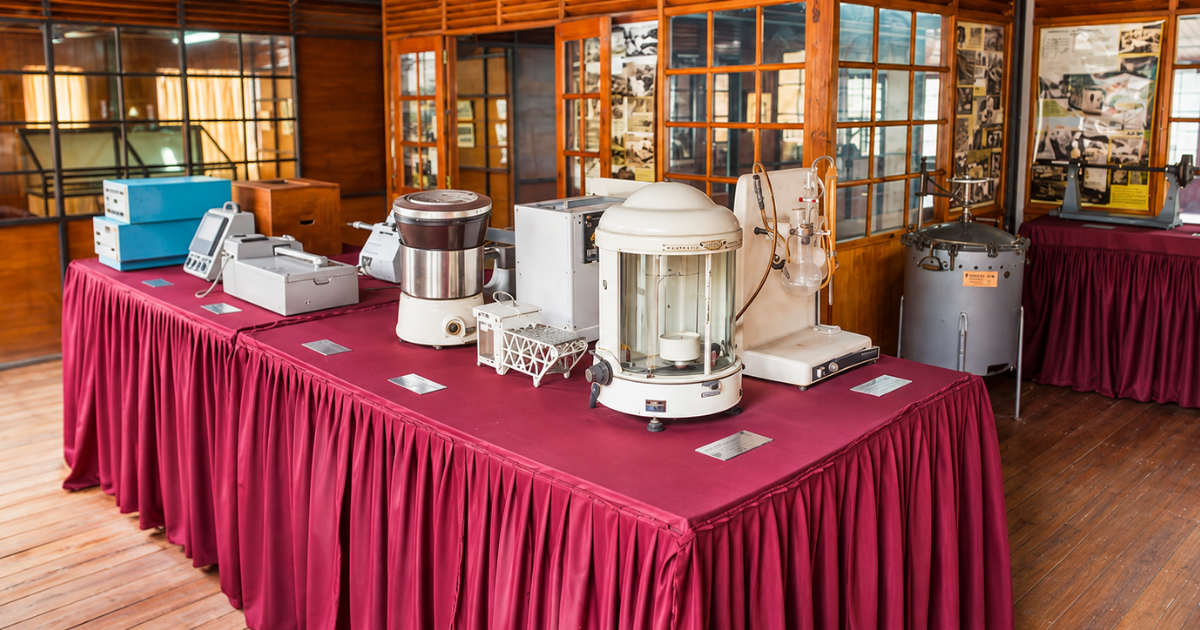
The Ceylon Tea Museum near Kandy provides an introduction to the industry’s history before travellers explore the surrounding tea-growing regions.
What’s the best way to explore Sri Lanka's tea plantations?
Visiting a working tea plantation is one of the best ways to learn about Ceylon tea while exploring Sri Lanka's hill country. Several estates around Kandy, Nuwara Eliya and Ella offer guided visits, where travellers can see how tea is harvested and follow the process of turning fresh leaves into finished tea. Some experiences include time among the tea bushes, while others focus on the factory and end with a tasting.
Exploring a working tea plantation
A walk through a tea plantation begins among rows of neatly maintained bushes that follow the contours of the hills. Although tea plants can grow into small trees, those on commercial estates are regularly pruned to keep the newest leaves within easy reach. Harvesting focuses on these tender shoots, with workers traditionally selecting two leaves and a bud from each stem. Older leaves remain on the bush, allowing new growth for future harvests.
Much of the harvesting is carried out by women from local plantation communities, whose families have often worked on the estates for generations. During a guided walk, visitors can learn how workers judge which shoots are ready for picking and how frequently the same bushes can be harvested. Selecting the tender growth requires care to avoid damaging the plant. The harvested leaves are collected in baskets or sacks and weighed before being transported to the factory.
Visiting a tea factory
Once harvested, the fresh leaves are taken to a factory, usually located within the estate or a short distance from the fields. Processing begins soon after picking to preserve their condition. Inside the factory, the leaves are first spread across long, ventilated troughs, where they gradually lose moisture and become soft enough for rolling. Rolling machines then twist and bruise the leaves, breaking down their cells and allowing oxidation to take place.
During oxidation, the leaves gradually turn coppery brown as their flavour develops. Factory workers monitor this stage carefully because the timing affects the finished tea. Once the desired level of oxidation is reached, the leaves are dried using heated air before being sorted into grades according to their size. Visitors may see the machinery operating during a guided tour, depending on the production schedule, while guides explain how the different stages affect the tea's colour and taste.
Tasting Ceylon tea
After the factory tour, some estates offer a tasting of the teas produced on their plantations. Several samples may be prepared side by side, usually without milk or sugar, so visitors can appreciate their natural flavours. Guides explain what to look for in each cup, including the colour of the brewed tea and differences in aroma and strength. Tasting them together makes these differences easier to recognise.
Some tastings also introduce the different tea grades, which are determined by the size and appearance of the processed leaves. For example, Orange Pekoe generally contains larger, whole leaves, while Broken Orange Pekoe consists of smaller pieces that release their flavour more quickly when brewed. These grades do not indicate quality, but they help explain why teas from the same plantation can produce different brews.
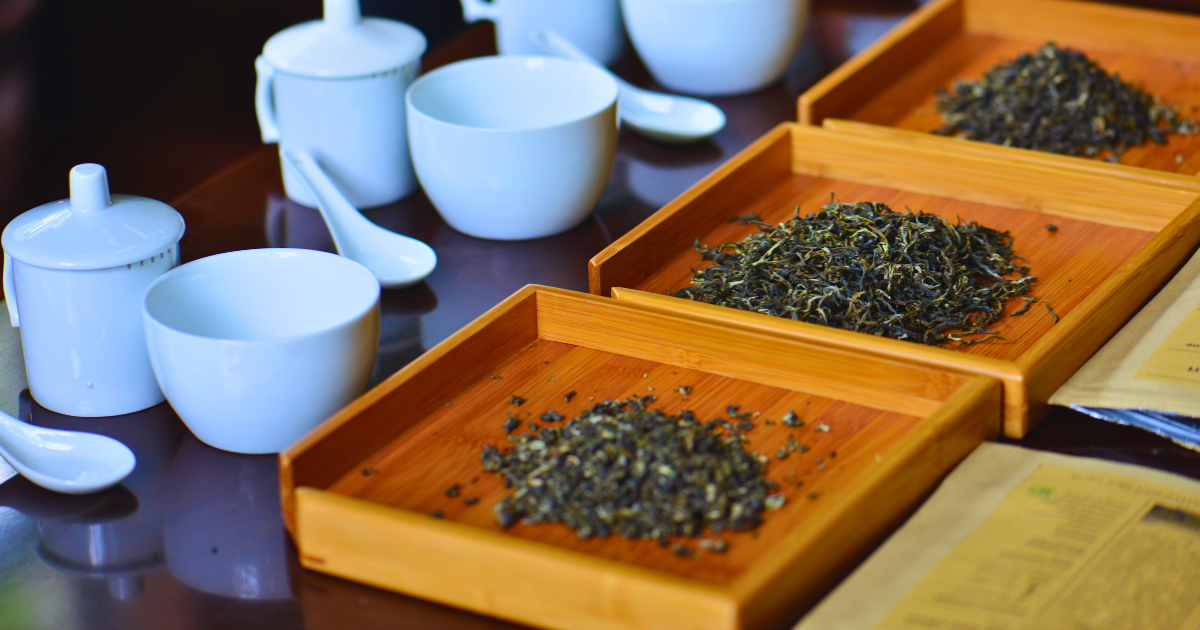
Estate visits connect the work of growing and processing tea with the flavours visitors discover during a tasting.
Tea aside, what else can travellers experience in Sri Lanka's hill country?
Sri Lanka's hill country offers much more than tea plantations. Kandy, at the gateway to the highlands, is home to some of the country's most important historical and religious sites. Farther into the mountains, the landscape opens into protected forests and grasslands. Travelling between these areas also offers an opportunity to experience the historic railway built to connect the plantations with the rest of the island.
Kandy's royal and religious heritage
Kandy was the last capital of Sri Lanka's Sinhala kings before the kingdom came under British rule in 1815. The city developed around a royal palace complex that remains one of its most important historic sites. Within the complex stands the Temple of the Sacred Tooth Relic, which houses a tooth believed to belong to the Buddha. Possession of the relic was once closely associated with the right to rule, making Kandy an important centre of both royal authority and Buddhist worship.
The temple remains an active place of pilgrimage, where monks conduct daily ceremonies and devotees gather to offer prayers and flowers. Visitors can enter designated parts of the complex and observe these traditions, although the relic itself is kept within a shrine and is not displayed to the public. A short walk from the temple leads to Kandy Lake, which was created in 1807 by King Sri Vikrama Rajasinha. The lake dates from the final years of the Kandyan Kingdom and remains an important part of the city's historic centre.
The railway through Sri Lanka's hill country
Sri Lanka's hill-country railway dates to British colonial rule, when it was built to transport coffee from the plantations to Colombo for export. As tea replaced coffee during the late 19th century, the railway was extended farther into the highlands to serve the growing tea industry. The line reached Nanu Oya in 1885 and Bandarawela in 1894 before eventually extending to Badulla in 1924. Many of the towns along the route developed around the railway and the plantations it served.
The journey between Nanu Oya and Ella is particularly popular for its mountain scenery. The train travels through tea-growing districts and winds around the hills near Haputale, where passengers can see plantations extending down the slopes. Along the way, the railway passes through small towns that developed alongside the plantation industry. The journey offers a chance to see how extensively tea cultivation has shaped this part of Sri Lanka.
Mountain walks and natural landscapes
Although tea plantations cover much of the cultivated highlands, some areas remain protected for their native vegetation and wildlife. Horton Plains National Park, around 30km from Nuwara Eliya, lies on a high-altitude plateau more than 2,100 metres above sea level. Unlike the surrounding plantation country, the park is dominated by open grasslands interspersed with montane cloud forest. These habitats support sambar deer and several bird species found only in Sri Lanka.
One of the main attractions at Horton Plains is World's End, a viewpoint where the plateau ends in a steep drop of approximately 900 metres. A walking circuit of around 9km leads to the viewpoint and continues past Baker's Falls, another well-known landmark within the park. Early mornings generally offer clearer views before mist settles over the plateau. For a shorter mountain walk, Little Adam's Peak near Ella follows a trail through tea-growing countryside to a ridge overlooking Ella Gap and the plains below.
What to know before visiting Sri Lanka's tea country?
Travelling through Sri Lanka's tea country requires planning around the mountainous terrain. The road from Kandy to Nuwara Eliya climbs through winding hills, and journeys can take longer than the distances suggest. The weather also changes with elevation, so a visit to the highlands calls for different preparations from a stay along Sri Lanka's coast.
When is the best time to visit Sri Lanka's tea country?
January to March is generally a favourable period for exploring the highlands around Kandy and Nuwara Eliya. January and February often bring clearer conditions for mountain views, although rain is still possible. The cooler temperatures make walking and sightseeing comfortable during the day, particularly around Nuwara Eliya.
Weather conditions differ across the tea-growing regions. The western slopes receive heavy rainfall during the southwest monsoon from May to September, while October and November often bring rain across much of the island. Areas farther east, including Haputale and Ella, experience different rainfall patterns because the central mountains influence the movement of monsoon winds. Tea estates operate throughout the year, although heavy rain or mist can affect outdoor visits and mountain viewpoints.
How many days should travellers spend in Sri Lanka's hill country?
A two or three-night stay allows time to concentrate on one part of the hill country. Spending time in Kandy can include the Temple of the Sacred Tooth Relic and a visit to a nearby tea estate, while Nuwara Eliya offers access to high-grown tea plantations and Horton Plains National Park.
With four or five nights, a journey can include both Kandy and Nuwara Eliya without spending every day travelling between destinations. Haputale and Ella can be added to a longer itinerary continuing east through the highlands. The mountain roads are winding, so allowing time between stops is important, especially when visits to tea factories or early morning excursions are included.
What should travellers wear and bring?
Temperatures in the hill country are noticeably cooler than in Sri Lanka's lowlands, particularly around Nuwara Eliya. A light jacket or jumper is suitable for most daytime sightseeing, but warmer layers are recommended for early morning visits to Horton Plains, where temperatures can be much lower. Rain protection is useful throughout the year, as showers can develop even during the drier months.
Comfortable walking shoes are also important for tea estate visits, where paths may be uneven or muddy after rain. When visiting Buddhist temples in Kandy, clothing should cover the shoulders and knees. Shoes and hats must also be removed before entering the temple buildings.
Do Australians need a visa to visit Sri Lanka?
Australian passport holders must obtain an Electronic Travel Authorisation (ETA) before travelling to Sri Lanka. Under the arrangements introduced in May 2026, the tourist ETA is free for Australians and permits a stay of up to 30 days. Applications can be completed through Sri Lanka's official ETA website before departure.
Passports must be valid for at least six months from the date of arrival. Travellers should also have a confirmed return or onward ticket and sufficient funds for their stay. Those wishing to remain longer than 30 days can apply for an extension, subject to additional fees. As visa requirements may change, the latest information should be checked through the Sri Lankan immigration authorities or Australia's Smartraveller website before departure.
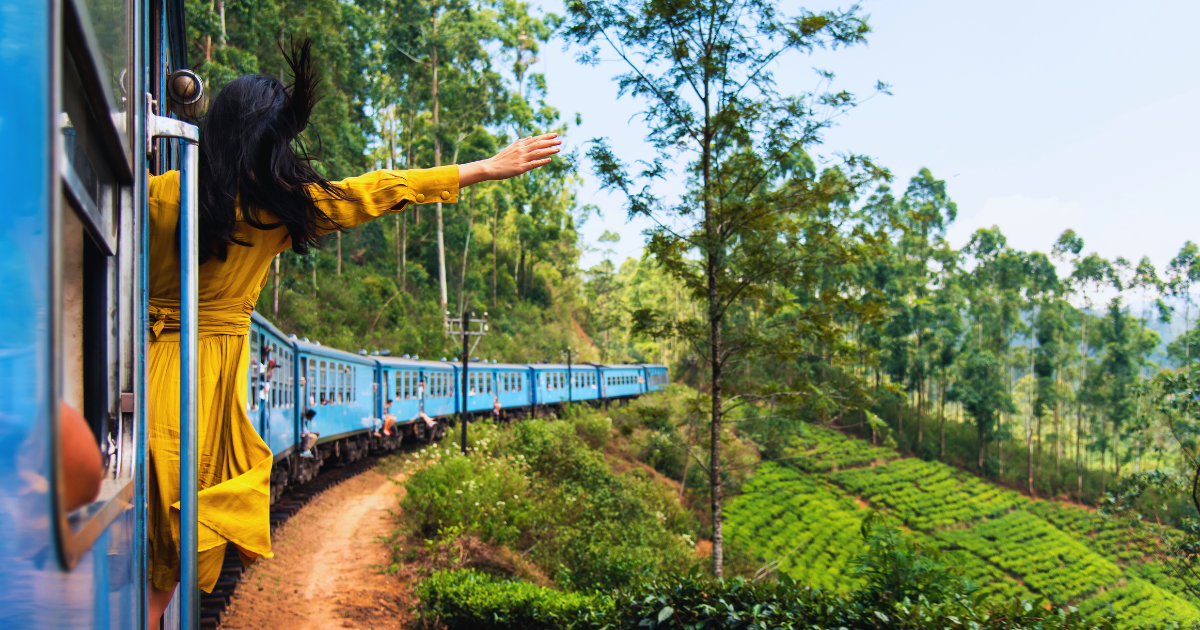
Beyond the estates, railway journeys offer a way to experience the mountain scenery between the hill country’s towns.
Explore Sri Lanka with Remarkable East
Remarkable East specialises in small-group journeys across Asia, drawing on more than two decades of travel experience to create thoughtfully planned itineraries. Our Sri Lanka tours introduce travellers to the country's history and culture, with opportunities to discover more of the island beyond its familiar sights. To learn more about our tours and upcoming departures, get in touch with our team.