
Why The Visayas Offers A Different Side Of The Philippines
The Philippines is one of the largest archipelagos in the world, made up of more than 7,000 islands divided into three main groups. Luzon in the north holds the capital, Manila, and most of the country's political and economic activity. Mindanao in the south has its own distinct cultural and religious history, with strong Muslim and indigenous influences. Between them lies the Visayas, a central cluster of islands that international travellers often overlook despite a long history and considerable cultural depth.
The Visayas is where Spanish colonisation of the Philippines began, with Ferdinand Magellan landing on Cebu in 1521. The centuries of trade, missionary activity and local resistance that followed left a layered cultural record, still visible in old stone churches, plaza-centred towns and food traditions that change noticeably from one island to the next. Daily life across these islands also remains closely tied to the sea, with fishing, inter-island ferries and coastal trade still fundamental to the regional economy.
For travellers who already know Manila or have spent time on the country's headline beaches, the Visayas offers a different version of the Philippines, with its own languages, food and pace of life. The Islands of the Visayas tour covers this side of the country through its history, its coastlines and cultural character that set the region apart from the rest of the country.
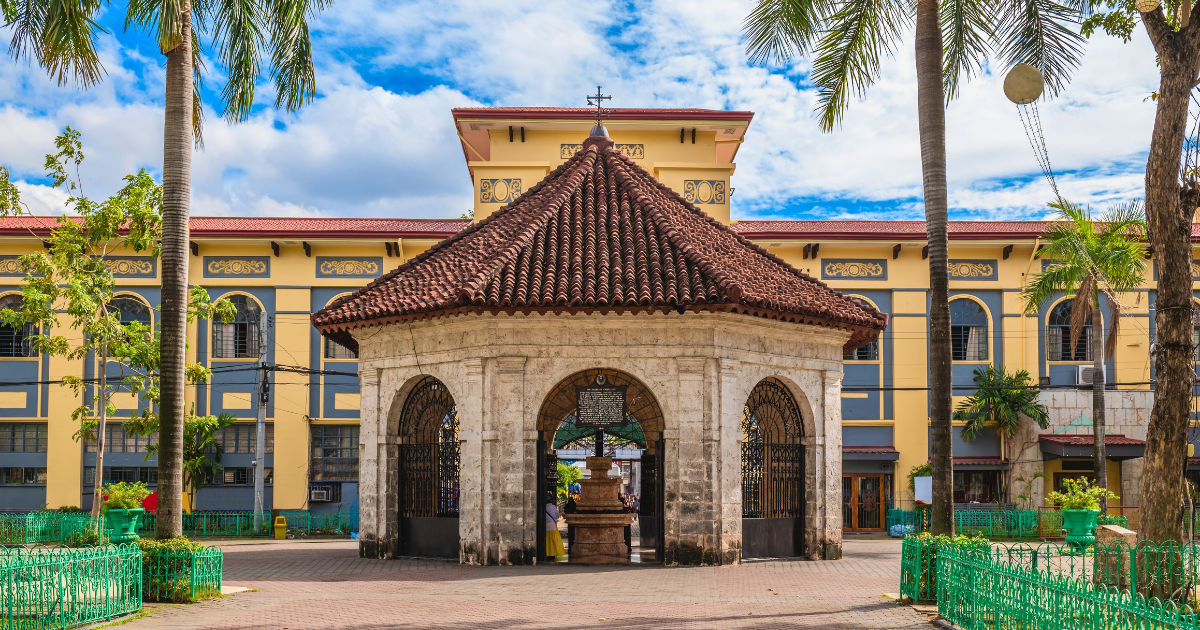
Cebu is the largest city in the Visayas and the regional centre for trade and travel. Magellan's Cross marks the point where Ferdinand Magellan planted the original cross in 1521.
Where are the Visayas located in the Philippines?
The Visayas is located in the central Philippines, covering around 57,000 square kilometres of land across more than 2,000 named islands. The region is surrounded and divided by water, with the Visayan Sea spreading across the centre, and the Camotes and Bohol seas lying between the smaller islands. To the west, the Sulu Sea opens towards Borneo and to the east, Samar and Leyte face the open Pacific. These inner waters carry more daily traffic than any road, and trips through the region usually involve short crossings by boat or domestic flight.
Cebu City is the regional hub and the main entry point for travellers, sitting around 570 kilometres south of Manila. Its airport, Mactan-Cebu International, is the country's second-busiest, with direct flights from Singapore, Hong Kong, Seoul, Tokyo and several other Asian gateways. Onward domestic connections reach the rest of the Visayas in under two hours, including the next biggest cities of Iloilo on Panay and Bacolod on Negros further west. Cebu sits between Bohol to the east and Negros to the west, both within easy reach by short flight or ferry.
What are the three regions of Visayas?
The Visayas split into three administrative regions, set west to east across the country's middle. The three are Western Visayas, Central Visayas and Eastern Visayas, each built around its own cluster of islands and a dominant Visayan dialect.
Western Visayas
Western Visayas covers Panay, Guimaras and the western half of Negros, with Hiligaynon as the dominant Visayan language. Iloilo and Bacolod sit at its commercial centre, both still carrying the heritage architecture and sugar-trading wealth of the colonial period. Panay is also home to the Ati people, an indigenous community whose presence on the island predates the arrival of Malay and Spanish settlers. Guimaras, the smaller island just south of Iloilo, is known across the country for producing the sweetest mangoes.
Central Visayas
Central Visayas takes in Cebu, Bohol, the eastern half of Negros and the smaller island of Siquijor, with Cebuano as the dominant language across all four. Each island has its own draw for travellers. Cebu carries the urban density and Spanish-era heritage centre, Bohol is built around the Chocolate Hills and its inland river country, and Negros Oriental and Siquijor lie further south with quieter coastlines and a slower pace. The four islands sit within short ferry reach of each other, making this the most easily combined sub-region for travel.
Eastern Visayas
Eastern Visayas faces the open Pacific and sees far fewer travellers than the other two sub-regions. It takes in Samar, Leyte and Biliran, with Waray spoken across the islands. Leyte was the landing point for the Allied return to the Philippines in October 1944, and the memorial at Red Beach in Palo is still one of the country's most-visited war sites. Beyond the WWII memorials, Samar holds some of the most extensive cave systems in Southeast Asia, and the San Juanico Bridge connecting it to Leyte is the longest road bridge in the country.
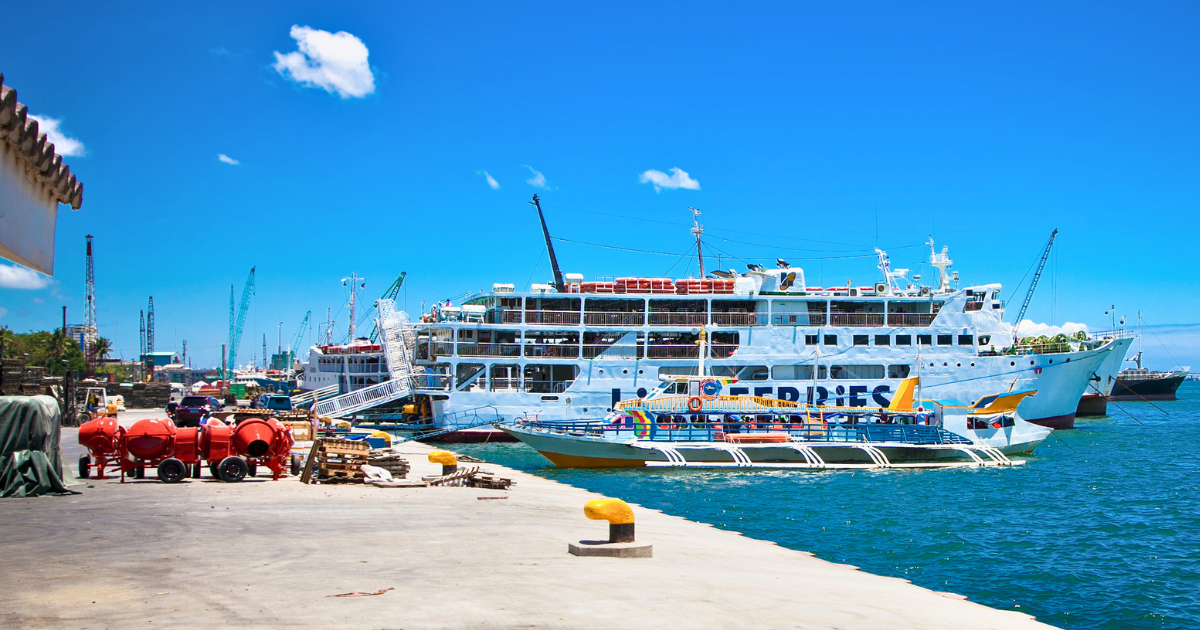
Ferries and short sea crossings connect the main island groups of the Visayas.
What is the Visayas known for?
The Visayas are known for being the first part of the Philippines that Spain reached, for languages that differ from the Tagalog-speaking north, and for a calendar of religious festivals that draw crowds from across the country.
Spanish colonial beginnings in Cebu
Spain first reached the Philippines through the Visayas when Ferdinand Magellan landed on Cebu in March 1521 during the first circumnavigation of the world. He died a few weeks later in the Battle of Mactan against forces led by the local chieftain Lapulapu, but left behind a small wooden statue of the Christ child that became the Santo Niño de Cebu, the country's oldest religious icon. Lapulapu is now regarded as the first Filipino to resist foreign rule, with a national monument and a city on Mactan Island named after him. The Battle of Mactan is commemorated each year on 27 April with a re-enactment at the site.
The first permanent European settlement in the archipelago was established at Cebu in 1565 by Miguel López de Legazpi, with the colonial capital staying there until it moved north to Manila in 1571. From Cebu, Spanish missionaries moved across the Visayas, building stone churches in coastal towns like Baclayon on Bohol, Boljoon in southern Cebu and Miagao on Panay. Miagao's coral-stone façade is carved with tropical Filipino motifs and is now protected as a UNESCO World Heritage site. The Visayas became the country's first and longest-evangelised Catholic region, and the Magellan's Cross shrine, Fort San Pedro and the Basilica del Santo Niño remain its main heritage sites in Cebu City today.
The Visayan languages and regional identity
The Visayan languages belong to the Bisayan branch of the Austronesian family, with around 30 million speakers across the central and southern Philippines. Cebuano alone is the country's second-most-spoken language and has more first-language speakers than Filipino itself. Within the Bisayan branch, Cebuano, Hiligaynon and Waray are the three main languages, each distinct enough that speakers from different sub-regions often switch to English or Filipino when meeting outside their own area. Smaller Visayan languages such as Aklanon on Panay and Boholano on Bohol carry their own variations and are still spoken at home.
Each Visayan dialect carries its own vocabulary and sound, with regional song traditions that have a different character from the Tagalog of the north. The balitaw, a traditional Visayan courtship duet, and the kuratsa, a partnered folk dance widely performed across the Visayas, are still part of weddings and town fiestas across the region. Visayan literature, including the poetry of Vicente Ranudo and the Cebuano-language novels of Vicente Sotto, has its own canon that runs alongside the more familiar Tagalog tradition. Most Visayans grow up speaking the regional dialect at home and continue using it through working life, with Tagalog and English picked up through schooling and used in formal settings.
Religious festivals and devotion
The three biggest Visayan festivals all fall in January and all honour the Santo Niño that Magellan's expedition left in Cebu. Sinulog in Cebu City is the largest, with several days of religious processions and street dancing leading to a grand parade on the third Sunday that draws around two million people. Ati-Atihan in Kalibo on Panay is the oldest, dating back centuries before Spanish arrival and later combined with Catholic devotion to the Santo Niño, with participants painting their faces with soot in honour of the Ati people. Dinagyang in Iloilo is the most choreographed, with competitive performance groups in Ati-style costumes drawing visitors from across the country.
Beyond January, the Visayan festival calendar continues through the year. MassKara in Bacolod takes place each October, with masked dancers in colourful costumes parading through the city in a tradition started in 1980 after the sugar crisis. Pintaflores in San Carlos and Sandugo in Tagbilaran draw smaller but loyal crowds, and most towns hold their own patronal fiestas tied to the saint's day of the local church. For Visayans, these festivals are part of an annual rhythm that combines Catholic devotion with civic and social life.
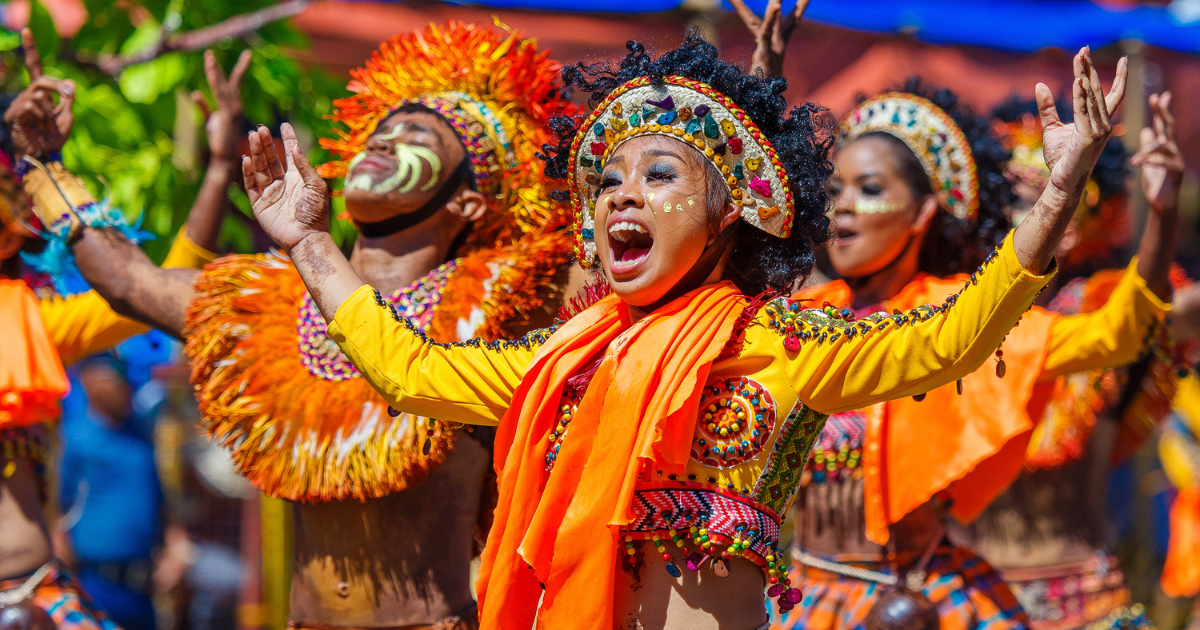
Dinagyang Festival in Iloilo honours the Santo Niño with choreographed street performances and Ati-inspired costumes.
What are the main islands in the Visayas?
Although the Visayas comprises more than 2,000 islands, the majority of visitors explore six key regions. Most Philippines itineraries combine two or three destinations, with convenient domestic flights and ferry services making island hopping straightforward.
Cebu and its southern coast
Most Visayan trips begin on Cebu, a long narrow island running roughly 200 kilometres from north to south. The provincial capital, Cebu City, lies partway down the east coast and serves as the main urban centre of the region. Its colonial-era core still stands alongside a modern business district, with the main Spanish heritage sites clustered together in the old quarter within walking distance of each other. Just nearby, Colon Street dates to the Spanish period and is the oldest standing street in the country, while the surrounding Carbon Market remains the city's main hub for food and produce.
The southern coast around Moalboal and Oslob is where most travellers head next, with the Moalboal sardine run holding a permanent school of fish close enough to swim out and join. Inland, Kawasan Falls and Osmena Peak draw walkers and day-trippers from the city. To the north, Bantayan and Malapascua sit off the island's tips, both small enough to cross in an afternoon, with pale-sand beaches and an unhurried pace. Malapascua is one of the country's main diving destinations, while Bantayan is more popular as a quiet base for a few days of rest.
Bohol and its inland interior
Bohol follows Cebu on most Visayan trips, with travellers usually splitting their time between the inland sights and Panglao Island, a small resort island on the south coast. The Chocolate Hills near Carmen are the island's signature view, more than 1,200 cone-shaped limestone mounds that turn from green to brown in the dry season. A slow boat ride up the Loboc River is another staple, with floating restaurants drifting through tropical forest to a small waterfall and back. The Philippine tarsier sanctuary at Corella protects the tiny nocturnal primate native to the country's southern islands, with early-morning guided walks giving the best chance to spot one in the wild.
On the coast, Panglao Island is the main resort base, connected to Bohol by two short bridges and known for the long Alona Beach strip and reef diving offshore. The smaller town of Anda further east has quieter, less-developed beaches and is becoming a popular alternative to Panglao. Pamilacan Island between Bohol and Mindanao is a small fishing community where day-boats run dolphin and whale-watching trips out into the Bohol Sea between March and June. The 1727 Baclayon Church on the south coast is one of the oldest stone churches in the country and is still in everyday use.
Negros and its sugar heritage
Negros has two distinct halves, with the west centred on Bacolod and the east on Dumaguete. The west is the country's old sugar-growing heartland, with Silay just to the north of Bacolod preserving more than 30 sugar-baron mansions from the late 1800s and early 1900s, several of them now open as small museums or restaurants. Bacolod itself is best known for chicken inasal, the grilled marinated chicken now eaten across the country, and for the MassKara Festival held each October. The Ruins, a roofless coral-stone mansion in Talisay just outside Bacolod, is one of the most photographed heritage sites in the region.
The eastern half, Negros Oriental, has a more relaxed pace, anchored by Dumaguete, a coastal university town with a long-standing expat and student community. Mount Kanlaon, the country's most active volcano, rises in the centre of the island and forms a long backdrop to either coast. Just off Dumaguete, the marine reserve at Apo Island has protected its reef since 1982 and remains one of the country's earliest examples of community-led conservation, with day boats from nearby Dauin a popular addition to most Negros stops. The Twin Lakes of Balinsasayao and Danao further inland are reached by a short boat ride through tropical forest and make a quiet half-day trip from Dumaguete.
Panay and Iloilo
Panay is divided into four provinces, with Iloilo City on the southeast coast as the main base for travellers. Iloilo's old quarter has a heritage core of nineteenth-century wooden mansions and Spanish-era churches in the Jaro and Molo districts, with several of the restored colonial houses now serving as small museums and family-run restaurants. La Paz Market in the city is the home of batchoy, the rich pork noodle soup that has become Iloilo's signature dish. The city is also the gateway to Guimaras Island, a 30-minute ferry hop across the strait, with mango plantations on the inland side and a string of small beaches on its south coast that make it a natural day trip.
To the north, Boracay is technically off Aklan but reached as a separate beach destination via Caticlan, with its 4-kilometre White Beach the main draw for resort-style holidays. Antique on the west coast runs into the Central Panay Mountains, where the hot springs and waterfalls around the Tibiao River make for a more rural, slower-paced trip, with kayaking on the Bugang River a popular addition. Capiz on the north coast is known as the country's seafood capital and for the iridescent capiz shells used in traditional Filipino window panes. The smaller heritage churches across Iloilo Province, including those at Sta. Barbara and Cabatuan, suit a slow day out of the city.
Samar and Leyte
Samar and Leyte are the least-visited of the major islands and the best for travellers wanting space and a slower pace, sitting at the eastern edge of the Visayas with Tacloban on Leyte as the regional capital. Visitors here often start with the Palo memorial and the surrounding sites tied to the 1944 Allied landing, then continue on to the smaller coastal towns and inland mountain roads. Limasawa Island off southern Leyte is recognised as the site of the first Catholic Mass in the Philippines, held in March 1521 during Magellan's voyage. The San Juanico Bridge, the longest road bridge in the country at over two kilometres, connects Leyte to Samar across a narrow strait.
On Samar, the Sohoton Natural Bridge and surrounding cave system in the south draw most of the visitors who venture this far east, with guided boat trips into the limestone caverns running year-round. The Pacific coast on the east side faces the open ocean and has some of the country's most consistent surf, with breaks between September and March at Calicoan Island and along the Borongan stretch. Calbiga in central Samar is the entry point to one of the largest cave systems in Asia, with several large chambers and underground rivers that are only partly explored. Biliran, the smaller third island, is reached by a short bridge from northern Leyte and has waterfalls and hot springs in its volcanic interior, often added as a calmer extension to a Samar or Leyte trip.
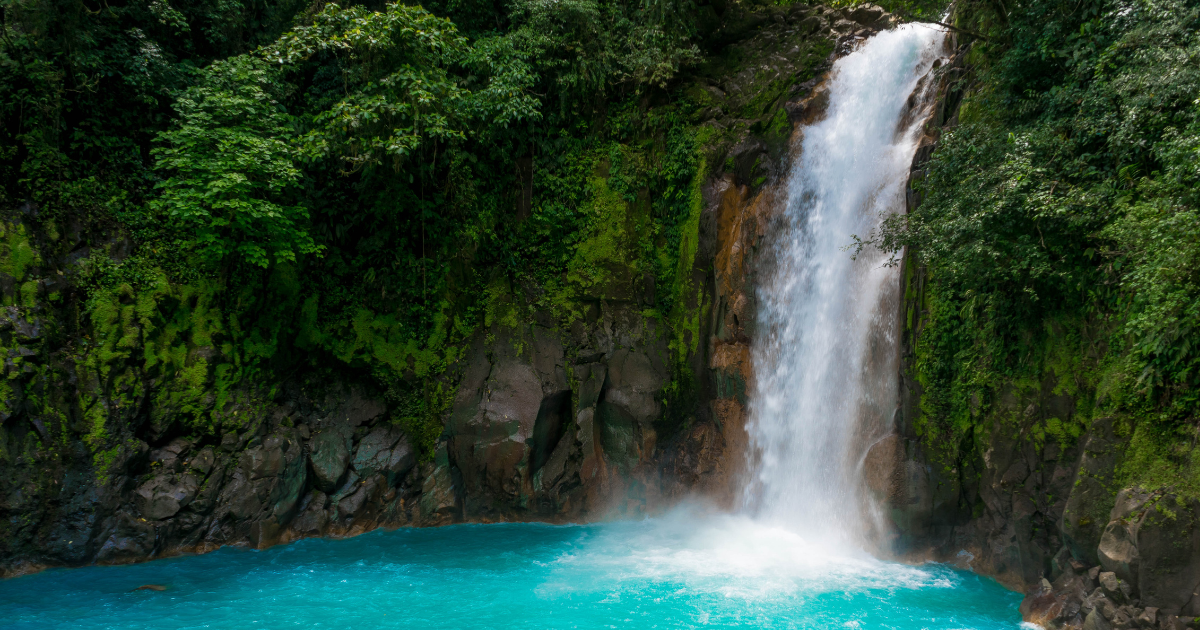
Kawasan Falls is one of southern Cebu’s best-known inland stops, often combined with Moalboal or other coastal areas on a Visayas trip.
What food is unique to the Visayas?
Some of the country's most-loved dishes started in the Visayas before being adopted nationally. The Visayan kitchen leans on seafood, coconut and vinegar-based marinades, with a coastal-leaning character distinct from the cooking traditions of Luzon to the north and Mindanao to the south. Six dishes in particular are worth seeking out, some now country-wide staples and others still mainly regional.
Lechon Cebu
Lechon Cebu is the slow-roasted whole pig that set the country's standard for the dish. The Cebuano method stuffs the cavity with lemongrass, garlic, scallions and bay leaves rather than dressing the meat in sauce, so the seasoning works through the pork as it roasts over coals for several hours. The skin comes out deep red and shatters at the knife. Carcar and Talisay south of Cebu City are the towns to head for, with their Sunday lechon tables drawing visitors from across the island.
Chicken inasal
Chicken inasal is the grilled, marinated chicken that started in Bacolod and Iloilo before becoming popular nationwide. The chicken is butterflied and marinated in vinegar, calamansi (a small citrus fruit), garlic and lemongrass for several hours, then grilled over coconut-shell charcoal and brushed with annatto oil. Manokan Country, a strip of long-running grill houses in Bacolod's city centre, is the most popular spot for an authentic plate, served with vinegar dip and unlimited rice.
La Paz batchoy
La Paz batchoy is a rich pork noodle soup with crushed pork crackling on top, named after the district in Iloilo City where it began. The broth is built on a long simmer of pork bones with garlic and shrimp paste, with thin egg noodles, slices of pork liver and beef added to the bowl. The original stalls in the La Paz Market in Iloilo still ladle the soup from large communal pots all day.
Kinilaw
Kinilaw is the Visayan version of ceviche, with raw fish or shellfish dressed in vinegar, calamansi, ginger and chilli, eaten wherever the day's catch comes in. The fish is cut into bite-sized pieces and the acid 'cooks' the flesh in a matter of minutes, with grated young coconut and onion added in some versions. It is the oldest preparation in Visayan cooking, predating Spanish arrival and still served at coastal markets and family gatherings throughout the region.
Pancit Molo
Pancit Molo is a clear pork-and-shrimp dumpling soup developed by the Chinese-Filipino families of the Molo district in Iloilo City. The dumplings are wrapped in thin wonton skins and dropped into a pork broth alongside shredded chicken and spring onion, with a finish of fried garlic and crisp chicharon flakes. It is one of the country's regional dishes most clearly drawn from Chinese cooking, and the Molo Mansion area in Iloilo is where the dish is most readily found.
Kalamay
Kalamay is the sticky rice and coconut dessert most associated with Bohol, sold in halved coconut shells along the road from Tagbilaran Airport. The basic recipe simmers glutinous rice flour, coconut milk and brown sugar until it thickens into a dark, fragrant caramel, sometimes finished with peanuts or anise. It travels well as a souvenir and is often the first or last food a visitor to Bohol picks up.
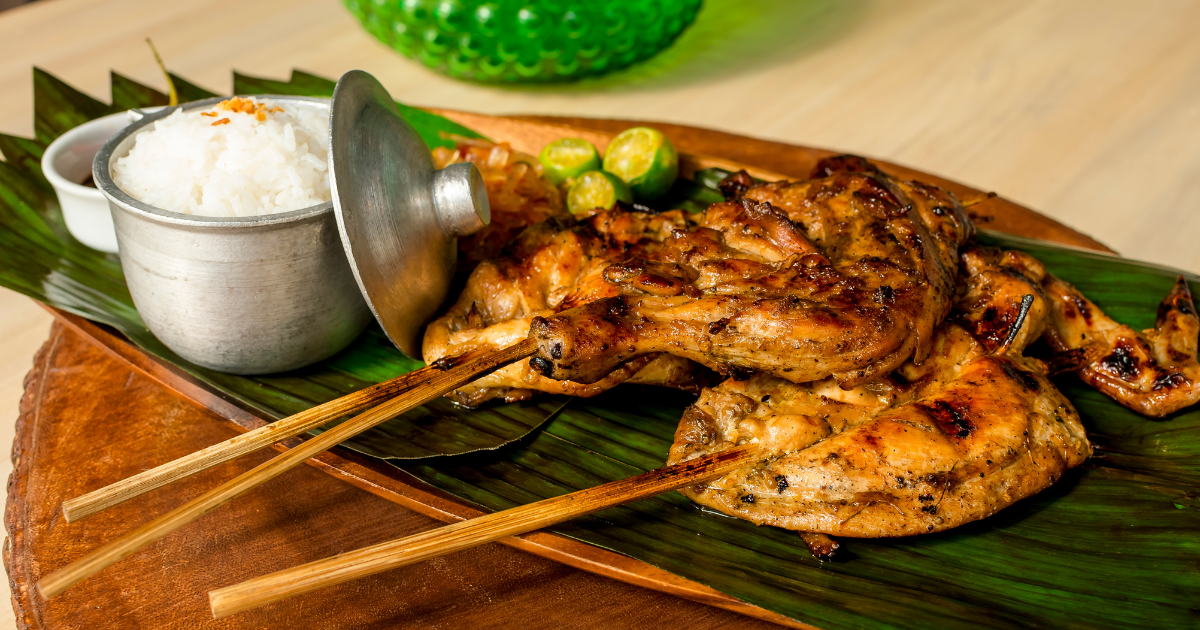
Chicken inasal, grilled over coals after marinating in calamansi, lemongrass and annatto oil, is one of the signature dishes of the Western Visayas.
What traditional crafts come from the Visayas?
The Visayas have a long-standing tradition of textile weaving and shellcraft, much of it developed during the Spanish colonial period and still practised today. The four most distinctive are hablon and piña fabrics from Panay, Capiz shell work from Capiz Province, and tikog grass mats from Samar and Leyte.
Hablon and patadyong
Hablon is the Iloilo handloom weaving tradition behind patadyong, the colourful checked or striped cloth worn across the Visayas as a sarong or as part of Filipiniana dress. The looms are wooden, foot-pedalled and passed down through families, with weaving still active in the towns of Miag-ao and Tigbauan south of Iloilo City. Travellers can watch the full process at a handful of workshops that take walk-in visits.
Piña fibre
Piña (pronounced as pinya) is the sheer, lightweight fabric woven from pineapple-leaf fibres, produced almost entirely around Kalibo in Aklan Province. The leaves are scraped to release the fine white fibres, which are then knotted by hand and woven on small looms in family workshops. Most formal Filipino barong tagalog shirts and Filipiniana dresses are made from piña, and a Kalibo workshop visit is one of the few ways to see the hand-knotting in action.
Capiz shell craft
Capiz shell craft uses the translucent, square-cut shells of the windowpane oyster, which were once the standard glazing material in Filipino-Spanish architecture, letting in soft light in place of glass. The shells are still harvested and processed in Capiz Province in northern Panay, then cut into uniform squares and set into wooden frames for windows, lampshades and decorative pieces. Roxas City has the largest concentration of capiz workshops, with several open to visitors year-round.
Tikog mat weaving
Tikog grass mat weaving is the Eastern Visayas craft most strongly tied to Basey in Samar and the surrounding villages. The tikog sedge is dried and dyed in bright reds, blues and yellows, then woven into large sleeping mats known as banig, often with personalised inscriptions or decorative borders. Most are still made by hand in weavers' homes, with Basey long established as the centre of the trade.
What marine life is unique to the Visayas?
The Visayas have some of the country's most distinctive marine encounters, including several found nowhere else in the world. The reefs between Cebu, Bohol and Negros Oriental form one of the densest concentrations of marine biodiversity in the country, with the wider Philippine seas home to more than 1,700 reef-fish species and 500 species of coral.
The Moalboal sardine run
Off Panagsama Beach in southern Cebu, millions of sardines have schooled close to shore year-round since at least the early 1990s. Swimmers and snorkellers can enter the water directly from the sand and reach the school within a few metres of the surface. The fish move as a single living formation, sometimes splitting into spiral or curtain shapes as predators come through, and travellers often spend hours watching without needing scuba gear.
Thresher sharks at Malapascua
Before sunrise each morning, dive boats leave Malapascua Island for Monad Shoal, a submerged seamount where pelagic thresher sharks come up from the deep to be cleaned by smaller fish. The island is one of the few places in the world where the sharks can be reliably encountered on a daily basis. The dive suits travellers with open-water certification who are happy with an early start.
Apo Island Marine Reserve
Locally-led conservation began at Apo Island in 1982, when residents of the small volcanic island off the southern Negros coast set up no-fishing zones around its fringing reef. The reef has since recovered to the point where Apo is now one of the most-studied conservation examples in Southeast Asia. Day boats run from Dauin and Dumaguete each morning, with giant clams, hawksbill turtles and healthy coral all visible from a snorkel mask.
Pamilacan whale and dolphin watching
The waters around Pamilacan Island in the Bohol Sea are home to spinner and bottlenose dolphins year-round, with sperm, melon-headed and Bryde's whales passing through between February and June. The small fishing community on the island runs licensed boat trips out to find them, and the local families who have worked these waters for generations now act as the spotters and guides on traditional wooden vessels.
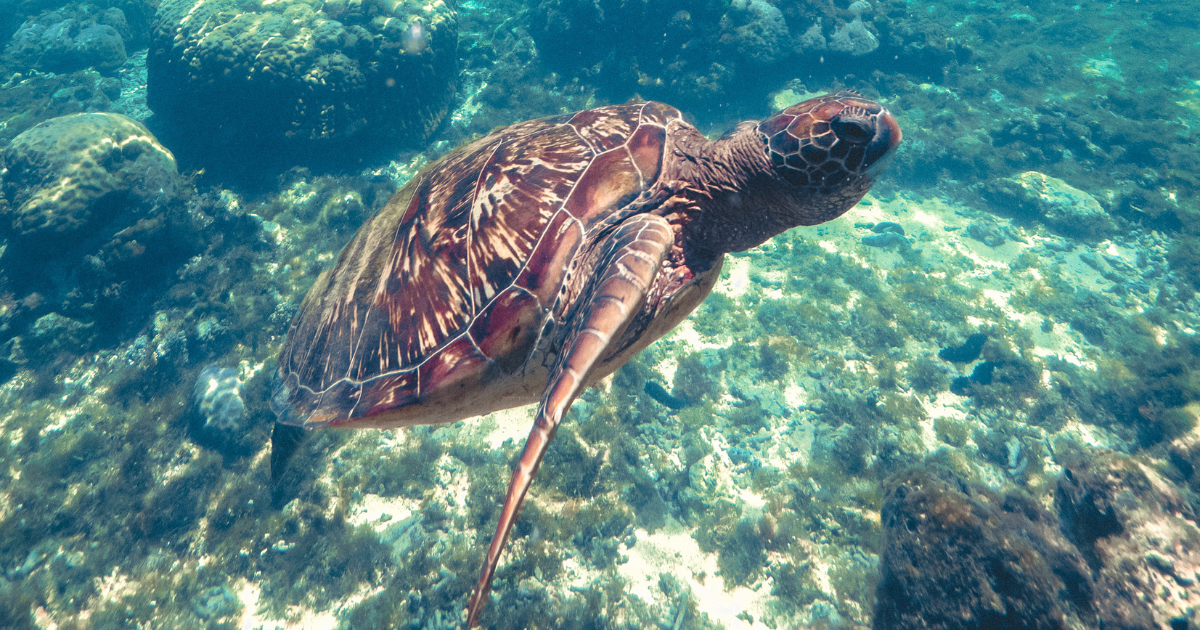
Hawksbill turtles are regularly seen by snorkellers on the protected reefs around Apo Island.
Is the Visayas worth visiting?
Yes, the region has enough variety for a two-week island-hopping trip and enough to fill a relaxed week on a single island. What stays with most travellers are the everyday details, like the Cebuano spoken in markets, the patadyong fabric in textile stalls, and the smell of lechon from the roasters in Carcar.
A first trip usually loops through Cebu, Bohol and Negros, with Panay, Samar or Boracay added as time and interest allow. The region also suits a slower stay on a single island, with reef diving, heritage walks or a few days in a quiet town all good options. Trips work at almost any pace, fast or slow, which is something not every Philippine destination allows.
When is the best time to visit the Visayas?
The best time to travel the Visayas is between late November and May, the regional dry season. Temperatures stay around 24 to 32 degrees year-round, with the wettest months between June and October. The driest stretch is January to April, when seas are calmest for boat travel between the islands. Christmas, New Year and Holy Week are the busiest weeks of the dry season, with flights and accommodation booked out well in advance.
For travellers planning to catch a Visayan festival, January is the peak month. Sinulog and Ati-Atihan share the third Sunday, with Dinagyang on the fourth, and accommodation in the host cities is usually booked out by early December. April and May are quieter on the calendar but still dry, and are usually the best months for reef diving across the region. Travellers looking for fewer crowds should aim for March, October or early November, when prices are lower.
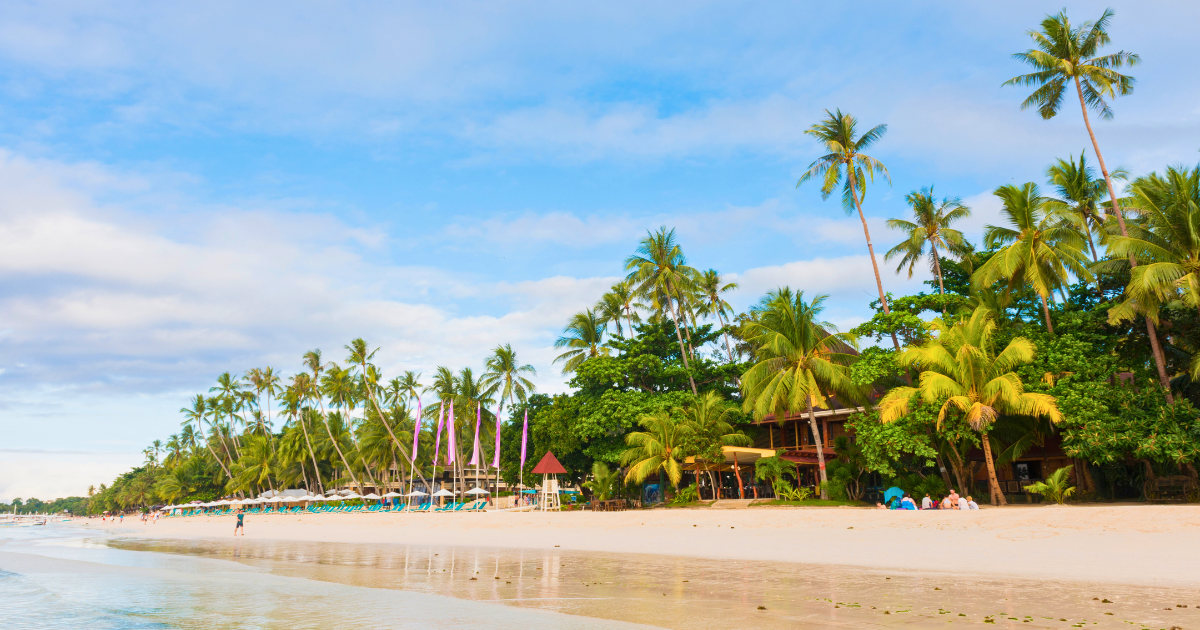
Beaches remain part of the Visayas experience, but the region’s character also comes through its towns, food, reef life and island crossings.
Explore the Visayas with Remarkable East
Remarkable East runs a small group tour through the Visayas, capped at 12 guests and built around cultural depth, regional knowledge and carefully paced travel. The 13-day itinerary opens in Manila before travelling through Dumaguete, Siquijor, Bohol and Cebu, with carefully chosen accommodation and enough time in each place to understand it properly. Contact us for the next departure date.